July / 22 / 2026
By: James Robinson, Kassim Mustafa and Petro Nnyiti
Cattle in the Community Forest is a documentary film created as part of James Robinson’s PhD research at the University of Edinburgh and Royal Botanic Garden Edinburgh. The film and broader research project examine the diverse discourses around livestock encroachment into community-managed village forest reserves in Kilwa District, south-eastern Tanzania. The causes and consequences of forest grazing, which is commonplace despite its prohibition under village by-laws, are strongly contested. Government officials blame pastoralists for violating bans on moving livestock, leading to overstocking and resource scarcity. Pastoralists highlight unjust land use policies and the corruption of officials and village leaders. According to some, livestock are beneficial or benign to forest ecosystems and commercial forestry objectives. To others, their impact is ecologically disastrous.
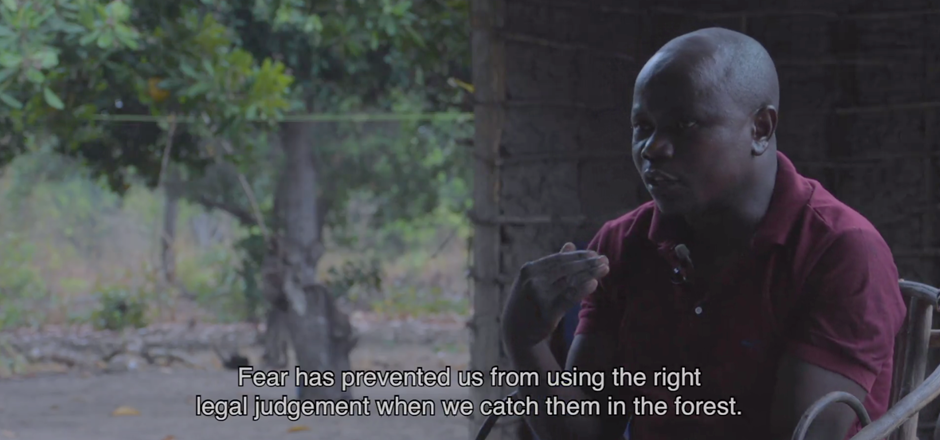
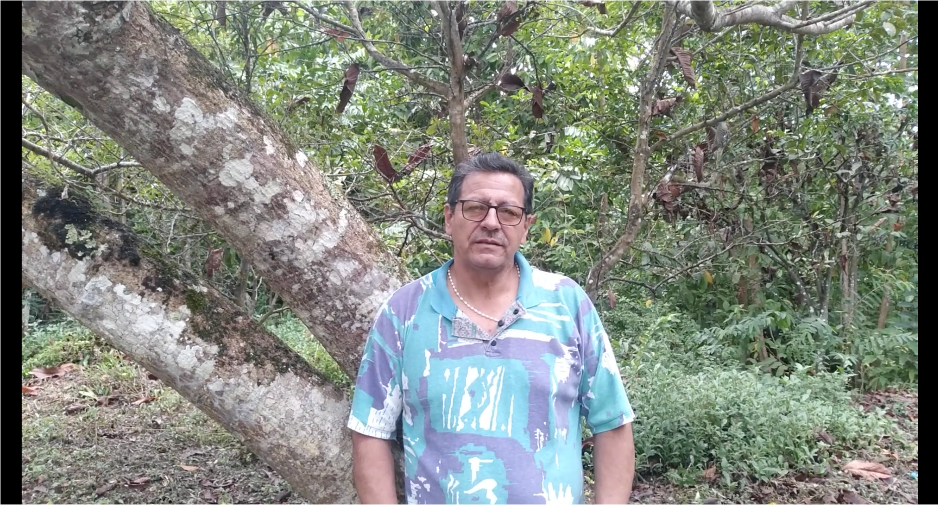
A farmer and Secretary of the Nainokwe Village Natural Resource Committee sits outside his home and describes how the fear of violence at the hands of pastoralists prevents scouts from implementing village by-laws when encountering livestock in village forest reserves. Frame captured from Cattle in the Community Forest (10:04).
While Cattle in the Community Forest is not a conventional ‘participatory video,’ as the researcher and filmmaker retained overall control of the filming and editing processes, the project was strongly inspired and influenced by participatory visual methodologies. In particular, it prioritized engaging marginalized groups and fostering dialogue to address shared concerns and challenges. Central to this approach were community film screenings followed by discussions involving pastoralists, agro-pastoralists, farmers, village leaders, and government officials.
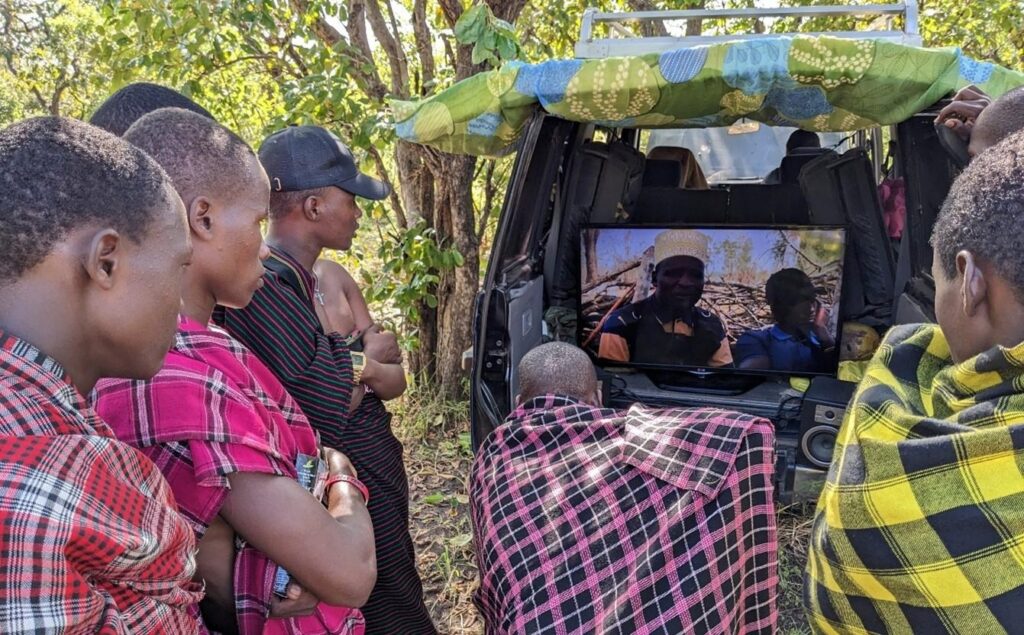
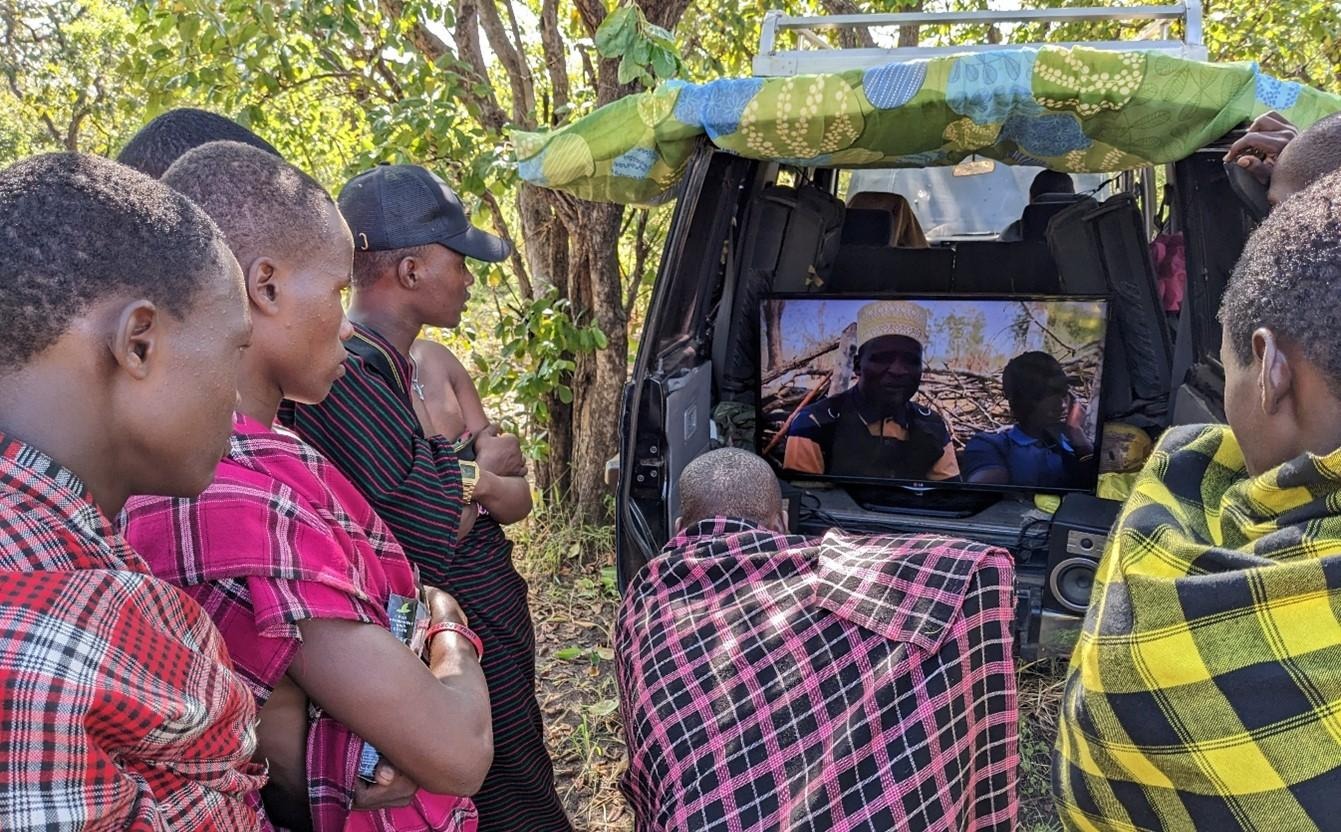
A screening of Cattle in the Community Forest with Mang’ati pastoralists in Nainokwe village. The filmmaker’s vehicle, TV, speakers and mattress (for shading the screen) function as a mobile cinema.
The film divided audiences. Farmers and livestock-keepers, despite their often antagonistic roles in the conflict, mostly identified with the film and viewed it as a tool to advocate for their own interests. Contrastingly, many village leaders and government officials expressed significant criticisms. Some felt threatened by the claims of livestock-keepers, others did not feel represented, and one regional official strongly objected to the use of ‘media’ in a research project. These interactions provided new insights into underlying power dynamics, competing interests, and inter-group relationships, enriching both the research and the communities’ understanding of the issues. An academic article drawing on findings from the screenings is currently under review.
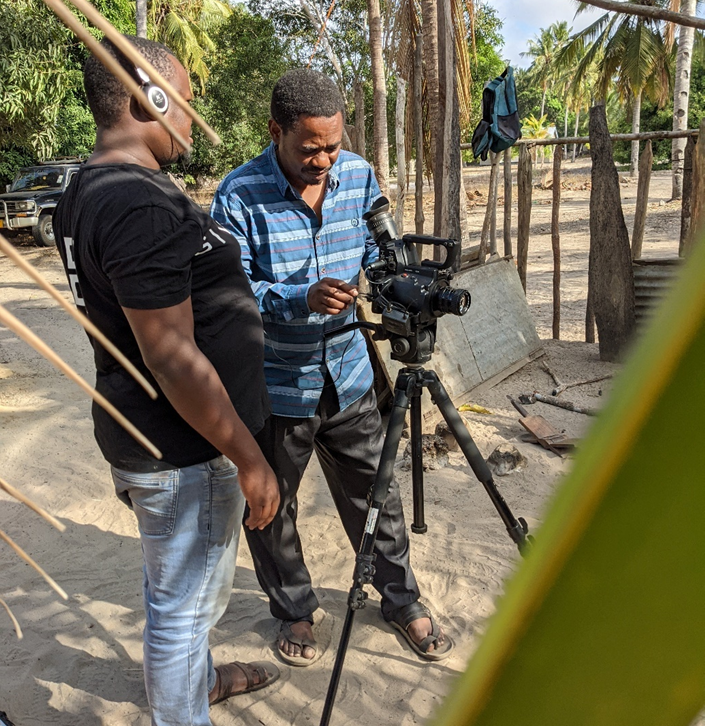
Kassim Mustafa (Filmmaker) and Baraka Robert (Sound Technician) prepare for an interview in Nainokwe village.
Cattle in the Community Forest was shot and edited by Kassim Mustafa (World Village Productions – Simanjiro, Tanzania) with research assistance from Petro Nnyiti. The film and broader research would not have been possible without their combined knowledge, skills and commitment. The production received support from the NERC E4 Doctoral Training Programme PhD studentship (Grant No. NE/S007407/1), Royal Botanic Garden Edinburgh and the Elizabeth Sinclair Irvine Bequest and Centenary Agroforestry 89 Fund.
By:

By:
By: Brecken Butterfield , Lauren Clement, Laurette Compass, Djuna Day-Booth, Victoria Jeffreys, Carmen Marshall, Elliot Miller, Clara Smartt, Natalie Smith, Emilie Dupuits [1]
By: Brecken Butterfield , Lauren Clement, Laurette Compass, Djuna Day-Booth, Victoria Jeffreys, Carmen Marshall, Elliot Miller, Clara Smartt, Natalie Smith, Emilie Dupuits [1]