By: Tosana Maria Töben
20 / October / 2026
Half a year after a record-breaking wildfire season devastated large stretches of South America’s tropical forests, community members of the Indigenous Territory Monte Verde and I sought to explore how this new fire regime is shaped by and shapes the lives of the human and non-human communities in the Bolivian tropics. To approach this question from plural perspectives, while considering my limitations as a Western outsider, I was drawn to methodologies that are non-extractive, participatory, co-creative and community-based. I landed at photovoice, which, in combination with transect walks, interviews and focus groups, proved to be a worthwhile method to perceive and situate relations between the state, humans and more-than-humans.
Interdisciplinary interest in more-than-human worlds is expanding, with amplified attention to the capacity of all living matter in worldmaking (Greenhough, 2010) as well as “the contribution of non-human agencies in shaping places and practices” (Alam et al., 2018, p. 256). Traditionally, political ecology scholarship, while politicizing ecological studies (Fischer et al., 2020, Latour, 2004), has often treated Nature as a passive object with little bearing on the relations that govern power and politics, leaving the material agency of non-human Nature unexamined (Barua, 2014; Walker, 2015; see also Choi, 2016, for a deeper inquiry into the gap of materiality in political ecology). Lending from more-than-human studies is therefore helpful in the inquiry into both “the co-constitutive role of nonhumans (e.g. landscapes, animals, objects) in the making of the world” and “the embodied, emotive and affective dimensions of nature-society relations” (Choi, 2016, p. 618). As reflected in my own work (Töben, 2026), perceiving non-human agency transforms how we understand nature-society relations and respond to socio-ecological issues. When we choose to see how nothing is ever completely passive, but instead in constant constitution, motion and transformation, the distinction between object and subject dissolves (Bennet, 2009). A non-anthropocentric reconceptualisation of agency provides a clearer understanding of socio-ecological changes and reinstates a moral responsibility for humans, since it resists objectifying the non-human as mere backgrounds for human activity (Contesse, 2021; Kim, 2020; Töben, 2026).
My research journey was a process of navigating the field of more-than-human political ecology, rich in theory but with few established methodological approaches (Alam et al., 2018; Dowling et al., 2017; Choi, 2016). How can we return to the aliveness of the planet in the study of socio-nature relations when those relations defy direct observation and established research paradigms? Working with forest fires made this question seem even more complex: how might we engage in such research with fleeting natural entities? Fire, rather than being a stable material state, is understood as a multi-sensory experience of combustion (Cox, 2018). Nonetheless, they possess material agency and dynamics that call for inquiry, particularly concerning their increasingly consequential interplay with forest loss and climate change.
As follows, there is a need to enhance traditional humanist methods with experimental practices (Whatmore, 2006). Donna Haraway (1988) was one of the first to advocate for a situated response that recognises human relations with more-than-human “others”, amplifying sensory and affective registers and acknowledging the agencies of those often overlooked in shaping places and practices (Alam et al., 2018). After consulting experts from animal communication to anthropology across multiple continents, I shifted my focus to human-non-human relations. Turning to the relational threads proved effective since, during fieldwork, I found that these interactions were so ingrained in daily life and the memory of the forest fires that they surfaced organically in conversations and interviews, and indeed, in many of the photos people took to tell their stories. I realised that even without direct observation or communication, I could analyse the role of the more-than-human by tracing their effects on human responses, feelings, livelihoods and governance. This shift involves an important assumption change, namely, that agency is relational and distributed, existing in interdependent assemblages, not independently or in isolation (Bennett, 2009). In this framework, agency exists as a creative and cooperative force that brings materialities into being through their relationships. Agency is thus not possessed solely by humans but is dispersed across all actants within the assemblage, with nonhuman elements exerting their own forces and influences (Smith, 2024).
Just as more-than-human research recognises the relational, bodily and emotional as important instruments of interacting with and knowing the world, photovoice aims to capture such relations through photos and narratives which can reveal parts of everyday experiences, places and practices that otherwise may remain hidden (Alam et al., 2018). Photovoice, inspired by feminist researchers, differs from and can complement traditional interviews by allowing participants to express their views through image production, revealing nuanced insights into marginalised communities (Wang & Burris, 1997). Yet, when we recognise that non-human entities and ecologies co-constitute social worlds, we begin to see photos as extensions of assemblages of human and non-human communities, as evident in the photovoices introduced in this visual essay. This resonates with Haraway’s concept of “response-ability”, which underscores the need for situated awareness in photographic practices and advocates a mindful approach to the lived realities of both humans and non-humans in shared spaces (Haraway, 2008).
Participant recruitment for the photovoice study involved ten community members across six households, selected via purposive sampling for gender and age balance, prioritising people with long-term residency in Monte Verde. All protagonists[1] provided verbal consent and retained ownership of their photographs, used solely for research. A first workshop trained protagonists in technical skills, leading to a ten-day photo documentation period reflecting their lives and livelihoods in relation to socio-environmental changes. Wildfires were a recurring theme, even though no particular prompt was given to focus on that or any theme in particular. Subsequent individual interviews followed a structured process of descriptive, interpretive, and affective analysis based on selected photos. Data collection culminated in a final workshop that synthesised findings and created recommendations for management policies. The analytical framework utilised both visual analysis of recurring symbols in the photos and narrative analysis through thematic coding, integrating visual and verbal data.
Photovoice revealed both a cosmological and material sense of relationality with Nature; it provided a window into a worldview where the forest is kin as well as a critical life-supporting system that is increasingly at risk of both anthropogenic and climate change-induced fires. More-than-human assemblages, understood as a dynamic, heterogeneous grouping of human and nonhuman bodies, organisms, materials, and forces whose interactions produce effects that no single component can generate alone (Müller, 2014), assemble and disassemble in countless ways. A selection of the observed and photovoice-communicated relations and responses in the context of forest fires was made, where surely many more assemblages at play were not identified or identifiable.
The fire scars the protagonists pointed out in the forest (Figures 1 and 2) are as much their own, in the sense that the community emotionally and effectively functions in relation to the ecosystem. Without a particular prompt, almost all protagonists chose to document their relationship to the forest or agroforest systems and the ecological and livelihood losses linked to them, which were severe. Fire also acts as a catalyst for physical and legal transformations of territories, recursively intensifying the very conditions that fuel it, since physical and legal boundaries at the deforestation frontier can become ambiguous or lose meaning during large-scale forest fires. This creates incentives for more deforestation by fire and reassembling of territories since accountability diminishes when different types of land cover and vegetation – titled and untitled lands, protected and unprotected areas – are burned alike.
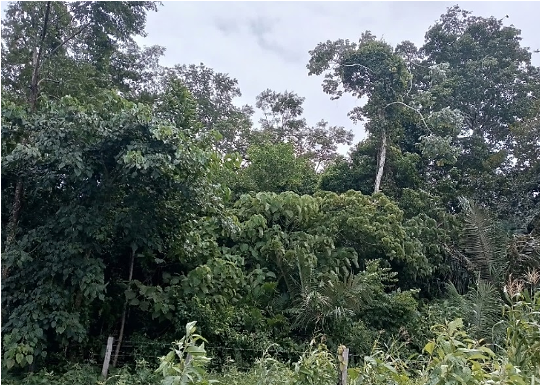
Fig. 1. Bosque verde – Green forest A piece of the chaco, a glimpse of what the natural forest once looked like. We’ve rescued 200 hectares of high forest near the house; the rest was burned. I took the photo to show the reference.
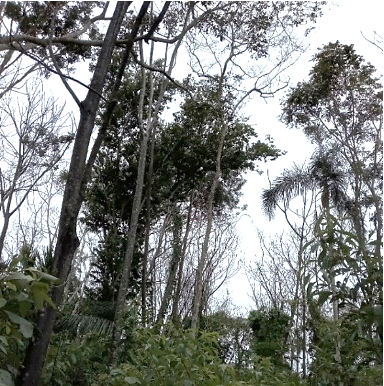
Fig. 2. Cicatriz del fuego – Fire scar The impact of the fire is now visible: the tree tips are dry and leafless. Those that do have leaves, typically with thick bark, are more resilient, like the jichiturico and cedar. Regeneration is still very limited.
Multispecies relations (Figures 3, 4 and 5) and intricate interactions with the river (Figures 6-11) clearly arose from the photovoice data. Macaws and butterflies were also included by other protagonists, which often represent everyday entanglements: “These days, we watch the macaws flying to the chaco by noon. To us, they are living ornaments.” Another protagonist accentuated conviviality, noting their shared existence with and caring appreciation of the birdlife, now seated on burned branches (see Figure 3). The stark transformations provoked by the forest fires came into view in many instances, for instance while looking over the landscape from a water tank and remembering how the reflection of the sun was replaced by a blinding wall of smoke. While discussing Figure 5, the photovoice protagonist emphasised the consciousness of the photo’s object, which by doing so, is ontologically de-objectified, evocative of thinking about agency in a way that moves beyond the subject/object binary.
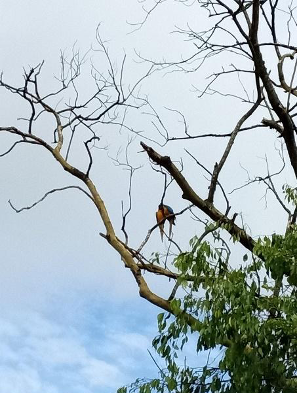
Fig. 3. Las parabas amarillas – The yellow macaws I admire them; they are gorgeous. The parrots pass and stop close to the village because they like eating the salt blocks for the cows. We co-live with them. I wish nobody would harm them and that they may always fly freely.
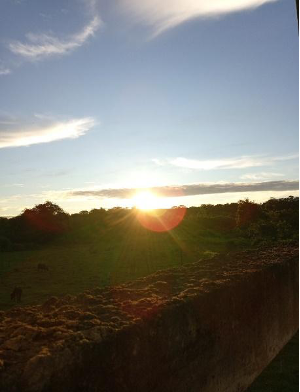
Fig. 4. Mi bello recuerdo – My lovely memory I climbed into the tank. There was no reflection here during the fires because it was all smoke. It was like a bright light, very bright. During this time, you could not see the animals eating peacefully because they were all closed in.
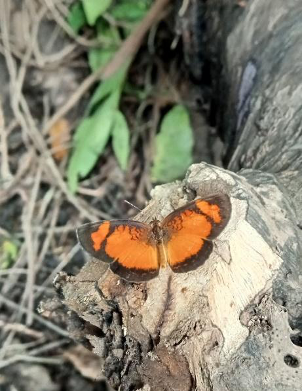
Fig. 5. Mi hermosa mariposa – My beautiful butterfly This butterfly likes to be on the riverbank. It is used to hunt smaller fish. The riverbank attracts other species of butterflies, but they left when I wanted to take the photo. It is conscious. It likes to feed on the nutrients from the wet wood.
The nearby river is framed in the photovoice imagery of multiple protagonists, who depict the Rio Negro (black river) with great admiration and feelings of relatedness. For a younger woman, it represents the beginning of their life, as she was living close to the river’s reaches before. They still visit every day. She tells of its fundamental life force: “the river gives life to all humans, animals and plants”. Connection to water was part of almost every photovoice interview and thus in the experiential photographic process, bringing the place-based relations and responses into being. In the midst of the catastrophe, water came to the defence in two ways: first, the rains provided instant relief from the drought and flames, and in the end, it was the river, acting as a natural barrier, that protected the village from being burned. Coping with and adapting to the transformations engendered by fires is thus in part achieved in relation to the more-than-human.
What is at stake? The youngest photovoice protagonist, a 17-year-old boy, takes the viewer on a dynamic and immersive journey through the river, from the confined reaches of a tributary waterfall to the wider riverbeds in the lower parts of the catchment, with each stage evoking close kinship and childhood memories with the riverscape (Figures 49-54). I want to highlight this set of photos because of the more-than-human assemblage they invoke and the narrative power of their visual and spatial arrangement, inviting us to witness the river’s movements as he physically moved through the current to take these photos.
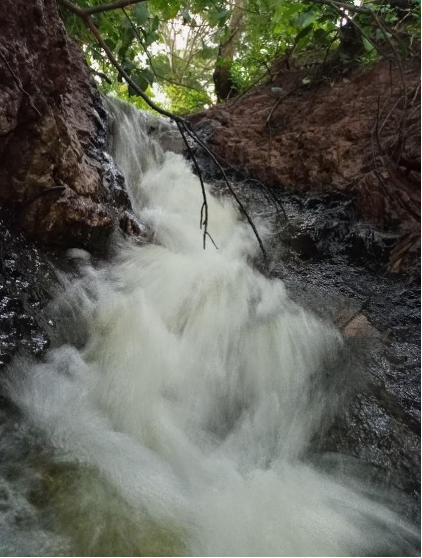
Fig. 6. Mi bella cascada – My beautiful waterfall The current from the top expands and creates a fog. Seeing it makes me happy because during the drought, it was gone; the bottom of the riverbed was bare. Mother Earth has been rehabilitating since the entire river completely dried up.
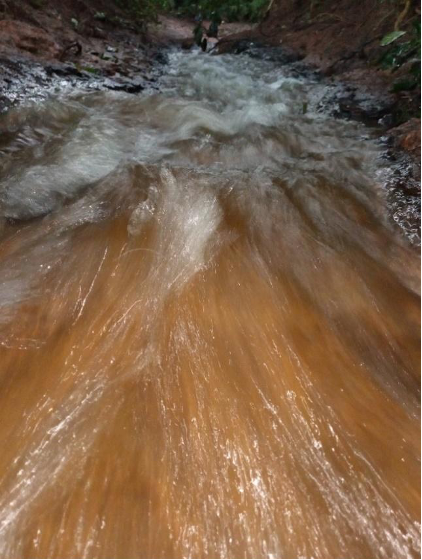
Fig. 7. Resbalin natural – Natural waterslide The beginning of the waterfall, which continues to flow into the brown water below. It reminds me of my childhood, around ten years old, when I used to have fun with my family, diving into the stream, like I imagine a slide at a water park.
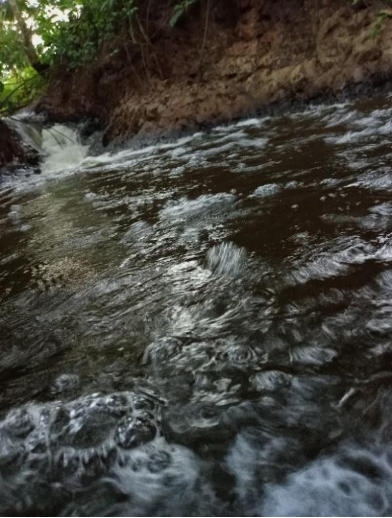
Fig. 8. Mi saltarin acuático – My water jumper We threw ourselves into the water like little frogs. We grabbed strings, three of us climbed onto a string, and when we could not hold on anymore, we went down to this part. I consider it all my natural playground.
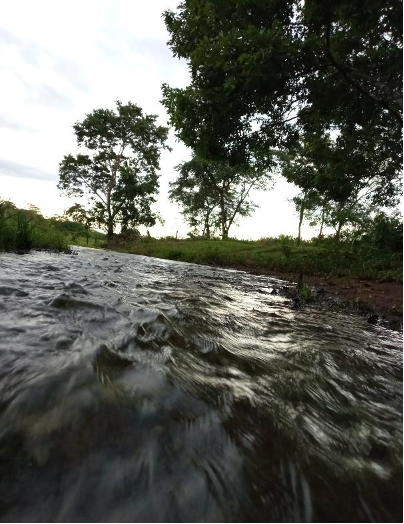
Fig. 9. La travesura – The mischief When we were going to play, we started at this reservoir, went into the water, and then moved to play further down so we would not get cold.
Fig. 10. Mi rio protector – My protecting river This is the river for fishing or playing with fish. It is also a protection in case of fire. The sun rises with a beautiful reflection.
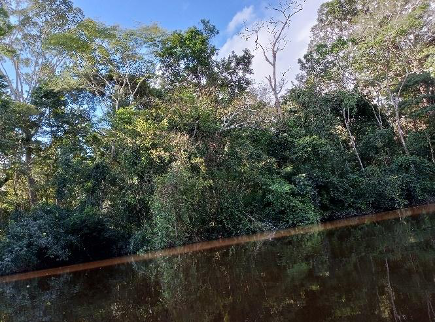
Fig. 11. Bello atardecer – Pretty sunset Sunset on the forested riverbanks. In the sun’s rays, the trees filter the light and make everything expand with colour. A single tree is dried out by fires, and there is a bird called a cowbird.
As the photovoices clearly show, the method offers a powerful lens through which, together with the community, we can analyse more than human relations in a co-creative way: (…) “nature does not ‘speak’ for itself nor do humans speak for nature, but rather it is about ‘speaking’ with nature in and through images and stories” (Morton et al., 2020, p. 3). Likewise, it is argued that the nonhuman turn should shift focus from decentring humans to a dialectic between human and more-than-human, challenging capitalism’s alienation between humans and Nature (Büscher, 2021).
As a participatory method, photovoice invites community members to share how they perceive and experience the more-than-human in relation to daily life and ecologies. It thereby opens a portal of heightened perceptivity to the contributions of non-humans, which are not only expressed in terms of usefulness but of a holistic relational and productive power, underlining their agency. The photovoice protagonists acknowledge a wide range of values and contributions, as can be noted from the way in which all aspects of the natural world are pictured and described as alive, vital and aware. This perception is grounded in the Indigenous Chiquitanía worldview, where the more-than-human are kin and active participants in social life (APCOB, 2016). By centring these Indigenous ways of seeing and knowing, photovoice allows the forest and its beings to speak through co-created photos and stories (Morton et al., 2020; Wang & Burris, 1997). By foregrounding visual and narrative data, photovoice makes visible the often-invisible bonds of kinship, care, and grief that permeate people’s relationality to non-human Nature. Less verbose practices, such as photography, may therefore be more effective at recognising and conveying non-human agency and human-nonhuman assemblages (Bennett, 2009), providing transboundary perspectives in harmony with the hybrid nature of forest fires.
Alam, A., McGregor, A., & Houston, D. (2018). Photo-response: Approaching participatory photography as a more-than-human research method. Area, 50(2), 256–265. https://doi.org/10.1111/area.12368
APCOB, (2016). “Ya no queda nada, el jichi se ha ido” Cosmovisión, conocimientos y prácticas del Pueblo Chiquitano en relación al cambio climático. Santa Cruz. 32 p.
Barua, M. (2014). Volatile Ecologies: Towards a Material Politics of Human—Animal Relations. Environment and Planning A, 46, 1462 – 1478. https://doi.org/10.1068/a46138
Bennett, J., 2009, Vibrant matter: A political ecology of things, Duke University Press, Durham, NC.
Choi, M. (2016). More-than-human geographies of nature: Toward a careful political ecology. Journal of the Korean Geographical Society, 51(5), 613-632.
Contesse, M., Duncan, J., Legun, K., & Klerkx, L. (2021). Unravelling non-human agency in sustainability transitions. Technological Forecasting and Social Change, 166, 120634. https://doi.org/10.1016/j.techfore.2021.120634
Cox, E. (2018, November 5). Is fire a solid, a liquid, or a gas? TED-Ed. https://www.ted.com/talks/elizabeth_cox_is_fire_a_solid_a_liquid_or_a_gas
Dowling, R., Lloyd, K., & Suchet-Pearson, S. (2017). Qualitative methods II: ‘More-than-human’ methodologies and/in praxis. Progress in Human Geography, 41(6), 823–831. https://doi.org/10.1177/0309132516664439
Fischer, K., Jakobsen, J., & Westengen, O. T. (2022). The political ecology of crops: From seed to state and capital. Geoforum, 130, 92–95. https://doi.org/10.1016/j.geoforum.2021.12.011
Greenhough, B., 2010, Vitalist geographies: Life and the more-than-human, in Harrison, P. & Anderson, B. (eds), Taking-Place: Non-representational theories and geography, Ashgate, Surrey, 37-54.
Haraway, D. (2008). When species meet. Minneapolis, MN: University of Minnesota Press.
Kim, J. (2020). The problem of nonhuman agency and bodily intentionality in the Anthropocene. Neohelicon, 47, 9-16. https://doi.org/10.1007/s11059-020-00534-1
Latour, B. (2004). Politics of nature. Harvard University Press.
Morton, D., Bird-Naytowhow, K., Pearl, T., & Hatala, A. R. (2020). “Just because they aren’t human doesn’t mean they aren’t alive”: The methodological potential of photovoice to examine human-nature relations as a source of resilience and health among urban Indigenous youth. Health & Place, 61, 102268. https://doi.org/10.1016/j.healthplace.2019.102268
Müller, M. (2014). Assemblages and Actor-networks: Rethinking Socio-material Power, Politics and Space. Geography Compass, 9, 27-41. https://doi.org/10.2139/ssrn.2497405
Smith, T. E. (2024). The (Un)Capture of Cappanawalla: Vital Materiality and Collaborative Artistic Emergence. Research in Arts and Education. https://doi.org/10.54916/rae.141657
Walker, P. (2005). Political ecology: where is the ecology?. Progress in Human Geography, 29, 73 – 82. https://doi.org/10.1191/0309132505ph530pr
Wang, C., and M. A. Burris. 1997.“Photovoice: Concept, Methodology, and Use for Participatory Needs Assessment.” Health Education & Behavior 24(3): 369–387.
Whatmore, S. (2006). Materialist returns: Practising cultural geography in and for a more-than-human world. Cultural Geographies, 13, 600–609.
[1] I switch to the term “protagonist” here since photovoice explicitly creates a partnership in which community members are co-researchers who generate knowledge, which positions them as protagonists in their own (his)stories – an active role that the passive connotations of “participant” fail to convey.
20 / October / 2026
By: Tosana Maria Töben
22 / July / 2026
By: Mi Mi (Myanmar farmer); JC (independent illustrator); Hilary Faxon (University of Montana), Zin Mar Pyo (Chiang Mai University) & Jenny Hedström (Swedish Defense University)
22 / July / 2026
By: Gerónimo Barrera de la Torre y Carlo Nasisse
22 / July / 2026
By: Adrienne Johnson, Murphy Boksanski, Nicolette Mehdizadeh, Carly Mitchell, Katherine Mottola, Lawrence Philip Tablada Tacto, Isabella Well
22 / July / 2026
By: Emma Johansson