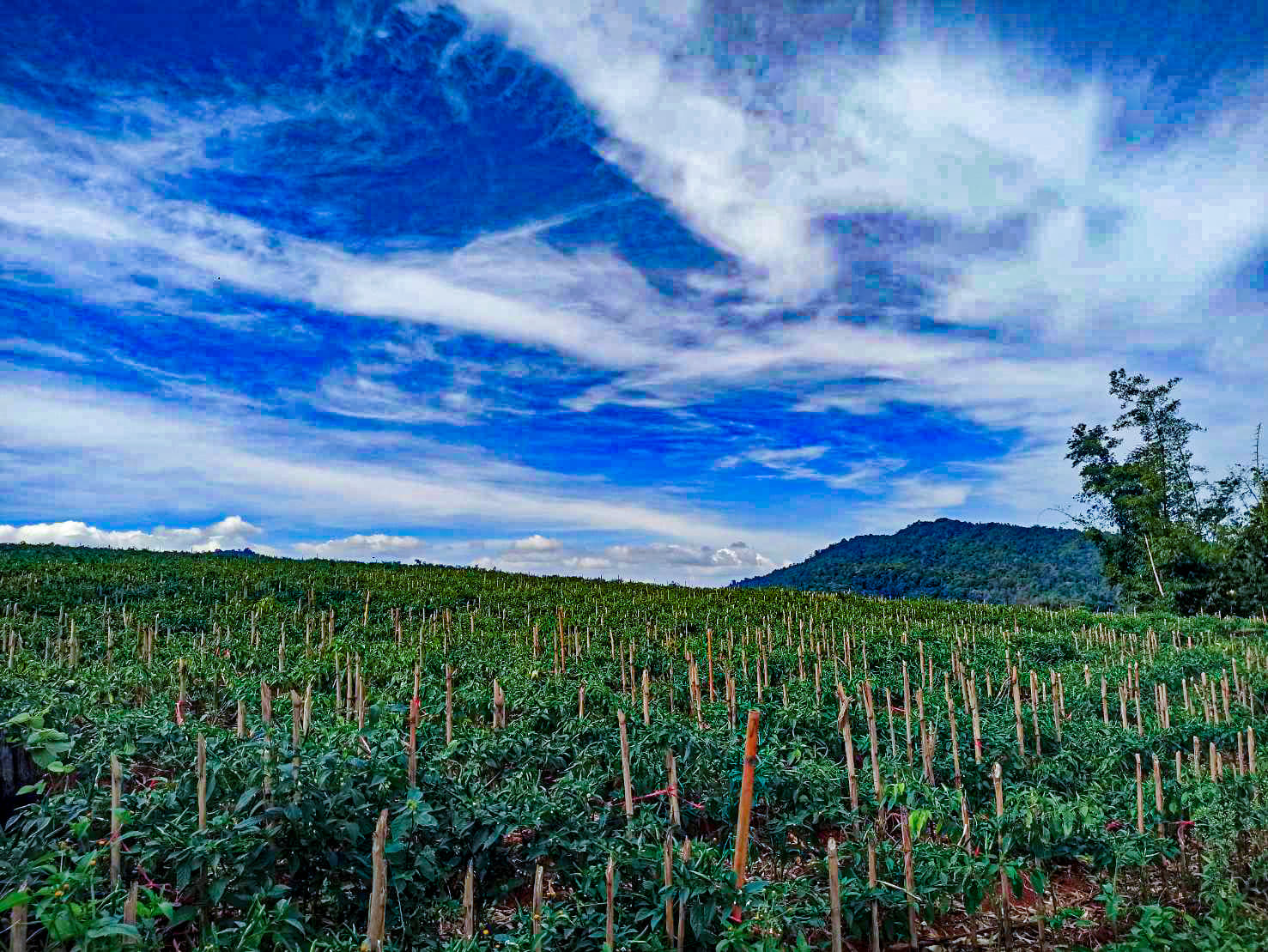
By: Gerónimo Barrera de la Torre y Carlo Nasisse
22 / July / 2026
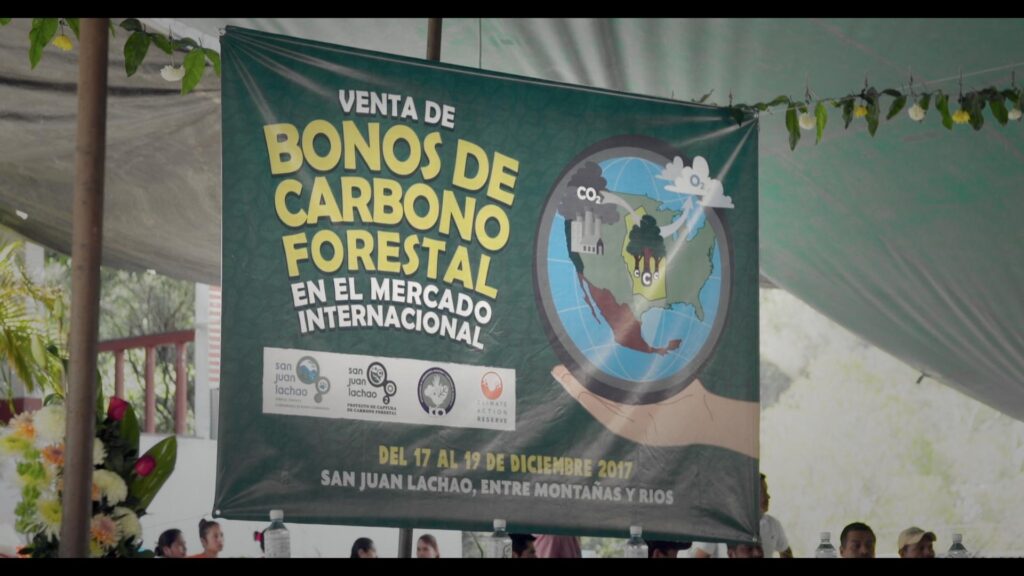
“Todo ha cambiado y va a cambiar mas” (“Everything has changed and will continue to change further.”). With these words, Gaspar Salinas, the main collaborator in our film Xa Lyu K’aq: A World of Mountains, frames the current moment he faces as his community’s forest has already undergone a large transformation and is perhaps on the cusp of an even greater one. framed a tension between. A tension that runs through the film which examines the implementation of climate change mitigation measures, particularly carbon offsetting in the international carbon market by the community of San Juan Lachao, an ancestral Chatino territory in southern Mexico. However, Xa Lyu K’aq closely examines this environmental intervention, considering that, firstly, the film was not originally meant to be a documentary about carbon and that the impact of carbon on transforming community landscapes goes beyond conservation efforts or community meetings.
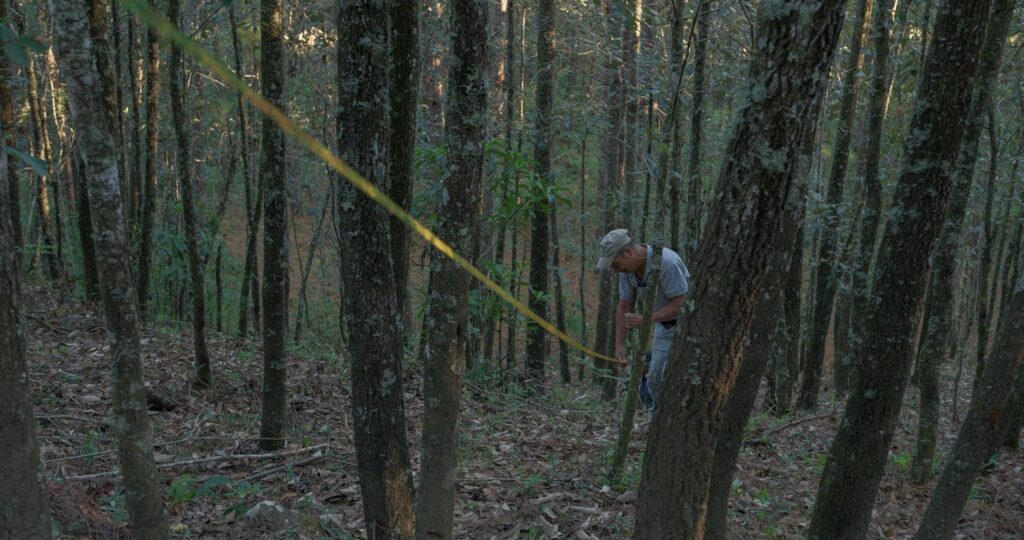
The film grew out of a collaboration between Geronimo, a geographer with deep experience in Lachao; Carlo, a documentary filmmaker trained in anthropology; and Gaspar, who leads Lachao’s department for the management of communal lands and forests. The film was developed through extensive conversations with Gaspar and many other community members in Lachao. We collaboratively decided on filming locations and topics, considering current circumstances, the possibility of our collaborator to visit various places, the time of year, and the local festivity schedule. Stylistically, we aimed for an approach that would allow for continued filming with Gaspar and the community over many years—one that could hold our own position within the film, without relying on the disembodied claims of truth often associated with observational cinema. The influence of the camera, sound equipment, and our positions—as a Mexican PhD student in the US and a US student—necessitated a different approach, shaped by our relationships and viewpoints. Although the process was unscripted and improvisational, it was rooted in the perspectives, experiences, and knowledge of participants. Because the production explored diverse visual and narrative options based on the situation, we developed material that became a visual archive for the communities and families of those who passed away in recent years. Additionally, we made a short film, Lencho, directed by one of the community elders, in which he reflected on what it means to be a Chatino person. This loose, meandering approach—particularly in the first few years—allowed us to co-create a range of texts that were important in shaping relationships to filmmaking that did not always privilege efficiency or the drive toward a feature-length film. While we sensed the importance and singularity of the carbon sale within the community, we were not always certain it would become the film’s final focus.
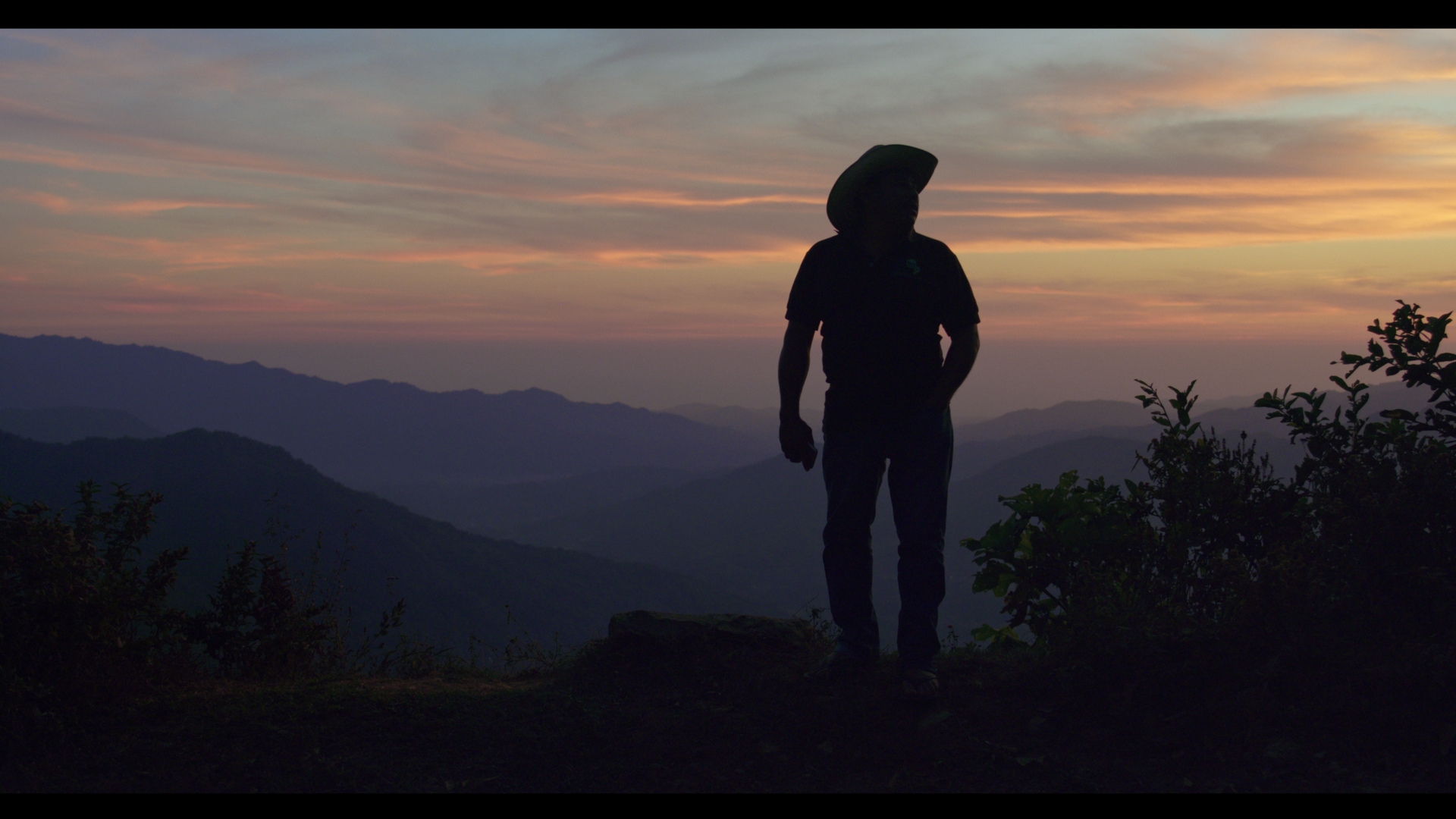
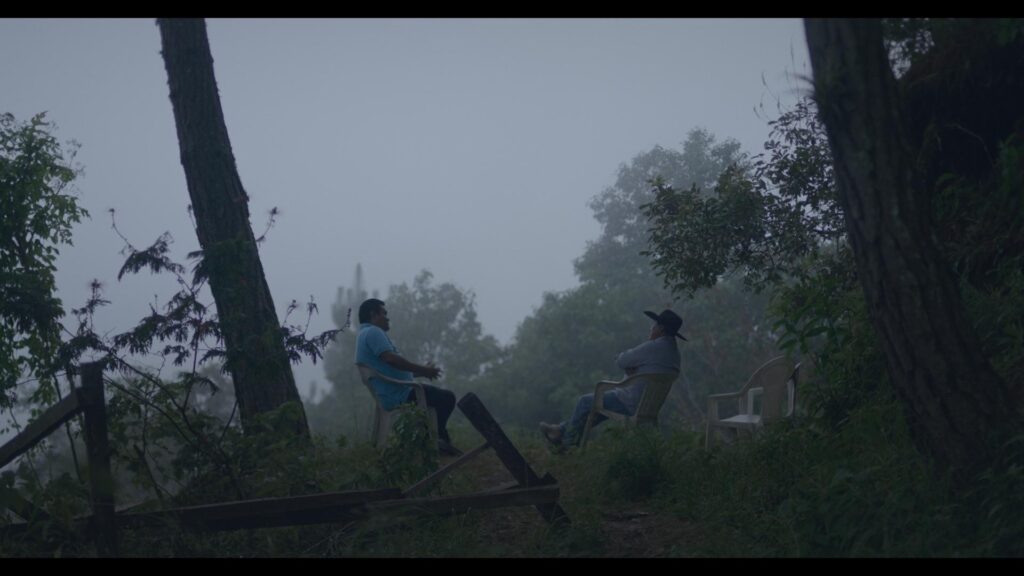
We engage with the aesthetics as part of the film ethical commitment and epistemic frame. We explored through long shots of the mist in the mountain rain forest of Lachao, and the intricate neo-tectonic landscapes of the Chatino’s territory the relationship between the communities and their land.
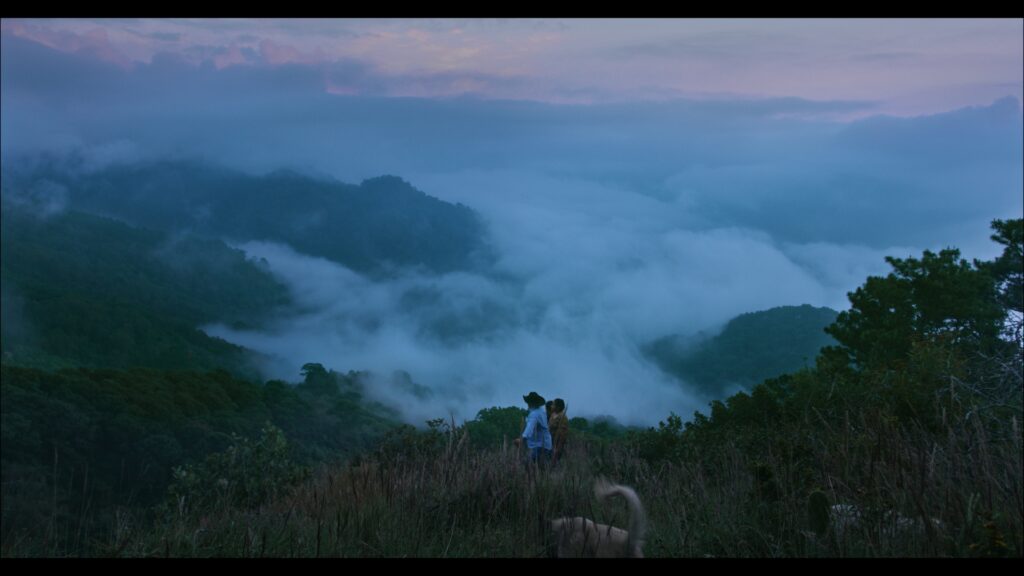
We faced the issue of representing a especially abstract commodity, carbon, that we could only capture in its material consequences for the people and their forest.
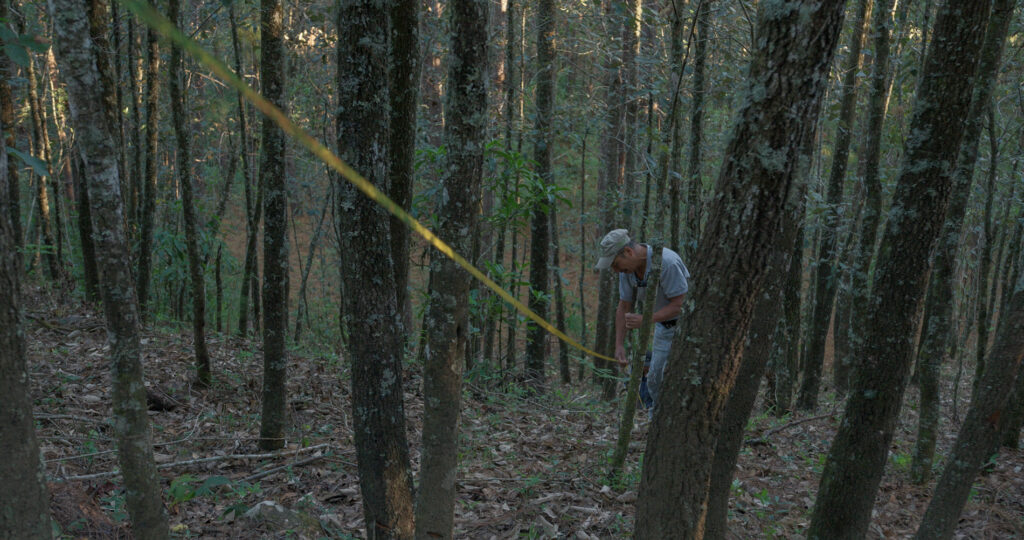
Thus, we turn to images of the mist and the wind sounds in the forest to construct the image of such an elusive entity and its entrenched difficulty for the community involved in it to make sense of its production and commercialization. We chose this frame to narrate otherwise the implementation of this environmental measures staying close to the relations, the sacredness, and the continual transformation always highlighted by our collaborators between the land and the community.
Another key aspect shaping this film and the overall visual project is our long-standing collaboration with Gaspar and the Lachao community, which has developed over more than eight years. This partnership was built in accordance with local political norms and closely coordinated with the municipal assembly. Such a slow, intentional process has been essential to integrating the film into the community’s rhythms and values. We believe the film’s beauty lies in the encounter between community members and us, turning it into a space where we can all express our sense of wonder and belonging in the natural world.
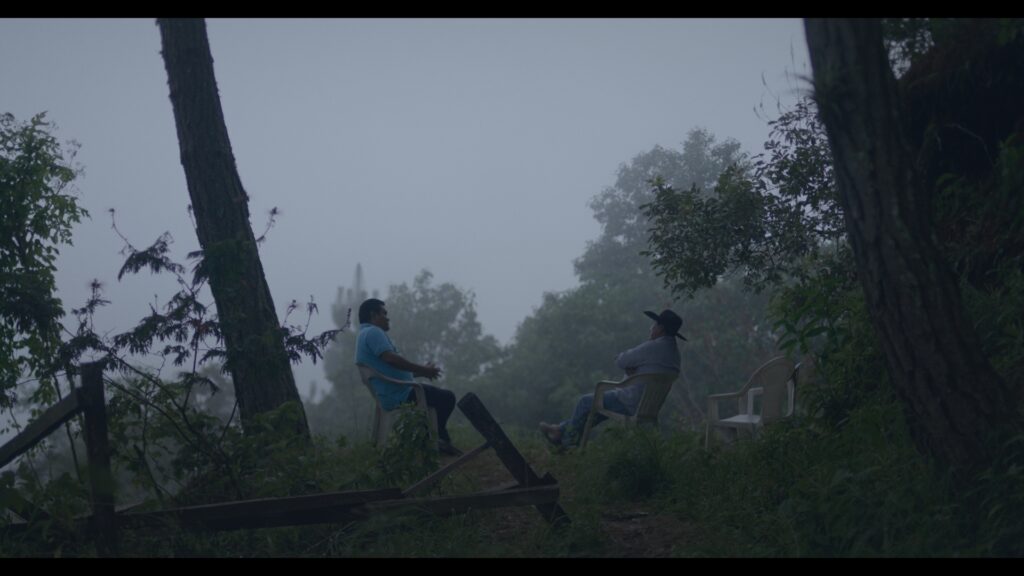
Additionally, filming over an extended period enables us to portray the tension between collective grief over its commodification and the inevitable community and forest changes. We acknowledge the contradictions and tensions that have arisen during project implementation and resistance by the communities, emphasizing everyday and emotional experiences to share beyond academic contexts as ways of understanding and engaging with the world.
It is also significant to mention that our collaboration grows from the convergence of Geography, Anthropology, and cinema- a dialogue between ways of knowing that shapes how we see, listen, and participate in the world. And through our engagement with the epistemic critiques that have pointed to the limits of our disciplinary work and the necessity to reflect on the politics of representation (Anthias & Asher, 2024; Asher K, 2013) The film is built around this meeting point, where research and filmmaking intertwine as complementary forms of inquiry and relation. Geronimo’s long-term engagement with forest management, conservation politics, and Indigenous autonomy in southern Mexico has grounded the project in a deep understanding of the historical and political forces shaping Lachao’s landscape. Our shared expectation with the community was for the film to help document Lachao’s history and engagement with the international carbon market and its communal life. Thus, the possibility of the audiovisual language was compelling for all of us, beyond the logocentrism of academic products, to reach other audiences, first within the community and then to other communities engaged in forest conservation. We also
Moreover, we are drawn to stories that unsettle familiar narratives about the environment, revealing the complex, lived relationships between people, forests, and ecology. Our intention was to make visible an environmental practice that is often difficult to perceive or represent. In particular, regarding climate change mitigation measures, we wanted our film to be attentive to the relational aspects through which carbon was “produced” and embedded in the community. Through this film, we confront the extractive logics of so-called “green capitalism”- systems that seek to greenwash and preserve the status quo through weak gestures of environmental responsibility, often obscuring the unequal distribution of its costs and benefits.
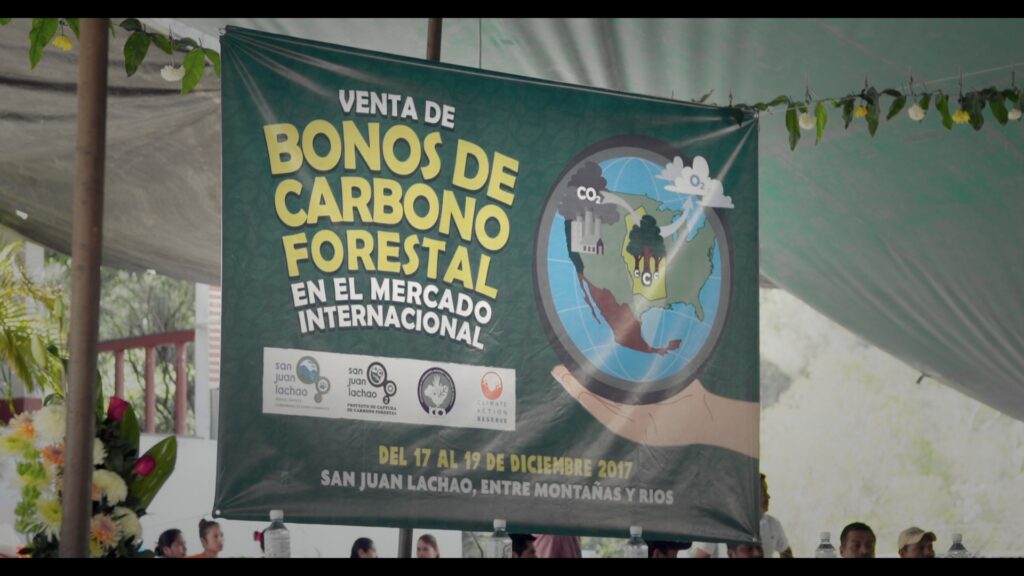
In doing so, the film presents contrasting ideologies about the value and meaning of forests that became intertwined as the project is implemented: between carbon as a commodity and the forest as a living, communal being embedded in social, spiritual, and political life. By doing this, we focus on the consequences for the lives of people inhabiting those territories and their forested landscape.
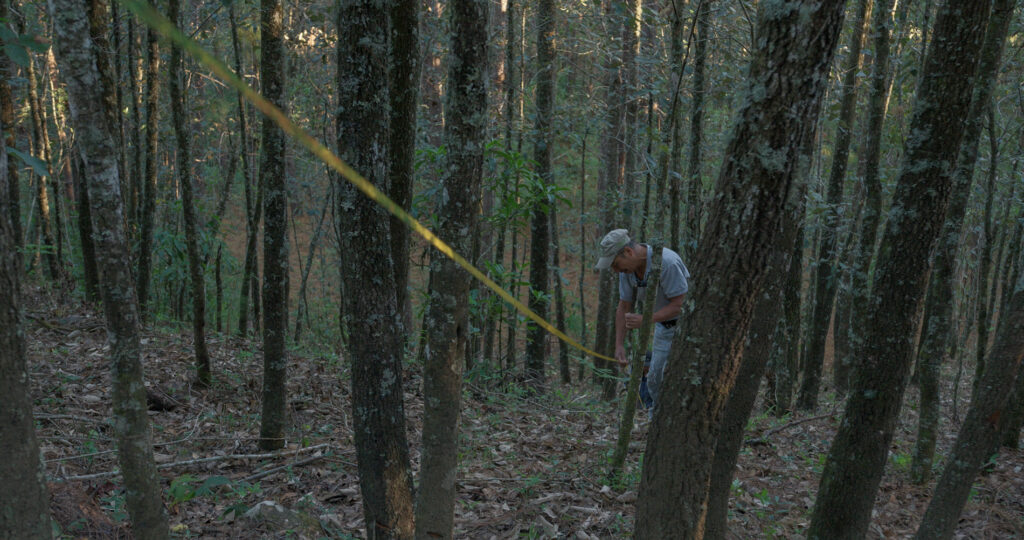
Our hope is that the film, together with the organizing and impact work surrounding it, will create a space for reflection on the ethics of environmental change and responsibility- and on the urgent need to integrate the knowledge of forest communities and their struggles for autonomy into the design of meaningful climate mitigation strategies. One of our primary goals is to share the film with other communities engaged in the carbon market. We consider it crucial to foster a dialogue grounded in the community’s diverse experiences with environmental interventions and the advancement of green capitalism, which have consequences for their forests and land.
Anthias, P., & Asher, K. (2024). Indigenous Natures and the Anthropocene: Racial Capitalism, Violent Materialities, and the Colonial Politics of Representation. Antipode, 1–22.
Asher K. (2013). Latin American Decolonial Thought, or Making the Subaltern Speak. Geogr. Compass Geography Compass, 7(12), 832–842.
1
2
3
4
5
6
22 / July / 2026
By: Gerónimo Barrera de la Torre y Carlo Nasisse
22 / July / 2026
By: Adrienne Johnson, Murphy Boksanski, Nicolette Mehdizadeh, Carly Mitchell, Katherine Mottola, Lawrence Philip Tablada Tacto, Isabella Well
22 / July / 2026
By: Emma Johansson
22 / July / 2026
By: Asamblea Socioambiental Huinganco con Adriana Arce, Maximiliano Navarrete y Mattias Borg Rasmussen
22 / July / 2026
By: Aung Htun Lin & Sofie Mortensen