

August / 25 / 2026
By: Jackson Tamunosaki Jack
Toxic forms of resource extraction produce far-reaching environmental transformations, which shape the everyday lives of marginalized communities across Africa’s natural resource enclaves. While the root causes of ‘toxic extractivism’ have been traced to colonial histories of capitalist expansion in Africa, this article examines how these historical legacies have endured in contemporary times and reproduced themselves in localized variants. With a focus on ‘Kpo-Fire’, artisanal crude oil refining in the Niger Delta, the article explores how Nigeria’s ‘petro-capitalism’ has fostered the emergence of informal oil economies. Drawing on ethnographic testimonies, the article unpacks Kpo-Fire as a case of localized toxic extractivism shaped by a combination of pollution, socio-economic deprivation, and local agency. By situating Kpo-Fire within the wider debates on toxic extractivism, it foregrounds how Niger Delta communities navigate, contest, and occasionally normalize environmental toxicity, challenging simplistic representations of these communities as merely victims or perpetrators.
Keywords: Kpo-Fire; artisanal refining; petro-capitalism; toxic extractivism; Niger Delta.
Across resource frontiers, particularly in the Global South, extractive industries generate ecological disruptions that shape the everyday lives of communities in extraction zones. Such ecological destruction is not an unintended by-product of resource extraction but a manifestation of ‘toxic extractivism’—an intensive form of exploitation that produces environmental harm while reconfiguring social and ecological relations (Nygren, Kroger, & Gills, 2022). Toxic extractivism is rooted in the capitalist logic of ‘accumulation by dispossession’ (Harvey, 2003), a continual process of capitalist expansion through the extraction of resources from both nature and human communities (Gago & Mezzadra, 2017). Often producing what Davies (2022) terms ‘toxic geographies’, these dynamics are especially visible in the petroleum sector. The Niger Delta in Nigeria represents an acute case. Here, decades of intensive oil extraction have generated pervasive environmental toxicity for Indigenous populations. Toxicity primarily manifests through oil spills from poorly maintained pipelines and gas flaring. Oil contamination of rivers, creeks, and farmlands poisons fish stocks, damages crops, degrades mangrove ecosystems, and undermines both livelihoods and community health (Ikhumetse, Abioye, Ijah, & Bankole, 2022; Nnadi, Udokporo, & Okolo, 2022; Abosede, 2020). The scale of this degradation is widely described by some as ‘ecocide’ (Mwanza, Dube & Addaney, 2026; Mai-Bornu, 2024).
This widespread harm constitutes a form of ‘structural violence’ (Galtung, 1969), whereby organized economic and political systems impose disproportionate risks on marginalized communities. One expression of this form of structural violence is ‘Kpo-Fire’, an underground economy organized around communal forms of crude oil refining. Through Kpo-Fire, I argue that communities become incorporated into the very capitalist oil economy that historically excluded them, participating as co-producers of value while simultaneously bearing intensified environmental costs. I consider Kpo-Fire to be a localized response to decades of environmental pollution and exclusionary oil resource governance system that siphons profits to International Oil Companies (hereafter IOCs) and the Nigerian state. Existing scholarship on the Niger Delta has interpreted Kpo-Fire as both an economic adaptation to degrading environment and declining livelihoods (Jack, 2025b; Ugor, 2013), as well as a form of political resistance through which communities assert claims to resource sovereignty (Naanen, 2019; Adunbi, 2017). While these perspectives are important, they tend to frame Kpo-Fire primarily as an expression of community agency (Adunbi, 2020), thereby overlooking its embeddedness within extractive structures that produce it. Such accounts risk obscuring how Kpo-Fire extends, rather than stands apart from, the logics of toxic extractivism.
To examine how toxic conditions disrupt everyday life and enable Kpo-Fire, I draw on Watts’ (2004) concept of ‘petro-capitalism’ and Liboiron, Tironi, and Calvillo’s (2018) notion of ‘toxic structures’. According to Watts (2004), petro-capitalism is a form of capital accumulation organized around the extraction, distribution, and consumption of petroleum. In Nigeria, petro-capitalism operates through what Watts (2004) calls the ‘oil complex’, a configuration of institutions, infrastructures, and power relations linking the state, IOCs, and oil-producing communities. Within this oil complex, wealth and political power accrue to the state and IOCs, while communities in the Niger Delta suffer the environmental and social costs of extraction. Central to this framework are structures of toxicity. As Liboiron, Tironi, & Calvillo (2018) argue, environmental toxicity is a form of structural violence, which emerges when institutional arrangements disrupt established social and ecological orders. Toxicity, thus, is not incidental but structurally produced: it arises from the interaction between existing orders and the forces that undermine them (p. 334). By integrating these perspectives, I will show in the next section how petro-capitalism as an extractive order generates toxicity, destabilizes local community life, and reconfigures local social relations in line with the logics of oil extraction. Although Kpo-Fire contributes to the formation of a new community order, it remains rooted in—and extends—the very structures of petro-capitalism.
Oil drilling in the Niger Delta began in 1956 following the discovery of commercially viable crude oil in the village of Otuabagi, within the colonial Oloibiri district in present-day Bayelsa state. The subsequent commercialization of oil produced a socio-economic paradox: decades of extraction have generated substantial profits for IOCs and the Nigerian government, while simultaneously producing toxic environmental degradation and adverse social transformations in the region. These outcomes are situated within a broader political ecology of natural resource misgovernance, negligence, operational malfeasance, and environmental irresponsibility (Maiangwa & Agbiboa, 2013). Unregulated extractive practices have led to oil spills, gas flaring, and deforestation (Numbere et al., 2023), dispossessing local communities of land, natural resources, and livelihoods.
Watts (2004) conceptualizes these dynamics as products of petro-capitalism—a system in which oil and extractive logics are central to the making and unmaking of communities. In Nigeria, petro-capitalism operates through an ‘oil complex’—a network of institutions involving the state, IOCs, and oil-bearing communities, structured by asymmetric power relations and environmental injustices (Watts, 2004). While profits accrue to the state and corporations, local communities bear the burdens of risk and dispossession. These asymmetries are underpinned by the statutory monopoly of the Nigerian state (Naanen, 2019; Olusola, Olabode, & Adebukola, 2018) and IOCs (Maiangwa & Agbiboa, 2013) over oil exploration. Embedded within this system are what Liboiron, Tironi, & Calvillo (2018) describe as structures of toxicity, wherein harm emerges through institutional arrangements that disrupt ecological and social orders. As Watts (2004) further argues, such processes generate enduring contradictions, fragmenting ‘community’ through its entanglements with global capitalist systems of accumulation by dispossession (Watts, 2006).
Petro-capitalism disrupts community order in the Niger Delta through several interrelated mechanisms. First, it produces toxic pollution. Oil wells and pipelines alter land use, restrict access to natural resources, undermine everyday subsistence practices, and erode the socio-ecological foundations of community life. Second, the concentration of control over oil resources in the hands of the Nigerian state and IOCs alienates communities from their ancestral lands, weakening customary systems of governance and indigenous environmental management. Third, the uneven distribution of oil rents, environmental risks, and compensation generates intra- and inter- community divisions along ethnic, chieftaincy, territorial, generational, and ancestral lines. These dynamics fragment communities into what Watts (2004) terms multiple and competing ‘governable spaces’, rather than cohesive social units. Community power brokers such as chiefs, youths, and armed groups compete to control representation and access to oil-related benefits within the oil complex. Collectively, these processes transform communities into contested sites of extraction, embedding them more deeply within petro-capitalist relations.
The structural inequalities of the oil complex, combined with the erosion of prior social and ecological orders, generate internal contradictions that compel communities to renegotiate their position within extractive systems. These responses take diverse forms, including ethnic claims-making, informal governance arrangements, protests and violent resistance (Jack, 2025a; Watts, 2013; Ebiede, 2011; Obi, 2010; Ikelegbe, 2005), as well as livelihood adaptations (Jack, 2025b; Jack & Anele, 2018). Although often framed as oppositional, I argue that such practices are better understood as embedded within petro-capitalism itself. Petro-capitalism inherently produces internal contradictions. It simultaneously disrupts community structures and creates the conditions for their reorganization. As Watts (2004) notes, this reconfiguration produces fragmented social formations, including emergent chiefdoms (Ebiede & Nyiayaana, 2022), ethnic associations, and militia territories (Amadi, Imoh, & Obomanu, 2016). It is within this broader restructuring of communities into local enclaves of capitalist extraction (Jack, 2025a) that informal oil economies—such as crude oil theft and Kpo-Fire—take shape. While Kpo-Fire may appear as a form of resistance, it is ultimately rooted in the same logic of accumulation by dispossession that underpins petro-capitalism.
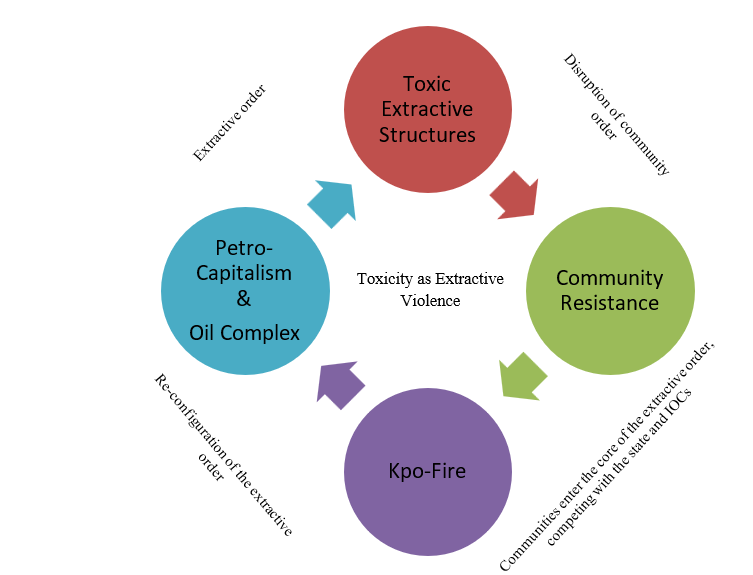
Figure 1: Kpo-Fire as the localization of toxic extractivism. Source: Infographic produced by the author.
In conceptualizing Kpo-Fire as a localized variant of toxic extractivism, I argue, as depicted in Figure 1, that it (Kpo-Fire) emerges from a mutation of the oil complex. The disruption of pre-existing social and ecological orders repositions communities from all margins to the operational core of extractive systems. Kpo-Fire should therefore be understood not as an external or isolated response, but as an extension and transformation of petro-capitalist structures themselves.
Based on ethnographic data collected between September 2023 and August 2024 from Bille, Igbomotoru, and Burutu communities across Rivers, Bayelsa, and Delta states of the Niger Delta, this section unpacks the phenomenon of Kpo-Fire. Oral histories were collected through key informant interviews (KIIs) and focus group discussions (FGDs) with community leaders, chiefs, youths, women, farmers, fishers, and Kpo-Fire artisanal refiners. In addition, participant observation further traced environmental transformations in these localities, providing visual evidence to support interlocutors’ accounts. I begin this section by outlining the nature, scale, and enablers of Kpo-Fire, before discussing how the practice reproduces environmental toxicity as a localized form of toxic extractivism.
Kpo-Fire is common in towns, villages, and cities in the Niger Delta, providing livelihoods for hundreds of thousands of people. It gained prominence in the early 2000s in the context of youth insurgency for resource control (Naanen, 2019). Initially, small in scale and oriented toward domestic consumption, with proceeds often linked to insurgent financing, the practice has expanded significantly in response to persistent energy shortages in Nigeria (Jack & Jack, 2022). Today, thousands of Kpo-Fire artisanal refineries operate across the creeks and forests of the region. Their products circulate widely within local markets, extend to other parts of the country, and reach neighboring countries such Benin, Cameroon, Chad, Niger, and Togo (Zakariyya et al., 2021; Ibekwe et al., 2020). This expansion reflects a broader logic of production for increasingly dispersed markets, mirroring patterns associated with the mainstream oil industry. During an FGD with artisanal refiners in Igbomotoru, participants described the extent of their business:
The scale of Kpo-Fire business in Igbomotoru community and Southern Ijaw generally is massive. We sell refined products not only to communities in our domain, but to nearby towns like Warri and Yenagoa. We also have buyers from across the country, as well as those from outside Nigeria. For the foreigners, we sell them both refined products and crude oil in barges and vessels on the high seas. (Kpo-Fire artisanal refiners, FGD, Igbomotoru, Bayelsa).
Kpo-Fire relies on crude oil obtained illegally from pipelines and wellheads operated by multinational companies and the Nigerian state. Refining takes place in makeshift sites—commonly referred to as ‘cooking camps’—located in remote mangrove swamps and forests, which limits regulatory oversight. The process is typically labor-intensive and utilizes technologies used in distilling local gin, called kai-kai or ogogoro, from palm wine. Crude oil is heated in metal drums over open flames (called ovens) (see Figure 2), with pipes channeling vapor through water-filled condensers where it cools and separates into petrol/gasoline (PMS), kerosene (DPK), diesel (AGO), and bitumen. Although rudimentary, this process parallels fractional distillation methods used in mainstream oil production.
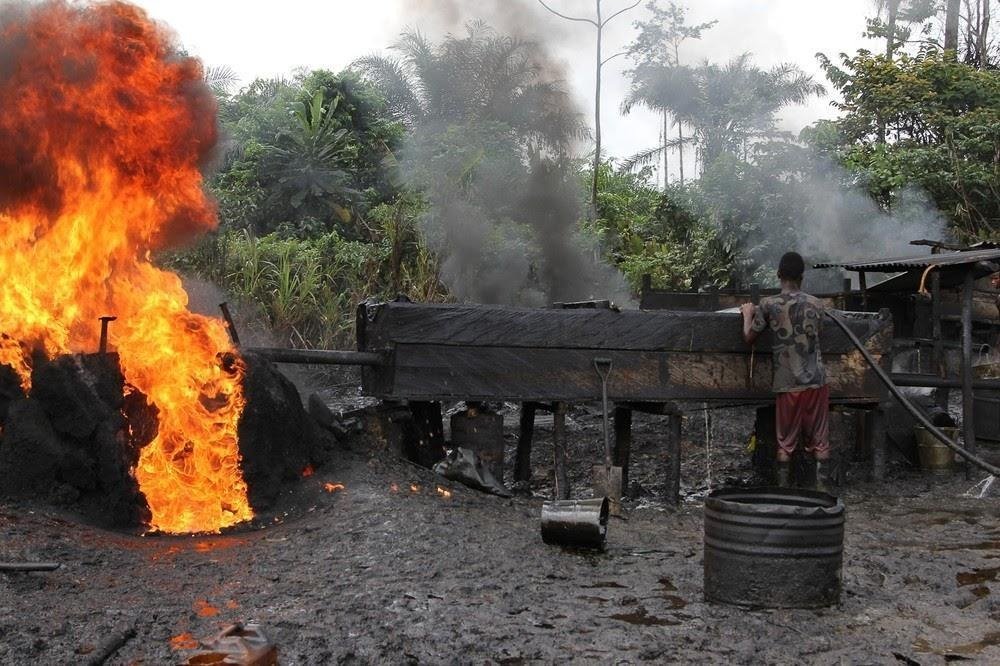
Figure 2: A Kpo-Fire refinery in the Niger Delta. Source: Photo by Tife Owolabi, Bayelsa state, 2012.
Following distillation, refined products are stored in makeshift containers, including Geepee water tanks and plastic drums, and concealed in kegs or leather bags for distribution. Transport typically occurs via creeks using wooden Cotonou boats and speedboats (see Figure 3). These products are sold at lower prices in local markets or passed to intermediaries, such as petrol stations, who blend them with legally sourced fuel and resell at official rates. They also circulate through informal networks, where individuals retail them in small quantities, sustaining localized economies.
The proliferation of Kpo-Fire is rooted in long-standing discontent tied to decades of neglect, economic marginalization, and environmental degradation caused by the extractive practices of oil multinationals in the region. These conditions, combined with high youth unemployment and the rising demands for inclusive resource governance, have driven participation in artisanal refining. As my interlocutors in an FGD in Burutu explained:
We are involved in this Kpo-Fire business because we need to survive in this Niger Delta. There are no jobs in our communities and our local fishing and farming activities are no longer lucrative due to massive oil spills caused by oil companies. So, we have suffered enough and need to join the oil business, because the oil is our own and we must benefit from it too.
(Kpo-Fire artisanal refiners, FGD, Burutu, Delta).
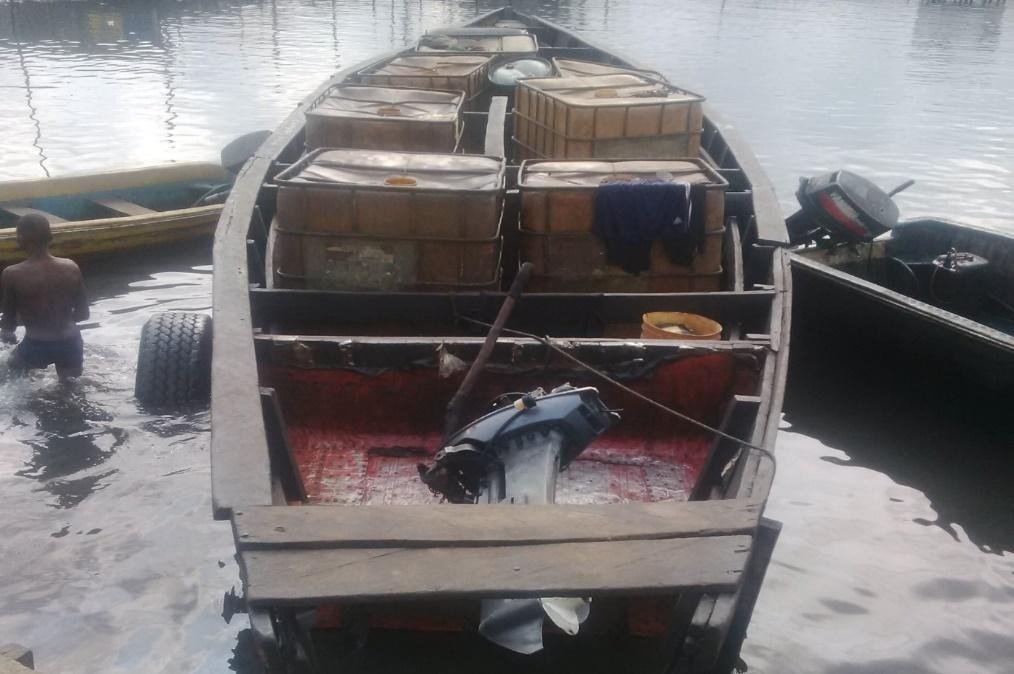
Figure 3: Refined Kpo-Fire produce loaded on a boat while a boy swims in a polluted river
Source: Author, picture taken in Bille Community, Rivers state
Decades of environmental degradation have undermined fishing and farming livelihoods, disrupted community order, and contributed to the emergence of precarious survival strategies such as Kpo-Fire. Adunbi’s (2022) notion of the ‘social death of the environment’ is instructive here, capturing how pollution constrains the environment’s capacity to sustain community life. Participants in the Bille FGD shared similar views, implicating international oil companies in producing toxicity, framing Kpo-Fire as a form of reclamation:
This oil belongs to us. Shell and the government have been drilling our oil; there is no single benefit to our community, instead, they pollute the environment. We are taking back what rightfully belongs to us.
(Kpo-Fire artisanal refiners, FGD, Bille, Rivers).
This perspective aligns with Liboiron, Tironi, & Calvillo’s (2018) argument that toxicity is structurally produced and generative of resistance. Kpo-Fire can thus be understood as part of a moral economy oriented toward redistributive justice, enabling communities to access resources from which they have been historically excluded. It constitutes a form of contestation over extractive rights (Adunbi, 2017) and reflects local agency within a global capitalist economy (Adunbi, 2020). At the same time, participation in Kpo-Fire is driven by the need to secure alternative livelihoods under conditions of environmental decline, corporate neglect, and socio-economic marginalization (Kabari, Pegg, & Oladejo, 2024; Ugor, 2013). The practice, therefore, embodies the complex and contradictory dynamics of informal responses to oil extraction in the Niger Delta (Jack, Pratten, & Zibima, nd).
While Kpo-Fire provides economic benefits for communities and represents a form of reclaiming access to oil resources, it simultaneously reproduces the toxic conditions these communities seek to resist. This contradiction situates Kpo-Fire not outside or in opposition to petro-capitalism, but firmly within it. It functions as a localized expression of the same extractive logic of accumulation by dispossession (Harvey, 2003; Watts, 2006), generating new forms of toxicity (Jack, 2025a). The environmental consequences of Kpo-Fire are severe. The refining process releases toxic fumes containing polycyclic aromatic hydrocarbons (PAHs) and particulate matter (PM) into the atmosphere, contributing to pervasive soot pollution. The rudimentary nature of these practices is reflected in the term ‘Kpo-Fire’, coined by artisanal refiners to describe the popping sound (‘kpo’) produced during crude oil processing and the constant risk of explosions. The name itself signals the crude and precarious character of the extractive activity.
Toxicity, however, extends beyond the refining process. Waste products, including sludge and other toxic residues, are routinely discharged into adjoining creeks and rivers, intensifying water contamination and mangrove destruction. Oil spills linked to pipeline vandalism and crude oil theft further degrade waterways (Asimiea & Omokua, 2013; Obenade & Amangabara, 2014; Raimi, 2023). Landscapes where Kpo-Fire operates are marked by hydrocarbon pollution and soot deposition (see Figure 2), while distribution practices (see Figure 3) introduce additional spillages. As a result, communities in proximity to these sites face sustained exposure to toxicity and significant health risks. Soot pollution arising from Kpo-Fire has worsened air quality in parts of the Niger Delta (Jack & Zibima, 2022), contributing to respiratory illnesses, skin conditions, sensory irritation, and congenital disabilities (Richard et al., 2023; Ephraim-Emmanuel, 2023; Jack & Zibima, 2020).
These dynamics were evident during my fieldwork. On approaching the communities by speedboat, dense smoke signaled ongoing refining activities. In Bille and Igbomotoru, rivers and forests were devastated by hydrocarbon pollution, with black sludge coating waterways and mangroves. Dead fish and other aquatic life forms floated along the surface of rivers, and the persistent stench of burning crude oil caused nasal congestion. My interlocutors generally agreed that Kpo-Fire reproduces environmental toxicity in oil communities. A woman leader in Bille, highlighting the negative effects of Kpo-Fire, said:
This Kpo-Fire business has helped our community; young men and women are now employed and are making money for themselves. Despite this, the problems accompanying this business are too much. It has destroyed our rivers, mangrove forests, and polluted our air. Even we humans are dying too. Many people are infected with different kinds of health conditions, and we all know it is because of Kpo Fire. But what can we do? We all need to survive. (Woman leader, 52 years old, Bille, Rivers state).
The environmental harm associated with Kpo-Fire is neither accidental nor isolated. It is embedded in the very conditions that make the practice viable. This aligns with Liboiron, Tironi, & Calvillo’s (2018) argument that toxicity emerges through industrial and political processes that disrupt existing social and ecological orders. The Niger Delta, a landscape rendered toxic by state and oil companies, provides the incentives for artisanal refiners to further produce pollution. This normalization of pollution among artisanal refiners and the wider community reflects calculated trade-offs in which environmental degradation is weighed against economic gains and survival.
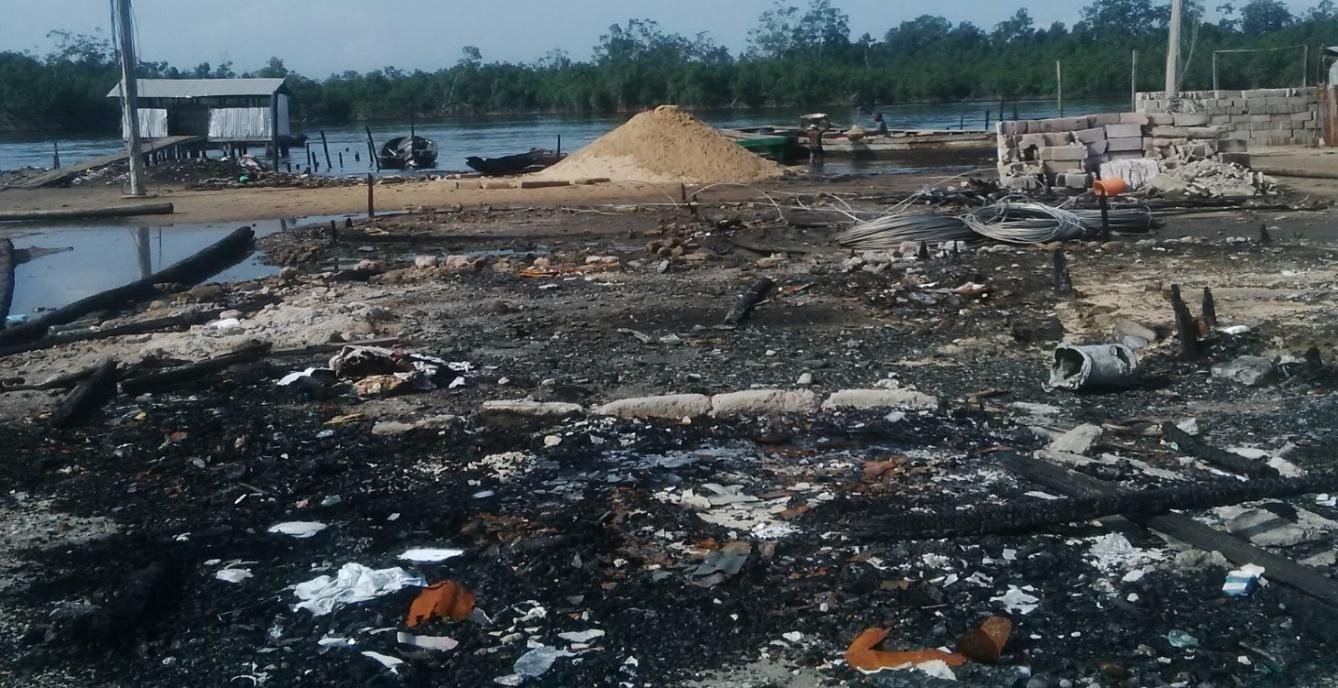
Long-term exposure to pollution arising from Kpo-Fire enables communities to ‘unnotice’ (Lou, 2022). This was evident in the case of a 14-year-old boy swimming in a heavily polluted river beside a boat transporting Kpo-Fire products in Bille (Figure 3). Although he reported skin irritation, eye inflammation, and nasal congestion, lifelong exposure had rendered these conditions routine, thus enabling the conscious act of unnoticing pollution (Lou, 2022; Shapiro, 2015). Such normalization and acts of unnoticing extend to artisanal refiners themselves, who operate in extremely hazardous conditions. Protective measures are rarely observed, and prolonged exposure to toxic fumes (see Figure 2) leads to severe health problems. The rudimentary nature of the Kpo-Fire refining process further increases the risk of explosions and fire hazards, often resulting in serious injuries or even death. Storage practices, moreover, compound these risks. Crude oil and refined products are frequently kept in plastic containers at refining sites, while intermediaries and middlemen store these products in their homes for onward distribution. These arrangements have led to fires, the destruction of houses (Figure 4), severe injuries, and fatalities.
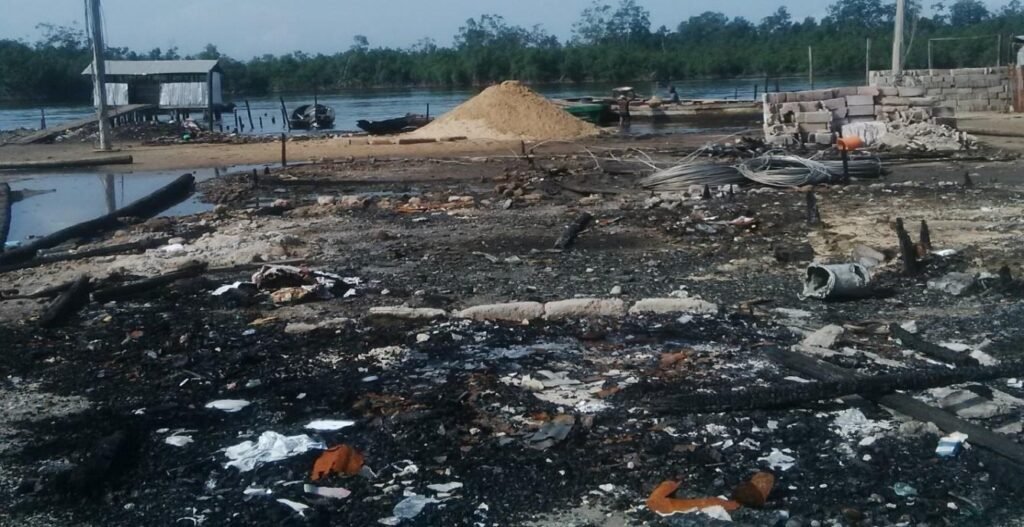
Figure 4: Remnants of burnt houses following an explosion from a Kpo-Fire storehouse
Source: The author, picture taken in Bille, Rivers state.
Describing his experience with fire outbreaks, a Kpo-Fire artisanal refiner lamented:
Our Kpo-Fire business is a very high-risk job. Besides the toxic fumes we are exposed to at the refineries, oftentimes explosions occur while cooking oil. This has led to the death of so many people in active service. I have lost friends personally to Kpo-Fire, some who are lucky to be alive have burns all over their bodies. Although I have been lucky that I am alive, I have also paid my own price. You see that place over there (pointing at the scene of Photo 3), that used to be my house. I had a store in my house where I kept my products before transporting them to Port Harcourt. But luck ran out one day when my products exploded and razed down my entire house … Despite these setbacks, I know I will bounce back, I will not leave this business, I must make it, I have nothing to fall back to.
(Kpo-Fire artisanal refiner, 44 years, male, Bille, Rivers).
As Davies (2018) notes, toxicity is often framed as ‘invisible’ by those with the privilege to ignore it. For those living and working in such environments, however, environmental harm is immediate and materially present. In the Niger Delta, awareness of these risks does not preclude participation in Kpo-Fire. Rather, existing toxic conditions compel practices that sustain and extend them. Ethnographic evidence reveals that the legacies of petro-capitalist extraction are not only reproduced but also reconfigured through Kpo-Fire. As illustrated in Figure 1, established infrastructures of oil production—oil pipelines, wells, and gas flaring—have historically generated both accumulation and dispossession, accruing profits for IOCs and the state, as well as producing widespread environmental degradation. These conditions have fueled community discontent and resistance, ranging from peaceful protests to violent agitation characterized by militia-style operations, mostly by youths. Over time, such disruptions have enabled a reconfiguration of communities from marginal actors to active participants within extractive systems. The result is a layered extractive landscape in which global and localized forms of toxic production coexist. Thus, Kpo-Fire exemplifies how capitalist extractive logics extend into everyday community life, shaping practices of survival and social organization. As Gago and Mezzadra (2017) argue, extractivism is not confined to large-scale industrial operations, but permeates domains of social reproduction. In the Niger Delta, Kpo-Fire emerges from the internal contradictions of petro-capitalism as an expanded, localized form of toxic extractivism.
This article examined the phenomenon of Kpo-Fire in the Niger Delta as a localization of toxic extractivism. The case foregrounds how the structural violence of petro-capitalism extends beyond environmental destruction into social disruptions that shape everyday life. By exposing the internal contradictions of Nigeria’s petro-capitalist order, Kpo-Fire illustrates how communities once marginalized by formal extraction now generate parallel oil economies. These formations underscore the depth of petro-capitalism’s entanglements with everyday life in the Niger Delta. As communities are re-configured within extractive systems, Kpo-Fire emerges not as an external response but as an extension of petro-capitalist structures that continue to produce environmental toxicity. It demonstrates how petro-capitalism decentralizes extraction and embeds it within the very communities it undermines. In this sense, Kpo-Fire operates as a dark mirror of petro-capitalism, reflecting the diffusion of toxic extractivism beyond large-scale industry into the domain of communal social production. Ultimately, the toxic landscapes of the Niger Delta, as Malvestio (2022) suggests, reveal a lived eco-dystopia of the Anthropocene’s toxic present, signaling that the crisis of petro-capitalism is not a future prospect but an ongoing condition.
I am grateful to Iva Peša and Sara de Wit and the co-editors of this special issue on AnthropoScenes in Africa: lived experiences of planetary transformations for their support while writing this article. I am also grateful to the team of peer reviewers whose critical evaluation of the draft manuscript contributed significantly to the theoretical depth of the article. Many thanks to Professor Raimi Lasisi, who also reviewed the initial draft manuscript and provided insightful feedback. Finally, my profound gratitude to the research participants, whose shared lived experiences with oil extraction and Kpo-Fire in the Niger Delta provided the empirical grounding for this research. This article was funded by the European Union (ERC, AFREXTRACT, project number 101039920). Views and opinions expressed are, however, those of the authors only and do not necessarily reflect those of the European Union or the European Research Council. Neither the European Union nor the granting authority can be held responsible for them.
Abosede, O.B. (2020). Local perspectives on food security in Nigeria’s Niger Delta. The Extractive Industries and Society, 7 (3), 931-939. https://doi.org/10.1016/j.exis.2020.07.011
Adunbi, O. (2022). Enclaves of exception: Special economic zones and extractive practices in Nigeria. Indiana University Press.
Adunbi, O. (2020). Crafting spaces of value: Infrastructure, technologies of extraction and contested oil in Nigeria. The Cambridge Journal of Anthropology. 38 (2), 38–52. https://doi.org/10.3167/cja.2020.380204
Adunbi, O. (2017). “We own this oil”: Artisanal refineries, extractive industries, and the politics of oil in Nigeria. In Leonard, L., & Grovogui, S.N. (Eds.), Governance in the extractive industries: Power, cultural politics and regulation (1st ed). Routledge. https://doi.org/10.4324/9781315226576
Amadi, L., Imoh, I. & Obomanu, E.F. (2016). Oil: Niger Delta and the making of militia capitalists: A theoretical assessment. International Journal of Social Sciences and Humanities Research, 4 (1), 172–184. https://www.researchpublish.com/papers/oil-niger-delta-and-the-making-of-militia-capitalists-a-theoretical-assessment
Asimiea, A., & Omokhua, G. (2013). Environmental impact of illegal refineries on vegetation of the Niger Delta, Nigeria. Journal of Agriculture and Social Research, 13 (2), 121 – 126. ajol.info/index.php/jasr/article/download/112571/102322
Davies, T. (2022). Slow violence and toxic geographies: ‘out of sight’ to whom? EPC: Politics and Space. 40 (2), 409 – 427. https://doi.org/10.1177/23996544198410
Ebiede, T.M. (2011). Conflict drivers: Environmental degradation and corruption in the Niger Delta region. African Conflict & Peacebuilding Review, 1, 139-151. https://doi.org/10.2979/africonfpeacrevi.1.1.139
Ebiede, T. M., & Nyiayaana, K. (2022). How violence shapes contentious traditional leadership in Nigeria’s Niger Delta. Violence: An International Journal, 3 (1), 65-84. https://doi.org/10.1177/26330024221090542
Ephraim-Emmanuel, B. C., Enembe, O., & Ordinioha, B. (2023). Respiratory health effects of pollution due to artisanal crude-oil refining in Bayelsa, Nigeria. Annals of Global Health, 89 (1), 74, 1-11. https://doi.org/10.5334/aogh.4247
Fyneface, D.F (2017). Economics of illegal oil refining in Rivers State. Unpublished research report submitted to the Stakeholder Democracy Network (SDN).
Gago, V., & Mezzadra, S. (2017). A critique of the extractive operations of capital: Toward an expanded concept of extractivism. Rethinking Marxism. 29 (4), 574-591. https://doi.org/10.1080/08935696.2017.1417087
Galtung, J. (1969). Violence, peace, and peace research. Journal of Peace Research. 6 (3), 167–191. https://doi.org/10.1177/002234336900600301
Harvey, D. (2003). The new imperialism. Oxford University Press. https://doi.org/10.1093/oso/9780199264315.001.0001
Ibekwe, N., Ukong, C., et al. (2020, February 1). Special report: Despite restriction on fuel supply to border communities, smuggling, extortion still rife. Premium Times. Retrieved June 20, 2022, from https://www.premiumtimesng.com/news/headlines/375363-special-report-despite-restriction-on-fuel-supply-to-border-communities-smuggling-extortion-still-rife.html
Ikelegbe, A., (2005). The economy of conflicts in the oil-rich Niger Delta region of Nigeria. Nordic Journal of African Studies, 14 (2), 208–234. https://doi.org/10.53228/njas.v14i2.276
Ikhumetse, A.A., Abioye, O.P., Ijah, U.J., & Bankole, M.T. (2022). A critical review of oil spills in the Niger Delta aquatic environment: Causes, impacts, and bioremediation assessment. Environmental Monitoring and Assessment 194 (816), . https://doi.org/10.1007/s10661-022-10424-x
Jack, J. T. (2025a). A cultural perspective on the cycle of violent conflicts in the Niger Delta region of Nigeria. The Economics of Peace and Security Journal, 20(1), 55–70. https://doi.org/10.15355/epsj.20.1.55
Jack, J. T. (2025b). (Mal)adaptation to environmental pollution: Oil and the ‘livelihood dysfunction trap’ in Nigeria’s Niger Delta. Africa, 95, 158–182. https://doi.org/10.1017/S0001972025101083
Jack, Jackson T.C.B., & Anele, K.A. (2018). Livelihood diversification and income levels amongst rural households in oil-impacted communities of the Niger Delta. Port Harcourt Journal of Social Sciences, 8 (1), 314-332. https://www.researchgate.net/publication/330226244
Jack, Jackson T.C.B., & Jack, Better (2022). Nigeria’s energy crisis and the sustainability question. Social and Health Sciences, 20 (1 & 2), 1 – 19. https://doi.org/10.25159/2957-3645/11449
Jack, J.T., Pratten, D. & Zibima, T. (2023). Living with environmental toxicity: Kpo Fire and the interconnected narratives on oil extraction in Nigeria’s Niger Delta. Paper presented at the ECAS Conference, University of Cologne, 2 June, 2023.
Jack, Jackson T.C.B., & Zibima, T. (2020). Soot pollution in Rivers State: An analysis of environmental public health impacts and coping strategies. Social Science Review, 1 (1), 193–200. https:www.researchgate.net/publication/349608845
Kabari, S., Pegg, S., & Oladejo, A.O. (2024). Mining from the pipeline: Artisanal oil refining as consequences of failed CSR policies in the Niger Delta. Journal of Environmental Management, 352, 120038. https://doi.org/10.1016/j.jenvman.2024.120038
KPMG (2019). Nigerian oil and gas update. Retrieved June 20, 2022, from Nigerian-Oil-and-Gas-Update – KPMG Nigeria.
Liboiron, M., Tironi, M., & Calvillo, N. (2018). Toxic politics: Acting in a permanently polluted world. Social Studies of Science, 48 (3), 331 – 349. https://doi.org/10.1177/0306312718783087
Maiangwa, B., & Agbiboa, D. E. (2013). Oil multinational corporations, environmental irresponsibility and turbulent peace in the Niger Delta. Africa Spectrum, 48(2), 71-83. https://doi.org/10.1177/00020397130480020
Mai-Bornu, Z.L. (2024). Green criminology in the Niger Delta region of Nigeria: Why African women’s voices matter. International Journal for Crime, Justice and Social Democracy, 13 (1), 41-50. https://doi.org/10.5204/ijcjsd.3248
Malvestio, M. (2022). Theorizing eco-dystopia: Science fiction, the Anthropocene, and the limits of catastrophic imagery. European Journal of Creative Practices in Cities and Landscapes, 5 (1), 24-38. https://doi.org/10.6092/issn.2612-0496/14532
Mwanza, R., Dube, F., & Addaney, M. (2026). Defining ecocide: A framework for centering the African experience. The International J. of Human Rights. https://doi.org/10.1080/13642987.2026.2642183
Naanen, B. (2019). When extractive governance fails: Oil theft as resistance in Nigeria. The Extractive Industries and Society, 6, 702 – 710. https://doi.org/10.1016/j.exis.2019.03.019
Nixon R (2011). Slow violence and the environmentalism of the poor. Harvard University Press.
Nnadi, V.E., Udokporo, E.L., & Okolo, O.J. (2022). Petroleum production activities and depletion of biodiversity: A case of oil spillage in the Niger Delta. In Madu, C.N. (eds), Handbook of environmentally conscious manufacturing (pp 95–111). Springer.
Numbere, A.O., Gbarakoro, T.N., & Babatunde, B.B. (2023). Environmental degradation in the Niger Delta ecosystem: The role of anthropogenic pollution. In Izah, S.C., Ogwu, M.C. (eds) Sustainable utilization and conservation of Africa’s biological resources and environment. Sustainable Development and Biodiversity, (Vol 32. pp. 411-439). Springer. https://doi.org/10.1007/978-981-19-6974-4_15
Nygren, A., Kröger, M., & Gills, B. (2022). Global extractivisms and transformative alternatives. The Journal of Peasant Studies, 49 (4), 734-759. https://doi.org/10.1080/03066150.2022.2069495
Obenade, M. & Amangabara, G.T (2014). Perspective: The environmental implications of oil theft and artisanal refining in the Niger Delta region. Asian Review of Environmental and Earth Sciences, 1(2), 25-29. https://www.asianonlinejournals.com/index.php/AREES/article/view/674
Obi, C.I. (2010). Oil extraction, dispossession, resistance, and conflict in Nigeria’s oil-rich Niger Delta. Canadian Journal of Development Studies, 30(1–2), 219–36. https://doi.org/10.1080/02255189.2010.9669289
Olusola J.O., Olabode A.O., & Adebukola E.O. (2018). Oil spillage in Nigeria’s upstream petroleum sector: Beyond the legal frameworks. International Journal of Energy Economics and Policy, 8 (1), 220-226. https://ideas.repec.org/a/eco/journ2/2018-01-27.html
Onakpohor, A., Fakinle, B.S., Sonibare, J.A., Oke, M.A., & Akeredolu, F.A. (2020). Investigation of air emissions from artisanal petroleum refineries in the Niger-Delta Nigeria, Heliyon, 6 (11). https://doi.org/10.1016/j.heliyon.2020.e05608
Raimi, L. (2023). Illegal oil bunkering in Nigeria’s Niger Delta region: Prevalence and consequences. International Journal of Advanced Research in Global Politics, Governance and Management, 4(1), 203-221. https://doi.org/10.48028/iiprds/ijargpgm.v4.i1.13
Richard, G., Izah, S.C., Morufu, O.R., & Austin-asomeji, I. (2023). Public and environmental health implications of artisanal petroleum refining and risk reduction strategies in the Niger Delta region of Nigeria. Bio-Research, 21 (1), 1896-1910 https://doi.org/10.4314/br.v21i1.12
Shapiro, N. (2015). Attuning to the chemosphere: Domestic formaldehyde, bodily reasoning, and the chemical sublime. Cultural Anthropology, 30 (3), 368–393. https://doi.org/10.14506/ca30.3.02
Ugor, P.U (2013). Survival strategies and citizenship claims: Youth and underground oil economy in post-amnesty Niger Delta. Africa, 83, 270 – 292 https://doi.org/10.1017/S0001972013000041
Watts, M. (2013). Petro-insurgency or criminal syndicate? Conflict and violence in the Niger Delta. In Rita Abrahamsen (ed), Conflict and security in Africa (pp. 41 – 64). Boydell & Brewer.
Watts, M. (2006). Empire of oil: Capitalist dispossession and the scramble for Africa. Monthly Review, 58 (4), 1-17. https://doi.org/10.14452/MR-058-04-2006-08_1
Watts, M. (2004). Antinomies of community: Some thoughts on geography, resources and empire. Transactions of the Institute of British Geographers, 29 (2), 195–216. https://doi.org/10.1111/j.0020-2754.2004.00125.x
Zakariyya, A., & Simon, E.S., (2021, April 4). How smuggled petrol from Nigeria floods Niger, Cameroon, Benin and Togo. Daily Trust. Retrieved June 20, 2022, from https://dailytrust.com/
25 / August / 2026
By: Ngaka Mosiane, Phathutshedzo Eugene Ratshiedana, and Wendy Tsoriyo
25 / August / 2026
By: Jackson Tamunosaki Jack
25 / August / 2026
By: Tholithemba Lorenzo Ndaba, Madoda Mkhobeni, and William Matlala
14 / August / 2026
By: Timothy Elikem Harvor and Alena Thiel
14 / August / 2026
By: Matthias C. J. De Groof