

August / 25 / 2026
By: Tholithemba Lorenzo Ndaba, Madoda Mkhobeni, and William Matlala
This article explores “Township Environmentalism” to understand environmentalism’s history and development in South African townships, focusing on Black residents’ experiences in Johannesburg’s mine dump communities. Using oral history interviews and photographs, the research uncovers diverse environmental practices developed by Diepkloof residents to combat mine dump dust and other environmental challenges. Informed by deep historical injustices, township environmentalism centers on acts of environmental stewardship and daily survival as forms of resistance against toxic legacies of pollution. Challenging narratives of environmentalism that focus solely on formal protest, this article foregrounds everyday forms of living with toxicity. Paying attention to grassroots practices, particularly by women, reveals the proactive, innovative, and resilient ways of dealing with pollution in Diepkloof, Johannesburg.
Keywords: Township environmentalism, toxicity, mining, photography, oral history.
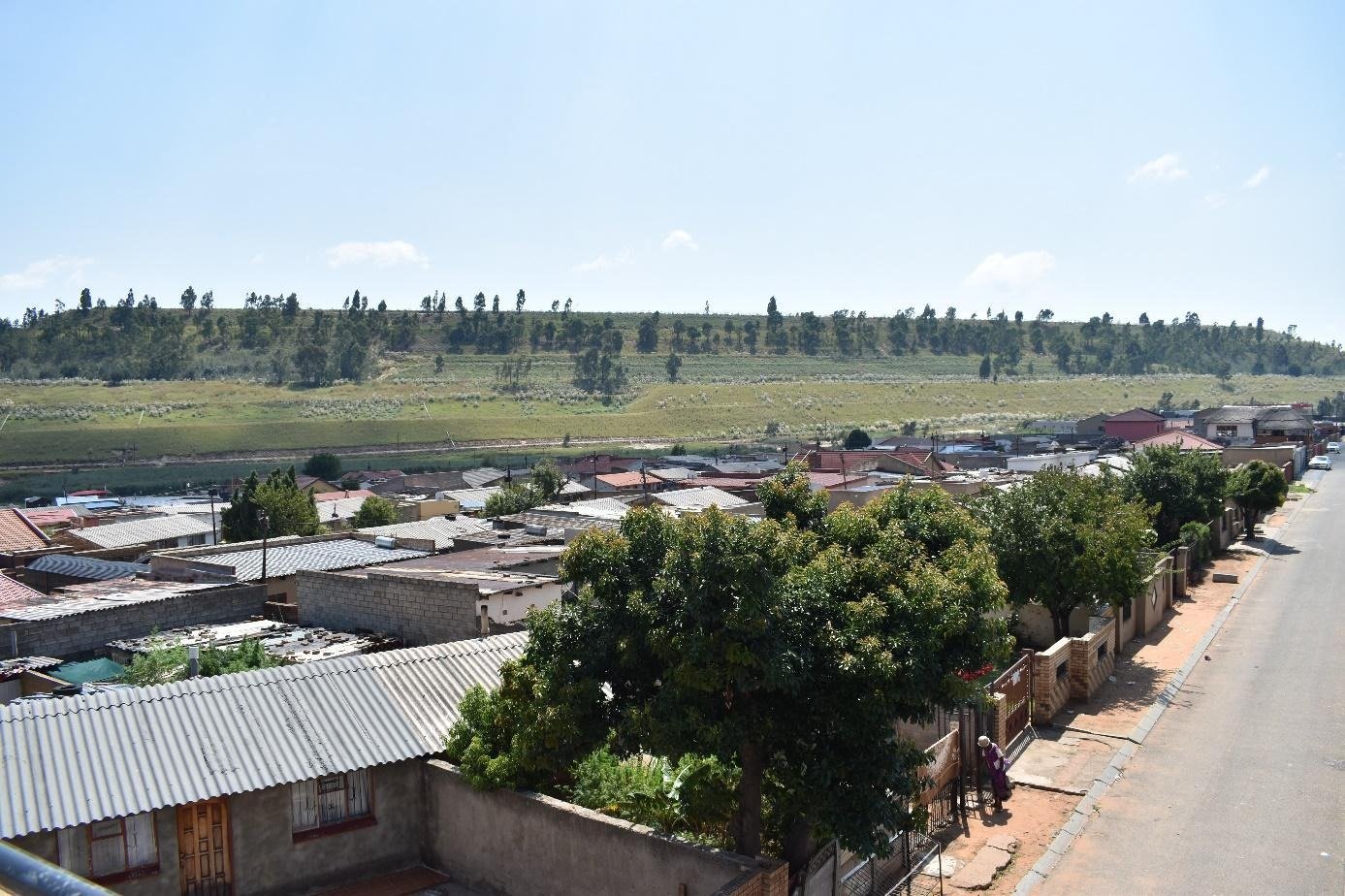
Figure 1: Layers of toxicity: mine dump towering over homes in Ghost Town, Diepkloof. Houses are covered with repurposed toxic asbestos-containing sheets. Photograph by William Matlala, 2024
Land dispossession in South Africa is a process which has produced consequences that extend far beyond land loss. For many Black South Africans, this is not a distant nightmare but a lived reality. The fight for land in South Africa has never been merely about territory—it is a fight for identity, survival, and environmental justice (Cock, 2004; Feinberg, 1993).
The legacy of land dispossession in South Africa is not solely a historical injustice; it continues to shape the environmental and social landscapes of the present. The Native Land Act of 1913 and the Group Areas Act of 1950 did not simply cause physical displacements; they entrenched a legacy of environmental degradation and spatial inequality that persists today (Clark & Worger, 2016; Feinberg, 1993). Understanding this history is crucial to comprehending the broader struggle for environmental justice among Black South Africans, who have been forced to adapt to some of the most hostile living conditions imaginable.
This article explores this complex history, arguing that the struggle for land is intrinsically linked to the struggle for environmental justice in South Africa (Ramutsindela & Shabangu, 2018). To examine this relationship, the article develops the concept of Township Environmentalism. Township Environmentalism emerges from the history of dispossession, apartheid spatial policy, and environmental marginalization that have defined black township existence. The concept highlights how township residents relate to environmental problems, both collectively and individually.
By examining Diepkloof as a case study, this article shows how residents, notably women, have transformed daily survival into acts of environmental activism. Using the theoretical framework of ‘everyday forms of resistance’ proposed by James Scott, the paper discusses how environmental activism often results from everyday strategies of adapting, caring for, and surviving within communities that lack political and economic influence (Scott, 1985). Herein lies the challenge to traditional notions of environmental activism, which focus more on movement mobilization, policy intervention, and public demonstrations. Drawing on Goffman’s concept of dramaturgy, this article highlights the importance of grassroots forms of environmentalism (Goffman, 1959). Front-stage acts, such as community clean-ups, are visible mainly within the township and sometimes in a wider South African context. Backstage practices, however, are more private—such as wiping dust from household surfaces or drinking milk after inhaling dust—yet remain equally crucial, despite being largely invisible.
This article contends that environmental activities in areas such as Diepkloof are not merely reactions to environmental issues but can—and arguably should—be seen as acts of resistance, and that these forms of environmental activity offer an important means for people to cope with environmental degradation. By bringing these grassroots forms of environmentalism to the forefront, this article enriches global environmental discourse by centering voices and experiences that have too often been overlooked.
Diepkloof was established in 1959, originally designed to house Black families, who were forcibly removed from Sophiatown and Alexandra. The township illustrates the profound and often overlooked environmental and social impacts of apartheid-era spatial planning (see, City of Johannesburg, n.d.; South African History Online, n.d.). While Diepkloof was intended to accommodate those displaced by the regime’s aggressive segregation policies, the relocation process was anything but smooth. It intensified the struggles of these communities by placing them in an area that was not only underdeveloped but also environmentally hazardous (Beavon, 2004; Bonner, & Nieftagodien, 2008; Maylam, 1990). The impact of apartheid spatial planning was not felt in just the actual process of relocation but also in the environment into which those people were moved and which would define their lives for many years to come.
Evidence from Diepkloof residents, such as Bab’ Ben and Mam Comrade, vividly captures these challenges. Bab’ Ben recalls:
My parents were moved to Diepkloof just like many others. We were forcibly relocated from Alexandra to Diepkloof—do you remember the forced removals? The apartheid regime systematically displaced our people from the towns to Soweto. They didn’t want us living close to them. (Interview with Bab’ Ben, February 2023).
This statement underscores the apartheid regime’s deliberate efforts to isolate Black communities from urban centers (Posel, 1991). As evidenced from Bab’Ben’s narration, apartheid’s spatial planning involved more than just the movement of people from one place to another; the relocation process involved exposing people to certain environmental risks. In Diepkloof, relocation came with exposure to mine dumps.
The impact of the environmental effects of displacement becomes apparent in Mam Comrade’s description of how the asthmatic condition of her mother deteriorated because of the unrehabilitated mine dumps that surround Diepkloof. The following extracts indicate how the effects of the environment were woven into the lived experience of disease:
My mother said that the mine dumps are not safe, particularly for people with asthma. She pointed out that in our town, Alex[andra], we didn’t have many people with asthma, but in other areas, like Diepkloof, there were a lot of asthmatic individuals. She observed that something was wrong with those mine dumps, which is why efforts were being made to plant grass and cover them to improve safety. (Interview with Mam Comrade, April 2023).
The testimony of Mam Comrade reveals that relocation was linked to environmental exposure; hence, environmental injustice not only affected people but the environment as well. Community members’ memories of respiratory diseases also highlight the implications of living in such an environment (Zupunski et al., 2023). Scott (1985) suggests that where communities lack adequate political power, responses to such situations occur through practice rather than institutions. As is common in Diepkloof, the issue has typically been addressed through mitigation rather than eradication.
Confronted with such environmental threats, residents devised ways to cope with situations beyond their control. This constitutes a significant component of Township Environmentalism, illustrating how environmental activism is created through daily forms of care and adaptation. For instance, Mam Thembi’s remark:
Closing our homes offers little protection; the dust permeates every corner… To mitigate its effects [after inhaling it], we resort to drinking milk. (Interview with Mam Thembi, April 2023)
The practice of drinking milk, believed by residents to soothe the throat and alleviate the effects of dust inhalation, reflects local forms of environmental knowledge developed in response to persistent exposure to mine dust. Some scientists argue that certain dairy products may provide symptomatic relief for respiratory irritation, as residents alluded to (Sveiven et al., 2021; Perdijk, et al., 2021).
As these activities took place largely in private or domestic environments, they went unnoticed in typical narratives about environmental activism. Here, Goffman’s idea of frontstage and back-stage performance may be applied. In contrast to other activities, such as organizing demonstrations or campaigns in the public sphere, coping practices and attempts to minimize one’s exposure to pollution were mostly carried out privately, at home. Nevertheless, these backstage actions played a critical role in citizens’ environmental tactics.
These cases illustrate a key characteristic of Township Environmentalism: environmental action can emerge from caring and adaptive practices aimed at reducing environmental harm caused by historically created imbalances.
Township Environmentalism is a multifaceted theoretical framework that seeks to redefine our understanding of how Black communities in Johannesburg’s townships—particularly, Diepkloof—engage with environmental issues. Township Environmentalism considers the different ways people living in townships respond to environmental degradation, rather than limiting environmentalism to formal institutions, policy actions, and protest campaigns. This approach considers not only visible forms of environmental activism but also more ordinary forms of self-care and survival, situating them within historical contexts of dispossession and environmental injustice.
Historical examples, such as the resistance to forced relocations to the townships in the late 1950s—particularly in Diepkloof in 1959—and the broader struggle against land dispossession led by the ANC, provide tangible evidence that environmental issues (environmental degradation, demands for land and freedom) have long been a central concern within these communities (Kgatla, 2013). The Sharpeville massacre of 1960, often understood primarily as a political event, can also be interpreted as a response to environmental exclusion and the intertwined struggles for land and justice (Hollister, 2023). These examples show that environmental issues were part of broader conflicts involving land, health, and belonging. In South Africa, for example, according to Steyn & Wessels (2000), the birth of “Black environmentalism” occurred in the 1980s through the formation of environmental movements and the politicization of environmental issues. Although such an analysis is significant, it can ignore the history of environmental involvement in people’s day-to-day lives. Hence, Township Environmentalism contextualizes current environmental activities in the histories of dispossession and environmental marginalization.
James Scott’s idea of resistance in everyday practices provides a valuable entry point to analyze the phenomenon of Township Environmentalism (Scott, 1985). According to Scott, marginalized social groups tend not only to engage in direct resistance but also to develop specific everyday practices to cope with the effects of unequal power relations. Environmentalism in township areas is one such practice because individuals affected by environmental threats are rarely able to overcome or change them. Thus, they engage in various everyday activities that allow them to manage, minimize, and negotiate the environmental problems. Goffman’s division of practices into those occurring on the front stage and backstage provides further insight into how Township Environmentalism operates (Goffman, 1959). Front-stage practices are public environmental initiatives, such as greening programs, cleanups, and other activities aimed at transforming contaminated territories. Those occurring backstage include household chores and practices aimed at mitigating environmental effects on individuals, such as minimizing exposure to pollution.
Township Environmentalism’s importance, therefore, does not lie in favoring either of these two environmentalisms, but in the understanding of their connection. Public environmental activism is, in many cases, sustained by unseen acts of care, maintenance, and knowledge that are performed inside homes and neighborhoods.
Within the concept of Township Environmentalism, Black environmentalism provides a theoretical foundation for understanding how environmental practices are shaped by experiences of marginalization (Bullard, 2000; Cock, 2007; Finney, 2014; McDonald, 2002). In Diepkloof, for example, domestic practices such as managing household dust have evolved into strategic responses to environmental challenges. These backstage practices are essential in mitigating the effects of environmental degradation and are closely connected to broader environmental strategies (see Dankelman & Davidson, 1988; Horn, 2000). Cock (2004), Nixon (2011), and Carruthers (2014) each argue that, within marginalized communities, environmental activism frequently manifests through these everyday activities that address immediate and localized challenges. In Diepkloof, women’s management of household dust is not merely a routine domestic task; it constitutes a strategic response to the pervasive environmental problems caused by nearby mine dumps. Township Environmentalism thus provides a new perspective on environmental politics, focusing specifically on modes of environmental action that are often neglected in dominant analyses of environmentalism. This framework brings into focus the significance of environmental stewardship, adaptation, maintenance, and know-how as strategies of response to environmental damage.
Township Environmentalism speaks to the diverse and localized environmental strategies communities employ in South Africa. Jacklyn Cock’s assertion that South Africa’s environmental movement lacks a unified collective actor or master frame further supports the fragmented yet interconnected nature of environmental activism in the country (Cock, 2004). Photography emerges as particularly useful, since the environmental behaviors noted in Township Environmentalism typically leave no visible traces in archives. This is evident in the photographic documentation produced for this research, which captures the varied environmental strategies of township residents (Newberry, 2023)[1]. The photographic documentation also provides extended encounters with Diepkloof, encouraging reflection on how these fragmented strategies connect to broader environmental concerns within the township. Building on this, Azoulay (2010) conceptualizes photography as an event rather than a static representation, emphasizing the relational nature of the photographic encounter—one that implicates the photographer, subject, and viewer in an ongoing dialogue shaped by power, memory, and interpretation.
Finally, it is important to consider how environmental degradation itself can function, when documented, as an archival record that indexically signifies the social and environmental injustices experienced by Black communities in Johannesburg’s townships. Environmental elements such as toxic mine dumps, polluted river streams, and asbestos roofs are critical indicators of historical and ongoing injustices (van Eeden et al., 2009; Oelofse, 2008 & Godfrey; Phillips et al., 2016). These sites are not merely remnants of industrial processes but should also be understood as living archives that encapsulate environmental and social impacts for surrounding communities (Guabli, 2022). Viewing these toxic sites as components of an environmental archive offers a theoretical framework for understanding the connections between environmental degradation, systemic inequality, and public health. This analysis underscores the importance of recognizing these environmental elements as part of a broader narrative of environmental and social injustice (Sauer, 1952).
The concept of Township Environmentalism provides a lens for examining how environmental mobilization takes shape through the lived experiences of those who must live with the aftermath of dispossession, extraction, and environmental discrimination. Through an examination of practices related to care, adaptability, environmental knowledges, and environmental activism, the concept exposes aspects of environmental politics that often go unseen. The photographs presented here serve as both evidence and layered texts documenting the environmental challenges these communities face.
Now that Township Environmentalism has been presented as an analytical lens for understanding environmental activism in marginalized communities, it is important to consider how it is expressed in practice in Diepkloof. In this section, four interrelated aspects of this phenomenon, which will be illustrated with photographic data and interviews with residents, will be highlighted: household-level environmental management; uneven abilities to address environmental vulnerability; placemaking; and ongoing cultural and spiritual production in degraded environments.
Household Environmental Management

Figure 2: Diepkloof resident dusting her living room. Photograph by author, 2024.
Rahman (2010) argues that women forge a profound bond with their environment because they – like nature – have been marginalised by patriarchal structures. In Diepkloof, the pervasive dust from the mine dumps profoundly affects daily life and health. Women in the community respond with remarkable ingenuity and dedication, meticulously wiping dust from surfaces as part of a broader daily routine that includes rigorous cleaning to protect against contaminants. Because of the continuous presence of mine-dump dust, the issue of environmental management is not limited to the activities of state agencies or environmental organisations. This has led to an offloading of the burden of mitigation from such official structures to the household level, where women do the work of making polluted spaces livable through environmental management practices such as dusting, cleaning, and watering.
Gog’ Esther, stated that: “Water is [a] useful [resource in dealing with dust]; we use it to sprinkle the ground to control dust.” (Interview with Gog’ Esther, March 2024). In the narrative of Gog’s Esther, one notes an essential characteristic of Township Environmentalism, whereby inhabitants have little ability to address environmental hazards such as mine dumps, yet they keep devising ways to mitigate their impacts. This reflects Scott’s view (1985) that disadvantaged communities usually negotiate inequalities in their daily practices.
Whereas households engage in practices that expose them to fewer environmental threats, individuals within the community cannot equally safeguard themselves from the hazards.


Figures 3 and 4: Ceilings in Diepkloof residents’ houses. Photograph by William Matalala
The two images above, taken in different houses in Diepkloof, contrast the varied responses to asbestos exposure – a form of toxicity that adds to mine dump dust. The differing conditions depicted in the images reflect variations in resource availability, adaptive capacity, and awareness of asbestos-related health risks. Together, they underscore the community’s multifaceted approach to managing environmental hazards and highlight the broader socio-economic context that influences these responses (Kekana et al., 2023).
Figure 4 depicts a house with a ceiling installed beneath an asbestos roof. This suggests some awareness of asbestos-related health risks and an attempt to mitigate them, although the ceiling may also have been installed for aesthetic purposes. Nevertheless, the ceiling functions as a barrier that may reduce asbestos exposure, demonstrating a conscious effort to protect household members from environmental hazards.
In contrast, Figure 3 depicts a house without a ceiling, highlighting a lack of resources or capacity to address the same health risks. For example, Itumeleng stated that:
The main issue was that they were expected to maintain the houses and ensure the roofs were painted. The dust would settle on the roofs and get inside the homes. As a result, [few] middle-class families began installing ceilings to keep dust from entering their homes. However, not every household had the means to make these improvements; only a few were able to do so. (Interview with Itumeleng, April 2023)
The differing images highlight the differences in the ability to deal with environmental threats. Whereas some families have the means to provide ceilings that help them avoid exposure to asbestos or dust, other families must rely on their environment, which they cannot change. The images thus highlight how environmental injustice exists not only between different societies but also within them. Township Environmentalism draws attention to the disparities in the abilities to avoid environmental dangers.
Environmental activism does not stop at the household level and includes attempts to reshape the degraded environment.
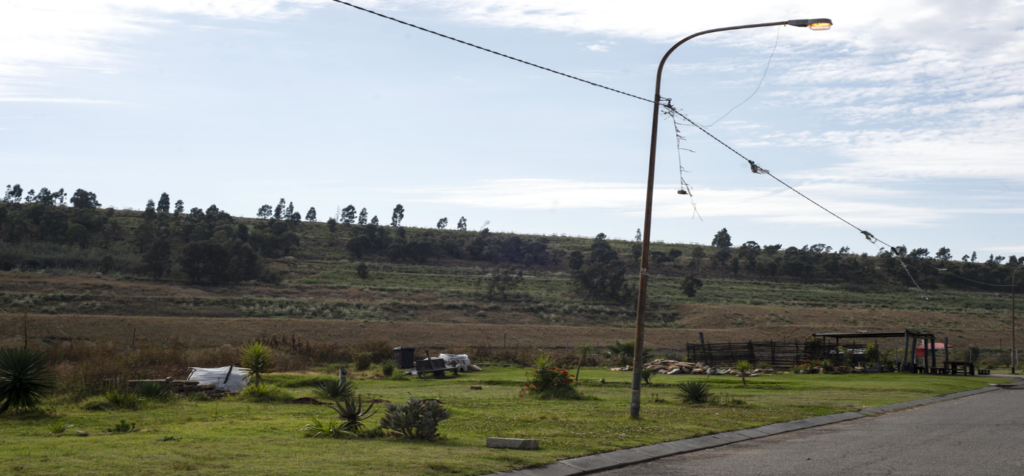
Figure 5: Grounds surrounding a rehabilitated mine dump transformed by community efforts. Photograph by Madoda Mkhobeni. 2023
In Diepkloof, the toxic mine dump has been converted into a community playground and recreational area. Beyond addressing recreational needs, the project symbolically confronts the historical environmental degradation imposed on the community. As Itumeleng explained:
Back then, the area [mine dump and the ground] wasn’t covered with grass or trees. During the windy months of August, white sand would blow through, affecting people’s health. It caused issues like tuberculosis, eye problems, and hearing difficulties. Additionally, the sand rusted the water pipes, creating numerous problems. It was only when the community started raising concerns that they began to introduce vegetation to cover the dumps. (Interview with Itumeleng, April 2023)
The process of rehabilitating the mine dump is therefore much more than an act of improving the environment’s physical condition. Placemaking involves actively reconstructing the meaning and purpose of a previously degraded landscape. Through transforming a place associated with pollution, dirt, and sickness into an area for leisure and interaction, inhabitants actively transform not only its physical but also its symbolic significance.
However, it should be noted that this process was prompted by ongoing concerns among residents about health impacts associated with dust. According to Itumeleng’s narrative, this concern was consistently raised by residents during their interactions. Indeed, placemaking is also a reflection of the daily politics of communities seeking to affect their immediate environments.
However, this is not all there is to Township Environmentalism. This attitude is also seen in people’s continued engagement with polluted environments.
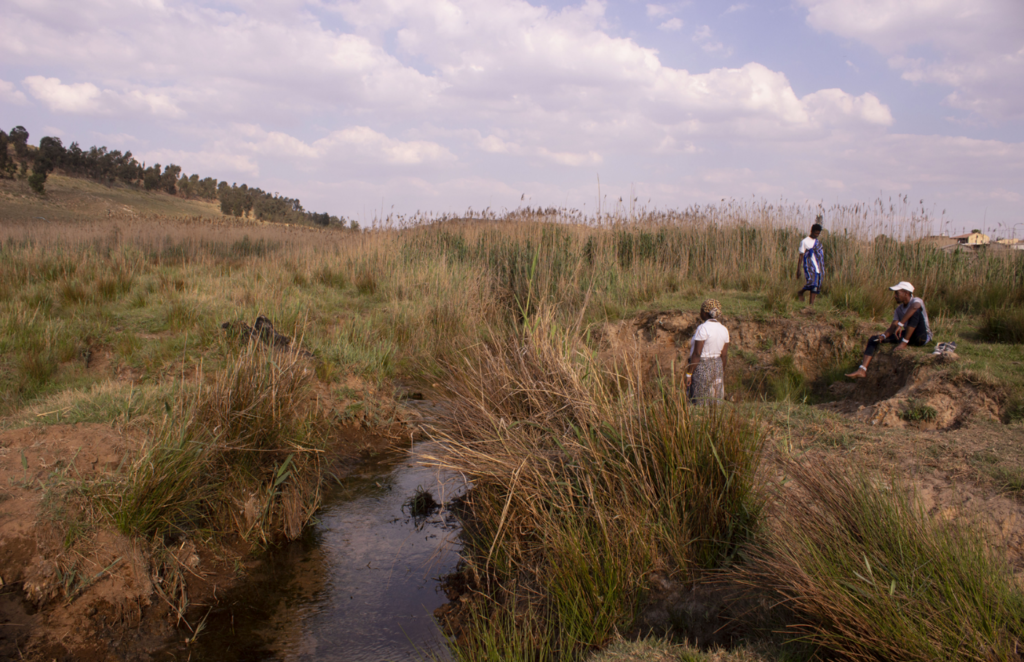
Figure 6: A group of traditional healers preparing for a cleansing ritual by a water stream adjacent to a rehabilitated mine dump. Photograph by Madoda Mkhobeni, 2023
Figure 6 of traditional healers preparing to perform a cleansing ritual in a polluted stream highlights the resilience of the Diepkloof community and their continued reliance on a toxic environment. Many interlocutors recalled swimming in this water and on the mine dumps during their youth because they lacked access to swimming pools. Gog’ Ether, a longtime resident of Diepkloof, reflected on the river’s current condition near the mine dump, stating: “No one enter[s] that water [now]… [because it is] rust-colored …[is] flowing near the bushes.” (Interview with Gog’ Esther, March 2024)
This shift reflects the community’s evolving relationship with the environment, particularly as awareness of the dangers of polluted water has increased. At the same time, the image of traditional healers performing spiritual practices in the contaminated stream illustrates how cultural practices continue within toxic landscapes. In doing so, rather than presenting environmental resistance in idealized terms, the photograph captures the everyday reality of living with persistent pollution (see Tsing et al., 2017). It shows survival and cultural continuity in Diepkloof are negotiated within, rather than apart from, environmental degradation (see Wright et al., 2024).[2]
This picture challenges the environmental narrative suggesting there are only two possible human responses: resisting environmental pollution and escaping it. However, it shows that even when environmental conditions are unfavorable, people carry on with their lives, practicing spirituality despite contamination. Hence, spirituality takes place within the context of environmental pollution.
In addition, the photograph does not convey a message of environmental revival but rather illustrates how people live with constant pollution and negotiate cultural continuity amid toxic conditions. Environmental pollution thus becomes an integral part of people’s existence in Diepkloof. (Hecht, 2023).
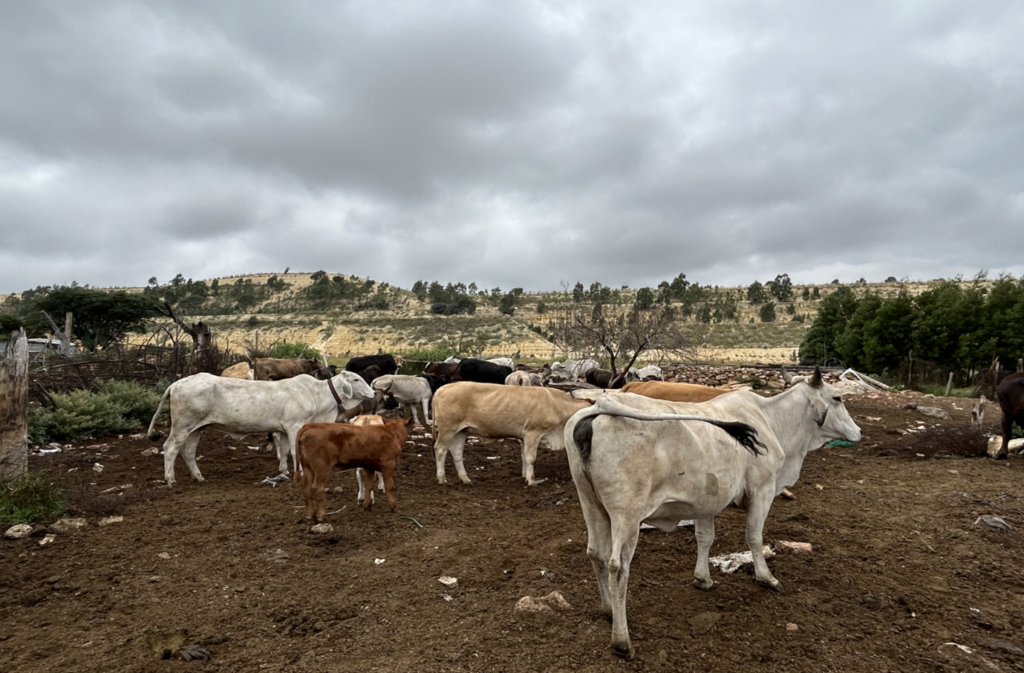
Figure 7: Livestock next to a mine dump. Photograph by William Matlala, 2024
Figure 7 illustrates how historical injustices, and systemic inequalities continue to shape the environmental conditions and adaptive strategies of marginalized communities. Due to histories of land dispossession, Black aspiring farmers are forced to use rehabilitated mine dump spaces for livestock grazing and cultivation. The photograph visually captures the intersection of environmental degradation and social inequities, revealing how systemic injustices have confined marginalized communities to potentially hazardous environments. Puseletso, the owner of the farm shown in Figure 7, acknowledges that this is not his preferred location, explaining:
A place I would love to live is a plot of land, as it would allow me to farm. I just don’t have substantial funds for it, so this will do. (Interview with Puseletso, March 2024)
The photograph allows me to highlight two critical aspects of Township Environmentalism. First, despite efforts to rehabilitate the mine dump, the image reflects the enduring environmental injustices—historical and ongoing—that continue to place marginalized communities in unsafe conditions. Second, it demonstrates the resilience and ingenuity required to transform adverse circumstances into economic opportunities, illustrating how these communities adapt to and utilize their environment to sustain their livelihoods. Gog’ Esther, however, expressed skepticism about the rehabilitation efforts, stating:
They’ve planted grass now, and the area looks beautiful. However, I wonder if they overlooked some issues and simply decided to cover it with grass. [On the mine dump] there are goats and a barn with an owner [which is concerning]. (Interview with Gog’ Esther, March 2024)
By contrast, Puseletso maintained that both the grass and the water are safe for livestock, noting:
The cows have been drinking the water [on the streams next to the mine dumps] without showing any signs of illness, suggesting that the water is not causing them any harm. (Interview with Puseletso, March 2024)
This claim, however, contrasts with the findings from several studies indicating that water near mine dumps is frequently contaminated and potentially toxic (Hecht, 2023; van Eeden et al., 2009). Overall, the image captures the tension between systemic environmental inequality and local adaptive practices within Township Environmentalism. It reveals how historical injustices continue to shape present environmental realities, while also documenting the practical strategies communities employ to sustain themselves within constrained conditions. Rather than romanticizing these adaptations, the photograph foregrounds the difficult negotiations involved in transforming hazardous spaces into viable economic and agricultural environments. It also provides a foundation for further exploration of how environmental and social archives contribute to understanding Township Environmentalism.
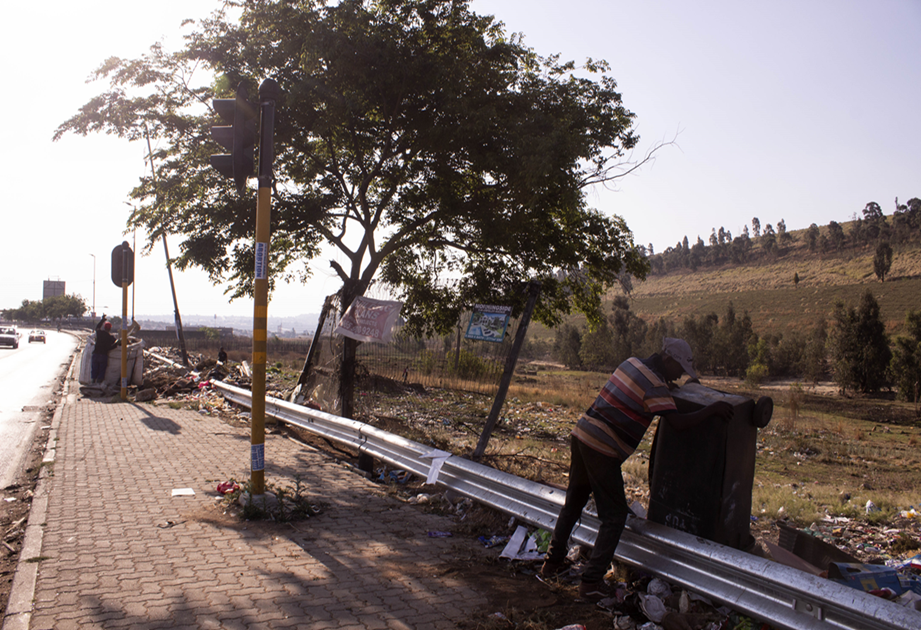
Figure 8: Diepkloof resident dumping trash next to the mine dump. Photograph by Madoda Mkhobeni, 2023.
Figure 8 of the rehabilitated mine dump in Diepkloof illustrates the complex intersection between environmental rehabilitation and ongoing social inequality (Mabaso, 2023). Although the site appears to have been environmentally restored, the photograph also reflects the historical and socio-economic realities that continue to shape the lives of displaced and marginalized communities. The green surface of the present-day, rehabilitated mine dump may signal environmental recovery, but it cannot fully address or heal the deeper legacies of displacement and marginalization.
As Itumeleng explains:
Diepkloof, like much of Johannesburg, presents many challenges; it’s a true survival-of-the-fittest in every aspect—jobs, relationships, housing, and more… Resources like land, water, work, and schooling are becoming increasingly scarce. (Interview with Itumeleng, April 2023)
The photograph should therefore be understood within the broader tension between apparent environmental recovery and persistent social hardship. The lush green grass and newly planted trees indicate efforts to mitigate environmental damage from past industrial activity. Yet, the image also captures a man discarding rubbish near the rehabilitated area, while waste remains scattered around an overflowing bin. This contrast complicates the narrative of successful rehabilitation by suggesting dissatisfaction with improvements perceived as superficial (on mining communities regarded as waste, see Hecht, 2023).
While the rehabilitated landscape masks visible signs of toxicity, it does not erase lived experiences and memories of displacement, dispossession, and marginalization. The man’s actions can be interpreted as reflecting broader resistance to the idea that environmental improvements alone can resolve entrenched socio-economic inequalities. The image, therefore, exposes the tension between environmental remediation and the continued struggles over poverty, neglect, and belonging within the community, revealing that superficial changes do not necessarily translate into meaningful improvements for those affected.
While the green landscape represents efforts to remedy environmental damage, the dumping of trash highlights the failure to address deeper socio-economic issues impacting the community. The photograph thus raises broader questions about the limits of post-apartheid transformation. Interlocutors argued that democratic change has done little to address longstanding and persisting social and environmental injustices. In some cases, it has even contributed to their intensification. Gog’ Dikeledi concludes that:
Since 1994, the government has changed, but unfortunately, things have not improved as we had hoped. The situation has often been worse than anticipated. (Interview with Gog’ Dikeledi, April 2023)
Figure 8 serves here as a poignant reminder that the physical scars of environmental degradation cannot be separated from the deeper social wounds inflicted by historical injustices (Barnwell et al., 2020). It highlights how landscapes shaped by historical exploitation continue to reflect and inform contemporary inequalities and forms of resistance. In doing so, it invokes a fundamental question: if democracy and environmental rehabilitation have failed to repair the social and ecological damage experienced by Black communities in Diepkloof, can these wounds ever truly heal, or will these struggles persist across generations (see Dhlamini, this issue)?
Overall, these examples show that Township Environmentalism is indeed analytically valuable. By drawing on Scott’s (1985) idea of looking at day-to-day actions, along with Goffman’s (1959) concept of differentiating between what happens front-stage and backstage, the framework broadens the definition of environmentalism and helps us see environmental practices emerging from the everyday and historical contexts of inequality.
The article has discussed the concept of Township Environmentalism as a theoretical approach to how township dwellers respond to environmental issues. Using oral histories and images collected in the township of Diepkloof, it has been demonstrated that responses to environmental issues extend beyond organized environmental groups, policies, and protests. On the contrary, environmental practice occurs in various ways, including household environmental management, environmental risk mitigation, placemaking, livelihood practices, and spiritual interaction with degraded land.
The use of photographs proved valuable in documenting the visual realities of environmental degradation. When viewed within a broader social and historical context, the images illustrate how environmental degradation remains integral to daily life despite ongoing rehabilitation programs and local actions. They can also be seen as forms of environmental archives in which much is not recorded officially.
Rather than illustrating simple stories of environmental renewal, the photographs illustrate negotiations with environmental destruction. These photographs document how individuals engage with and make sense of landscapes transformed by mining, even as they continue to grapple with the effects of dispossession and environmental injustice.
It is interesting to consider how visible improvements in the landscape have failed to address ongoing social and environmental disparities. As several of the photographs illustrate, environmental restoration does not automatically equal social restoration. In this context, Diepkloof represents what Crapanzano (2011) calls “a wound that will not heal.” While some landscapes are restored, the scars of dispossession, environmental exclusions, and inequality continue to be inscribed onto both the landscape and its inhabitants.
This is why the article proposes that Township Environmentalism be further developed as an interdisciplinary theoretical framework that incorporates environmental history, environmental justice, visual studies, oral history, and cultural critique. This framework holds great potential for exploring the lived realities and interpretations of environmental injustices in marginalized communities.
Using oral history, photographs, and environmental studies as methods, this paper demonstrates the utility of Township Environmentalism in analyzing the interconnected nature of environmental degradation and social inequality. Ultimately, it highlights the need for approaches to environmental justice that address both the visible and less visible dimensions of environmental degradation and their continuing effects on communities such as Diepkloof.
Research for this article was funded by the European Union (ERC AFREXTRACT, project number 101039920). Views and opinions expressed are however those of the authors only and do not necessarily reflect those of the European Union or the European Research Council Executive Agency. Neither the European Union nor the granting authority can be held responsible for them.
Azoulay, A. (2010) What is a photograph? Retrieved January 30, 2025, from: https://monoskop.org/images/7/71/Azoulay_Ariella_2010_What_is_a_photograph.pdf.
Barnwell, G. C., Stroud, L., & Watson, M. (2020). “Nothing green can grow without being on the land”: Mine-affected communities’ psychological experiences of ecological degradation and resistance in Rustenburg, South Africa. Community Psychology in Global Perspective, 6(2, Part 2), 87–109. https://doi.org/10.1285/i24212113v6i2-2p87.
Beavon, K. (2004). Johannesburg: The making and shaping of the city. UNISA Press.10.1163/9789004491809
Bonner, P., and Nieftagodien, N. (2008). Alexandra: A history. Wits University Press. 10.18772/22008114808
Bullard, R. D. (2000). Dumping in Dixie: Race, class, and environmental quality. Westview. https://doi.org/10.4324/9780429495274
Carruthers, J. (2014). Environmental history with an African edge. In: The edges of environmental history: Honouring Jane Carruthers, RCC Perspectives, 1, 9–16. https://www.environmentandsociety.org/sites/default/files/carruthers_prologue.pdf
City of Johannesburg. (n.d.). Chronology of events in the making of Soweto. City of Johannesburg. Retrieved January 30, 2025, from https://joburg.org.za/play_/Pages/Play%20in%20Joburg/Culture%20and%20Heritage/Links/Chronology-of-events-in-the-making-of-Soweto-.aspx/.
Clark, N. L., and Worger, W. H. (2016). South Africa: The rise and fall of Apartheid (3rd ed.). Routledge. https://doi.org/10.4324/9781315621562
Cock, J. (2004). Connecting the red, brown and green: The environmental justice movement in South Africa. A case study for the UKZN project entitled: Globalisation, Marginalisation and New Social Movements in post-Apartheid South Africa.
Cock, J. (2007). The war against ourselves: Nature, power, and justice. Wits University Press. 10.18772/12007104570
Crapanzano, V. (2011). The Harkis: The wound that never heals. University of Chicago Press.
Dlamini, J. (2009). Native Nostalgia. Jacana Media.
Feinberg, H.M. (1993). The 1913 natives land act in South Africa: Politics, race, and segregation in the Early 20th Century, The International Journal of African Historical Studies, 26(1), pp. 65–109. https://doi.org/10.2307/219187.
Finney, C. (2014). Black faces, white spaces: Reimagining the relationship of African Americans to the great outdoors. The University of North Carolina Press.
Goffman, E. (1959). The presentation of self in everyday life. Doubleday.
Guabli, B. E. (2022). Rethinking archives, rewriting history: Other-archives and the interdisciplinary approaches to Moroccan history of the “Years of Lead.” History in Africa, 49, 207-234. https://doi.org/10.1017/hia.2022.6.
Hollister, R W. (2023). The Sharpeville massacre, violence, and the struggles of the African National Congress, 1960-1990, Armstrong Undergraduate Journal of History, 13, 1, Article 5. 10.20429/aujh.2023.130105
Horn, J. (2008). Gender and climate change: South Africa case study. Heinrich Böll Stiftung Southern Africa. https://www.boell.de/sites/default/files/assets/boell.de/images/download_de/ecology/south_africa.pdf
Kekana, H. N., Ruhiiga, T. M., Ndou, N. N., and Palamuleni, L. G. (2023). Environmental justice in South Africa: The dilemma of informal settlement residents. GeoJournal, 1–17. https://doi.org/10.1007/s10708-022-10808-z.
Kgatla, S. (2013). Forced removals and migration: A theology of resistance and liberation in South Africa. Missionalia, 41(2), 120-132. https://doi.org/10.7832/41-2-9
Maylam, P. (1990). The rise and decline of urban apartheid in South Africa. African Affairs, 89(354), 57-84. https://doi.org/10.1093/oxfordjournals.afraf.a098280.
McDonald, D. A. (2002). Environmental justice in South Africa. Ohio University Press.
Newbury, D. (2023). Ernest Cole’s house of bondage, the United States Information Agency, and the cultural politics of race in the Cold War. In Sheppard, S., (Ed.), Cold War history and culture, (pp. 33- 65). Duke University Press.
Nixon, R. (2011) Slow violence and the environmentalism of the poor. Harvard University Press.
Oelofse, S. H. H. and Godfrey, L. (2008). Defining waste in South Africa: Moving beyond the age of ‘waste’. South African Journal of Science, 104(7-8), 242-246. http://www.scielo.org.za/scielo.php?script=sci_arttext&pid=S0038-23532008000400001.
Perdijk, O., van Splunter, M., Savelkoul, H. F. J., Brugman, S., & van Neerven, R. J. J. (2018). Cow’s Milk and Immune Function in the Respiratory Tract: Potential Mechanisms. Frontiers in immunology, 9, 143. https://doi.org/10.3389/fimmu.2018.00143.
Phillips, J.I., Swanepoel, A.J., and Rees, D. (2016) Asbestos remains troublesome in South Africa after the ban. Occupational Health Southern Africa 22(4):20–3. https://www.occhealth.co.za/_assets/articles/244/1713.pdf
Posel, D. (1991). The making of apartheid, 1948-1961: Conflict and compromise. Clarendon Press; Oxford University Press.
Rahman, S. Afsah. (2010). Women and environment: An overview. In Jahan, N., & Alauddin M. (Eds.), Development, governance and the environment in South Asia, (pp. 301-313). Palgrave Macmillan.
Ramutsindela M, Shabangu M (2018). The promise and limit of environmental justice through land restitution in protected areas in South Africa. In Mollett S., & Kepe T. (Eds.), Land Rights, Biodiversity Conservation and Justice (pp. 31–48). Routledge.
Sauer, C. O. (1952). The morphology of the landscape. University of California Press.
Scott, J.C. (1985). Weapons of the weak: Everyday forms of peasant resistance. Yale University Press.
South African History Online. (2011). Johannesburg: The segregated city. South African History Online. https://www.sahistory.org.za/article/johannesburg-segregated-city.
Steyn, P., & Wessels, A. (2000). The emergence of new environmentalism in South Africa, 1988‐1992. South African Historical Journal, 42, 210-231. https://doi.org/10.1080/02582470008671379
Sveiven, S. N., Bookman, R., Ma, J., Lyden, E., Hanson, C., and Nordgren, T. M. (2021). Milk consumption and respiratory function in asthma patients: NHANES analysis 2007-2012. Nutrients, 13(4), 1182. https://doi.org/10.3390/nu13041182Press.
Tang, D., and Watkins, A. (2011). Ecologies of gold. The past and future mining landscapes of Johannesburg Places Journal. https://doi.org/10.22269/110224
Tsing, A. L., Bubandt, N., Gan, E., and Swanson, H. A. (Eds.). (2017). Arts of living on a damaged planet. University of Minnesota Press.
van Eeden, E. S., Liefferink, M., and Durand, J. F. (2009). Legal issues concerning mine closure and social responsibility on the West Rand. Journal for Transdisciplinary Research in Southern Africa, 5, 51-71. 10.4102/td.v5i1.148
Wright, C. Y., Millar, D. A., Kapwata, T., Rodgers, G., Batini, C., and Theron, L. (2024). Social-ecological-resilience enablers among youth residing in the air polluted Highveld priority area of South Africa. International Journal of Adolescence and Youth, 29(1). https://doi.org/10.1080/02673843.2024.2322569.
Zupunski, L., Street, R., Ostroumova, E., Winde, F., Sachs, S., Geipel, G., Nkosi, V., Bouaoun, L., Haman, T., Schüz, J., and Mathee, A. (2023). Environmental exposure to uranium in a population living in close proximity to gold mine tailings in South Africa. Journal of Trace Elements in Medicine and Biology, 77, 127141. https://doi.org/10.1016/j.jtemb.2023.127141.
[1] In his chapter, Newberry (2023: 33-66) explores the impact of photography during apartheid in South Africa, focusing on Ernest Cole’s work as a tool for resistance and social change.
[2]David van Wyk, a researcher and environmentalist from the Benchmark Foundation, who has studied Johannesburg all his life, calls Soweto ‘a crime against humanity and no one should be living there.’ This highlights the systemic challenges Black communities face (beyond poisonous water or toxic dust). While some might view the image of the traditional healers as prioritizing cultural practices over physical survival, this overlooks the broader environmental context. Each part of their environment and existence is already contaminated.
25 / August / 2026
By: Ngaka Mosiane, Phathutshedzo Eugene Ratshiedana, and Wendy Tsoriyo
25 / August / 2026
By: Jackson Tamunosaki Jack
25 / August / 2026
By: Tholithemba Lorenzo Ndaba, Madoda Mkhobeni, and William Matlala
14 / August / 2026
By: Timothy Elikem Harvor and Alena Thiel
14 / August / 2026
By: Matthias C. J. De Groof