
August / 25 / 2026
By: Ngaka Mosiane, Phathutshedzo Eugene Ratshiedana, and Wendy Tsoriyo
This article examines why mining-affected communities in the Gauteng City-Region appear to prioritize livelihoods over environmental wellbeing, and why this response is itself a product of the exercise of power. While pollution is about land relations and exposure to it is unevenly distributed, generating evidence for its existence is political. The article draws on contamination data and ethnographic interviews to describe how regulatory actions normalize pollution, forcing communities into false choices. It shows the multifaceted nature of ordinary people’s responses to pollution and poverty: survivalist, thus harmful to some of them and their localities; and an exercise of resistance for others. The article argues that choosing livelihoods over health is rational under conditions of economic scarcity, yet this choice obscures cumulative exposure to contamination and associated slow violence. This discussion demonstrates that when proper organizational and political conditions exist, communities can and do refuse the separation of economic and environmental justice. The discussion contributes to the political ecology concept by centering how uneven power relations produce not only pollution as acceptable but also ordinary people’s response options
Pollution, risk normalization, community responses, Gauteng-City Region
The Gauteng City Region is the heartland of South Africa’s economy, with mining having historically been themajor driver of its industrial and residential landscapes. While gold and, to some extent, coal and platinum-group metals have variously been the bases of South Africa’s economic growth, the wealth they generate is unevenly distributed, with many people of color, including mineworkers, struggling to survive. In addition, the mines are massive sources of pollution, with ordinary people in areas such as Blyvooruitzicht and Kroondaal living under conditions of contamination and facing complex choices about their livelihoods and their health.
A Blyvooruitzicht community leader told us: “We face death from hunger, not only from contamination.” This is not an expression of resignation but a rational response to joblessness; to being ignored by public actors; to corporate companies abandoning their legal obligations and the state’s failure to enforce environmental laws. The community leader’s sentiment is not simply about prioritizing livelihoods over health; it reflects the power relations that shape what communities can know about pollution and how they can act. The public in the Gauteng City-Region faces what Bond (2021, p.5) calls ‘toxic uncertainty’ and a performance of ‘everyday praxis of not noticing’, as contamination gets normalized by contradictory messaging from authorities, by lack of accessible and reliable information, and the long-standing minimization of risks by mining corporations and the state.
This article contributes to the concept of political ecology by reflecting on how uneven power relations produce both contaminated landscapes and constrained response possibilities. The idea of political ecology is sometimes seen as “hard to define” and to be “not a method or a theory, nor even a single perspective” (Robbins, 2012, p. 7, viii). In contrast, Swyngedouw and Heynen (2003) see political ecology as a ‘theoretical’ platform for interrogating the complex, interrelated socio-ecological processes that produce highly uneven socio-environmental conditions. In this article, we operationalize political ecology in two specific ways: First, we use political ecology as a framing device for reflecting on the inequitable distribution of social and economic power (Swyngedouw & Heynen, 2003). Second, we use it as an argument about what people do in response to toxicity and economic hardships. We also draw from contamination data and ethnographic interviews to describe how regulatory practices normalize pollution and force communities into false livelihoods/environment choice.
The section that follows describes our research methods and case study areas. We then discuss how the measurement of pollution and the lack of enforcement of environmental laws normalize toxicity. We argue that forms of quantification and regulation render toxicity mundane and acceptable. This is because toxicity and evidence-making for acceptable pollution limits are political – measuring helps decide what counts as harm (Hetch, 2023). Toxicity and its measurement are in part the outcomes of land colonialism and associated violence (Liboiron, 2021), embodying what Hecht (2018) and Peša (2022) call the African Anthropocene: toxicity is both a colonial-apartheid legacy and an ongoing neoliberal project. The ‘we’ who polluted the planet is not a universal ‘we’ – mining capital and the state enable pollution. The ‘we’ who live with that pollution is racially and spatially specific.
Our discussion will foreground ordinary people’s lived experiences, exploring how they respond to their conditions of toxicity and impoverishment through strategies of resilience, reworking and resistance. While the Blyvooruitzicht community seems to frame economic livelihoods and environmental wellbeing in opposition to each other, organizations like the Ikemeleng Environment and Justice Organization connect environment and economy. Its actions make clean water, safe soils and decent livelihoods part of a single development claim. In this sense, the Gauteng City-Region region appears not as a case of apathy but as one of lived ingenuity amid legacies of mining-related toxicity and unequal power relations.
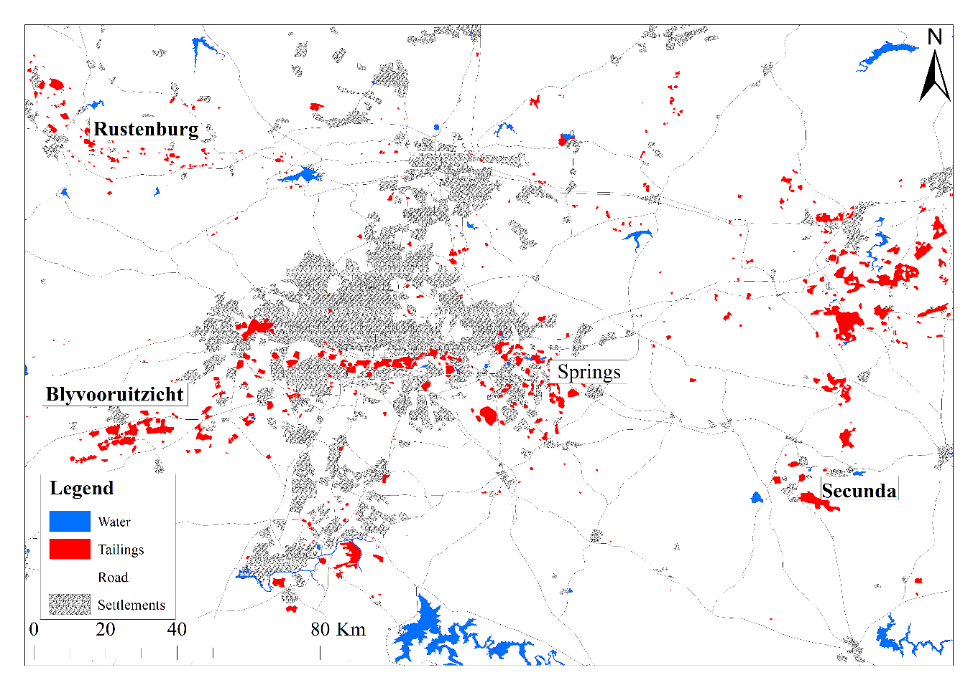
In December 2023, we collected water and soil samples in selected mining areas in the Gauteng City-Region and tested their toxicity levels. We sampled areas where platinum-group-metals (PGMs[1]) are mined in Rustenburg, North-West province; where gold is mined in Blyvooruitzicht, Gauteng province; and where coal is mined in Secunda, Mpumalanga province (see Figure 1, with the east-west band of tailings in red, running from Blyvooruitzicht to Secunda, being part of what came to be the Witwatersrand mining belt). We collected both water and soil samples in Rustenburg (in the settlements of Ikemeleng and Kanana) and Secunda. [2] In Blyvooruitzicht, we collected soil samples only, as its limited ground water sources are not generally used in people’s homes and gardens (see Figures 2 and 3).
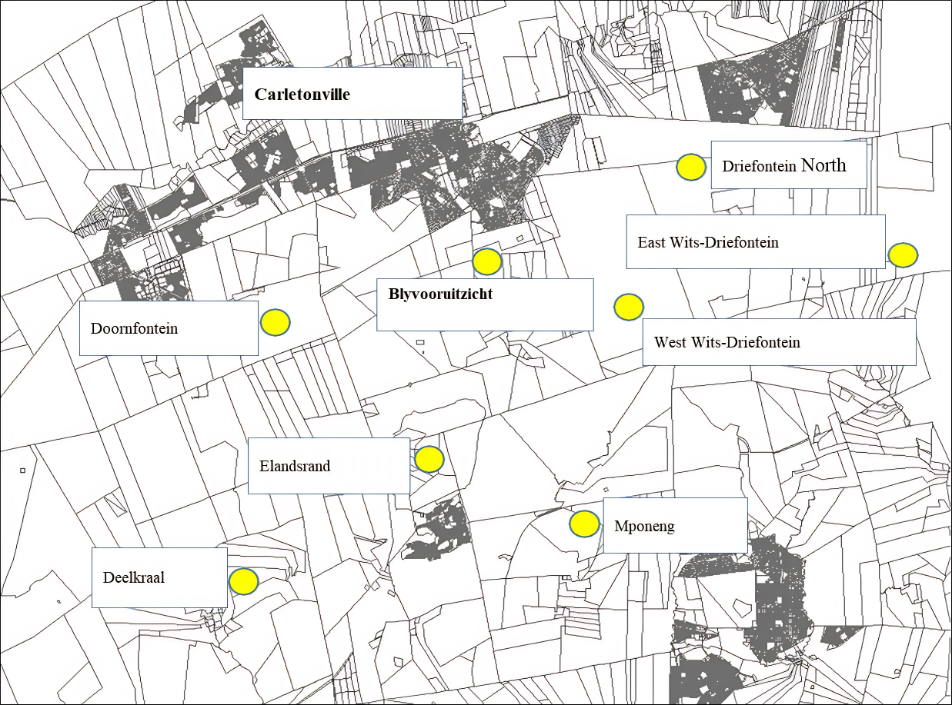
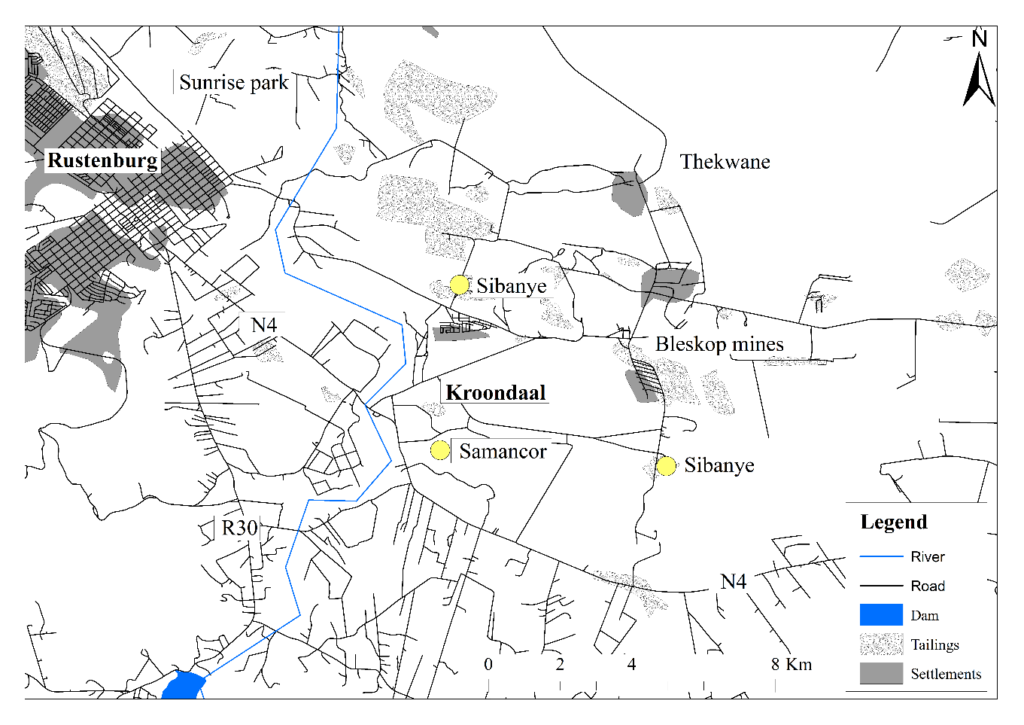
Rustenburg is on the outer edges of the Bushveld Igneous Complex’s western limb[3], which holds the world’s largest reserves of PGMs. Although mining in this western limb is downscaling,[4] it has already produced waste materials whose heavy metals contaminate water streams via seepage and surface runoff and pollute the atmosphere through heavy metal laden dust. Its southern part, where the immigrant communities of Kroondaal and Ikemeleng are located, features significant mining of chrome, with farming activities taking place nearby. This southern part is at the upper end of the Hex River (Figure 3 in blue), and the tributaries feed contaminated water from nearby mining operations into this major river.
During the first half of 2024, we conducted semi-structured qualitative interviews with the residents of Blyvooruitzicht and Ikemeleng settlement in Kroondaal. The interview participants were all over 18 years old, and they included local youth leaders, former mineworkers (white-collar and blue-collar black African males), and female residents. The interview questions were centered around the health effects of soil and water contamination from local mining activities and how research participants were responding to toxicity and economic distress. Participants also spoke about a range of other issues during interviews, which helped to illustrate Liboiron’s (2021) assertion that pollution is colonialism. They discussed local histories of land dispossession, land repurchasing for agricultural practices, and later land leasing for mining operations. They spoke of their experiences with the tender system that mining companies use as an illusion of support to local businesses instead of the mandated ‘social and labour plans’ (below); their experiences as mineworkers during the height of gold mining operations; impoverishment due to colonialism, apartheid and post-apartheid failures; the 2012 liquidation of the company Durban Roodepoort Deep Limited; and their subsequent exclusion from employment by BlyvoorGold (Pty) Ltd, a mining company residents had supported by signing documents required for it to operate local Shaft 5 in 2015.
Overall, by integrating discussion of contamination data and data from ethnographic interviews, we aim to bring into focus the intersections between power relations, uneven distribution of contamination, institutional neglect of contamination, and ordinary people’s everyday struggles as they respond to their conditions of economic distress and pollution.
Acid mine drainage is the main ground source of contamination across the Witwatersrand mining belt. Hecht (2023) cites the Brenk report on the Wonderfonteinspruit water catchment, which passes through Blyvooruitzicht and supplies drinking water to the locality and some 450,000 residents located in Potchefstroom, the North-West province, some 30 miles away. This “drinking water destined for humans offered the most significant pollution pathway … Radiation exposure at half of the sampled sites exceeded the 1 millisievert limit for public exposure. Some sites were ten times that limit, and a few exceeded it by two orders of magnitude” (Hecht, 2023, p.70). The water samples that we tested show that the levels of heavy metals in the waters of Rustenburg and Secunda are within the South African National Standards’ permissible limits (5 mg/l to 400 mg/l), but above that of the United States of America’s Environmental Protection Agency (commonly just over 0.0 mg/
The point is that for a century, pollution standards and numbers have made toxicity governable and often ignorable. For example, apartheid South Africa set uranium limits in water at 8,000 μg/l – over 250 times higher than the current WHO standard of 30 μg/l (Hecht, 2023). At multiple sites, toxicity exceeded safe limits by orders of magnitude but was still considered acceptable. The South Africa government only aligned its permissible uranium limit with that of the World Health Organization (WHO) in 2011 at 15 μg/l, partly due to the influence of international institutions such as the International Atomic Energy Agency (ibid). And in the two decades before this, the limit had been lower: 140 μg/l in 1993; then 2 μg/l in 1998; 15 μg/l in 2004; and now 30 μg/l (ibid). Exceptions are noticeable, though, with zinc being within permissible limits of both countries. In the coal mining context of Secunda, the recorded heavy metal values by far exceed the South African ceiling: 40,60 mg/l for arsenic, 1559,12 mg/l for copper and 54512,91 mg/l for nickel. Similarly, the manganese levels are higher than the South African standard in Kroondaal at 404,72 mg/l and in Secunda they range from 416,67 mg/l to 555,22 mg/l. With regards to the Blyvooruitzicht sampled soils, the amounts of heavy metals are generally within the US EPA and SANS standards.
The point remains though that the permissible limits for heavy metals, as the uranium example shows, do not reflect better science, but are evidence of regulatory choices and contested politics about whose bodies count (Jha, et al. 2024). In 2007, the International Commission on Radiological Protection recommended that uranium levels should be reasonably achievable, with judgments on acceptable radiation exposure left to each society (Hecht, 2018). Contamination limits could thus be set at higher levels in some countries and at lower levels in others, meaning that people’s lives in different parts of the world could be treated unequally, making the experience of toxicity contextual (Peša, 2022). Accordingly, mining companies tend to locate some of their operations in ‘low risk’ contexts, thereby absolving themselves of responsibility as polluters. Indeed, when the Blyvooruitzicht Gold Mining Company Ltd sold its operations to Durban Roodepoort Deep Limited in 2007, the latter stated that neither the mining project they acquired nor its historic activities were a source of pollution (LHR, 2017). Durban Roodepoort Deep Limited also stated that its new mining project was not an economic, social or environmental liability to the local community or the state (ibid). Even though on paper, pollution levels in Blyvooruitzicht soils comply with South African standards – and are thus portrayed as ‘acceptable’ – the residents of this place are still exposed to contamination.
The state and mining companies tend to normalize toxicity through tactics of minimalism, simplification and delay, even though they often clash over mine closures and how mining companies should handle contaminated post-mining landscapes (Hecht, 2023). Shifting pollution limits and their uneven enforcement across space create administrative innocence for polluters while residents learn that dust, odor and strange water are ‘normal’ (Mosiane, forthcoming). Thus, when contamination is never officially recognized as a problem and companies like Durban Roodepoort Deep Limited claim ‘no pollution’, residents internalize this normalization. This is Liboiron’s (2021) point: that to measure is to enact a politics of land relations, deciding what counts, and whose bodies count. Thus, we agree with Hecht (2023) that in the Gauteng City-Region, numbers have been calibrated to enable capital accumulation and austerity, not to limit cumulative exposure or ensure intergenerational health.
These dynamics of pollution production and measurement illustrate what scholars of the African Anthropocene call the uneven distribution of planetary burden (Peša, 2022; Hecht, 2018). Peša (2022) argues that the Anthropocene feels different depending on where one is. In the Gauteng City-Region, it feels like uranium in dust and in drinking water. The epoch’s defining characteristic here is not abstract climate change but tangible, daily exposure to industrial residue. For Hecht (2018), when we speak of ‘our’ polluted planet, the ‘our’ obscures the fact that South Africa’s mining communities bear a disproportionate burden of exposure to toxicity – not as victims of a generic ‘human’ epoch, but as subjects of specific colonial and capitalist extraction. The Anthropocene, viewed from Blyvooruitzicht or Ikemeleng, is less about humanity’s collective footprint and more about how some communities are made to live with and in the waste of others’ accumulation. This African perspective reveals the Anthropocene as fundamentally about differentiated causation and exposure (Peša, 2022), where those least responsible for planetary degradation endure its most concentrated harms).
Effects of pollution on humans and ecosystems
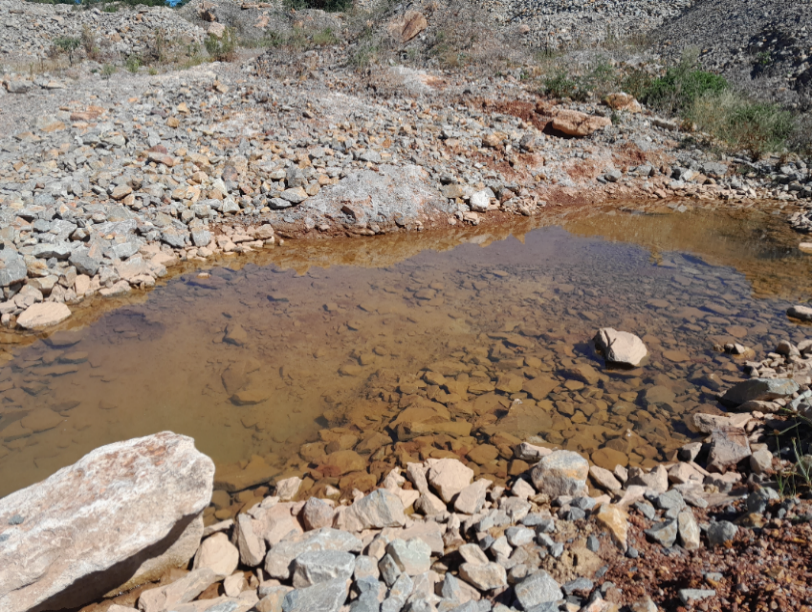
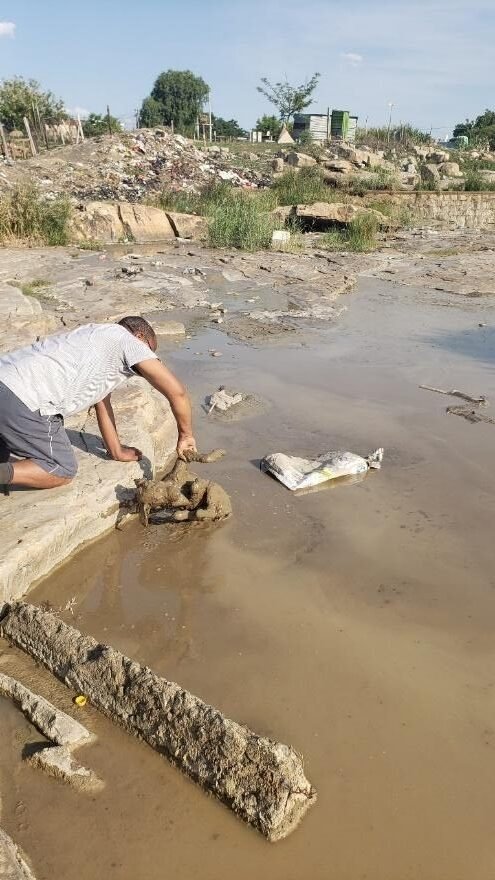
The presence of heavy metals in the soils and waters of mining areas is hazardous to humans and broader ecosystems (Bobbins & Trangos, 2018). Our research did not produce direct evidence of this, as we only obtained anecdotal health information from secondary sources. We could not obtain health data from the local clinic, and even if we could, it is almost impossible to make a direct heavy metal-disease link due to uranium’s changing behavior spatio-temporally, for example (Hecht, 2023). For her, the practice of compartmentalizing toxins molecule by molecule makes it extremely difficult to apprehend synergistic effects of multiple forms of exposure. Similarly, our research respondents were not inclined to speak to us about their health conditions related to local mining operations but were instead more interested in speaking about their livelihoods. That said, the Lawyers for Human Rights (2017) point to the possibility that the residents of Blyvooruitzicht will develop forms of cancer and suffer from decreased cognitive functioning and skin infections. Figure 4 shows a body of surface water near the site of Blyvooruitzicht’s first uranium metallurgical plant. Residents are exposed to this surface water, especially children playing there in a context that lacks public recreational facilities. Residents of the Ikemeleng settlement kept referring to a child who was infected with bilharzia in 2008. They also highlighted skin-related problems as well as plumes of smoke and associated smells emanating from local mining operations. Figure 5 shows a polluted tributary that passes along the Glencore mine operation and Ikemeleng settlement, and the remains of a dead dog.
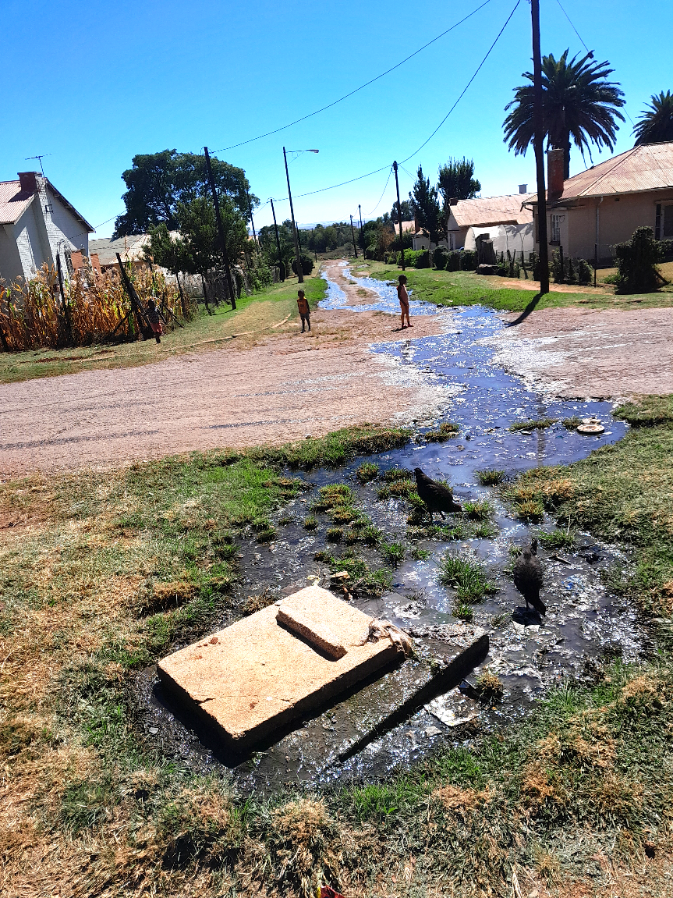
Moreover, the village abandonment by mining companies and associated sewage system dilapidation are sources of hazardous waste, with the potential to cause gastrointestinal illnesses (Lawyers for Human Rights, 2017; Figure 6). Sewage waste also provides exposure to pathogenic bacteria, which are responsible for the transmission of multiple infectious diseases, including cholera and typhoid fever (ibid). Despite the contamination and possible health effects highlighted above, a leading member of the Blyvooruitzicht Community Leaders Forum, who was a mineworker at Blyvooruitzicht’s uranium processing plant, said that “we have to ignore health concerns related to contamination in favor of livelihood formation – we are faced with death from hunger, not only from contamination, anyway”. The Blyvooruitzicht community is forced to choose between health and livelihoods.
In other contexts, such as the Ikemeleng settlement, communities are rejecting the health/livelihoods trade-off evident in Blyvooruitzicht. The Ikemeleng Environment and Justice Organization, for example, refuses the separation that the state and mining capital imposes. A statement by their chairperson, drawing on her experience of documenting mining harm with the Bench Marks Foundation, articulates this clearly: “We can’t just be here breathing clean air, drinking fresh water and eating uncontaminated locally produced food. Our struggle for development is equally important.” This is not acceptance of contamination. It is a rejection of the false choice between contamination and economic wellbeing. Ikemeleng deliberately connects water testing (via WaterCAN) with legal advocacy (Centre for Environmental Rights) and economic empowerment (Khulisa), operationalizing the principle that clean water and decent livelihoods are a single development claim. More on these organizations below, but what distinguishes the Ikemeleng Environment and Justice Organization from Blyvooruitzicht’s survivalist responses is that it insists on collective infrastructures rather than individual entrepreneurship, and it frames contamination as a violation rather than part of an inevitable trade-off. We will see below that ordinary people are not apathetic about their situations. They adapt to their circumstances; make the most of its fault lines; attempt to make capitalism pay and seek to change their living and working conditions through altering the terms of their relations with dominant powers.
Communities respond differently to the environments in which they live. Those that adopt resilient and innovative strategies adapt to their impoverished and toxic environment as responsibilized subjects (Ferguson, 2009). They create livelihoods from home gardens, water harvesting and roadside and home-based retail stores (see Figures 7 and 8). Some people use their mining-related skills and experiences to repair basic infrastructure, such as leaking water pipes. A local company in Blyvooruitzicht, the Merafong Crusher, often contributes its workers and machinery (excavator and loader) to assist in those repairs, with food for workers and materials purchased from as far as Randfontein, about 50 km away, and costs often paid from donations by households and small retail businesses. Beyond these survivalist repair efforts, residents seek to ‘rework’ their living and working conditions without changing the terms of existing power relations (Coe & Jordhus-Lier, 2010). The re-mining of mine dumps, tailings and slime dams is a case in point. The Blyvooruitzicht Youth Forum seeks to participate in these activities as small entrepreneurs, making the most of capitalism’s fissures. This is potentially harmful, with re-mining loosening dust (laden with toxins) that is blown onto residential settlements and ecosystems locally and beyond. That said, such activities can bring improvements to the lives of ordinary people.
Social and Labor Plans (SLPs) are part of those reworking strategies. At the stage of planning their operations, mining companies are legally required to submit SLPs to government, committing to contribute to host communities’ social and economic development (Department of Mineral and Resources, 2002). One mining company, Sibanye-Stillwater, financed a brickmaking initiative by a small group of people, while the Glencore mining company created opportunities for groups to run food catering, laundry and sewing businesses. Additionally, some local mining companies pay Ikemeleng pupils’ school fees and transport expenses. But the expenditure by mining companies on these activities is paltry in the broader context of mining profits and SLPs’ prescripts (Centre for Applied Studies, 2016). This entrepreneurial refocusing of SLPs tends to break up what could be joint efforts for inclusive economic practices that also sustain environmental health. Instead of rolling out universal public services and promoting collective economic development, mining companies turn individuals and groups into entrepreneurs. Their SLP approach undermines social solidarity, causing residents to be in competitive and conflictual relationships with one another. It is noteworthy that several of the above-mentioned projects were short-lived, and research participants in Ikemeleng expressed dissatisfaction with them, instead arguing for empowering small groups and individuals.
Ordinary people also resist those in power and try to alter the terms of their relations to the neoliberal political economy. The Ikemeleng Environment and Justice Organization established relationships with organizations that operate at larger scales. The aim is to explore real alternatives, including the possibility of collective initiatives, advocacy for provision of universal public services, and other efforts that transcend the separation of ecological concerns from socio-economic development. The chairperson of Ikemeleng Environment and Justice Organization is a former local operator of Bench Marks Foundation, an organization that documents the negative impacts of mining operations across South Africa (CSIR, 2019). She became politically aware and empowered through her data collection work for the Bench Marks Foundation. Although the Ikemeleng Environment and Justice Organization is seeking procurement opportunities and joint ventures for the people of Ikemeleng from mining companies, it is also campaigning for mining corporations to compensate individual mineworkers for occupational injuries and to pay communities that are spatially displaced to make way for the expansion of mining operations. In addition, it mobilizes its members and the Ikemeleng community to recycle used materials and ensure the cleanliness of their locality.
To realize its goals, the Ikemeleng Environment and Justice Organization created relationships with organizations such as WaterCAN, the Khulisa Social Solution, and the Right and Remedy Centre for Environmental Rights. WaterCAN is a network of citizen science activists who advocate for clean, safe and sustainable water. It tests household water for communities, including the people of Ikemeleng, providing data that can be used to lobby the local municipality, mining companies and other players for clean water. Khulisa Social Solution trains members on collective strategies and tactics for pursuing social justice and economic empowerment. The Right and Remedy Centre for Environmental Rights provides legal services and assists in the production of important documents such as the constitution of the Ikemeleng Environment and Justice Organization. It also teaches communities about South Africa’s environmental laws and how to engage corporations on SLPs. These networks illustrate how the Ikemeleng Environment and Justice Organization is resourcing itself to advocate for socio-economic development and environmental justice. The organization is at a nascent stage; thus, how its efforts will pan out remains to be seen.
Table 1 provides a summary of the livelihood strategies of the people of Ikemeleng and Blyvooruitzicht. It breaks down that central feature of their lives into actors, enabling conditions (triggers), arenas, activities and typical outcomes. The three response categories (resilience, reworking, resistance) show how communities navigate between immediate survival and long-term justice. When considering these kinds of responses to unequal power relations, ethnography is useful for understanding communities’ hardships and toxicity, and their resilience and aspirations for justice. Ethnography allows for an in-depth exploration of the lived experiences that shape how communities perceive and react to their environment (Clerc et al., 2023; Javan et al., 2024; Lechner, 2016). It brings into sharper focus why ordinary people often seem resigned to their conditions, as they just seek to get by, delaying their own destruction (Watts, 2015, 2000). It also provides insight into how they make joint environment-economy claims and their attempts to shift their terms of relations with dominant powers.
Thus, the interview excerpt from a member of the Blyvooruitzicht Community Leaders Forum, which echoes a refrain we heard across the mining landscapes of the Gauteng City-Region, highlights the reality of struggles for daily survival in contexts where former mineworkers and residents lack the conditions to enact sound ecological and economic practices. The statement is merely a response to his community’s infrastructural collapse, joblessness, insufficient connections and ignored corporate obligations. On the other hand, the chairperson of the Ikemeleng Environment and Justice Organization demonstrates an understanding of a holistic approach to development – environmental justice and public health are as important as the production of livelihoods, economic growth and infrastructure improvements. The Ikemeleng Environment and Justice Organization refuses the false choice between livelihoods and environment, establishing scaled institutional networks to demand both decent economic livelihoods and healthy environments.
| Response | Typical triggers | Actors/alliances | Arena | Activities | Likely outcomes |
| Resilience | Mine liquidation/closures, being abandoned by public and private institutions, weak enforcement of environmental laws, lack of legal recourse, hunger, infrastructural failure | Individuals, households, group savings schemes, local companies, community and institutional resources | Homes, streets, local municipalities, tribal authorities, NGOs | Home gardening, rotating-credit schemes, water harvesting, sex work, cohabitation | Surviving, normalization of risk, reinforced masculinity |
| Reworking | Entrepreneurial framing of SLPs, outsourcing, left-over mining waste, limited economic opportunities | Small groups, youth forums, companies’ corporate social responsibility unit | Commodity value-chain edges, mine tailings and slime dams | Re-mining, small businesses, economic empowerment, vocational educational institutions | New exposure to environmental contamination, social fragmentation and income inequality |
| Resistance | Legal openings, organizer capacity, visibility of new data, organizational networks, acute health cases (e.g. bilharzia, chronic health conditions, cancer) | Community organizations, NGOs, citizen science initiatives, mining companies, state institutions | Public sphere, law, negotiations, protests | Water and soil testing, lobbying, training in collective strategies and tactics, legal services, advocacy, protests | Shifts in terms of relations; joint environment-economy claims |
The discussion above contributes to the idea of political ecology by centering how uneven power relations produce pollution as acceptable; how the actions of dominant powers constrain response possibilities; and how the trade-off between livelihood and environmental health is not an expression of ignorance, but a rational response under conditions of economic scarcity. But the apparent prioritization of livelihoods over environmental health is a false choice resulting from the contextual activities of mining capital, the state, civil society and community actors. Drawing on Bond’s (2021) insistence that we stay close to experience while acknowledging the planetary scale of extraction, contamination in the Gauteng City-Region embodies what Peša (2022) and Hecht (2018) call the African Anthropocene: toxicity is both a colonial-apartheid legacy and an ongoing neoliberal project. The ‘we’ who polluted the planet is not universal; it is mining capital and states that enable toxicity, normalizing it by historically under-measuring it, minimizing its effects administratively, and distributing it along old fault lines of race, class and place. The ‘we’ who live with that pollution is racially and spatially specific.
In the mining landscapes of the Gauteng City-Region, black African communities bear disproportionate exposure while mining capital and the state evade accountability through regulatory minimums and corporate liquidations. That said, white working-class communities and other categories of difference across space also experience contamination, albeit unevenly (Bond, 2021). David Bond highlights two remaining social safety nets – family and home – being attacked through perfluorooctanoic acid in rural United States of America. The health impacts he discusses, including testicular cancer and infertility, parallel the Gauteng City-Region’s experiences with bilharzia, skin problems and cancer. But if local contamination connects to planetary issues, global experience does not erase the specificity of local harm (Peša, 2022), the responsibility of the state and mining capital, and the capacities of ordinary people.
The responsibilities and exposures are radically unequal, and standards and numbers have too often underpinned that inequality. Residents do not choose between jobs and health so much as they are made to. Their responses include resilience and reworking. But they are incomplete responses, which are not horizons for justice because continuing to work in toxic environments obscures slow violence and cumulative exposures. Indeed, as coalitions, evidence and opportunities thicken, resistance as a strategy becomes feasible. These different kinds of responses to living and working conditions characterize communities that, while grappling with despair, seek to reclaim agency and demand change. The political ecology framework reveals that the livelihoods/environmental health trade-off is not a case of resignation, but a response to economic distress and environmental pollution. As in the rural United States of America (Bond, 2021), there is no going back to pre-contamination conditions in areas of anthropogenic activities like Ikemeleng and Blyvooruitzicht. This does not mean accepting current conditions. It means fighting for a better world today.
Policy considerations
This article argues that toxicity is about the exercise of power, its uneven spatial effects, and the responsibility that polluters place on ordinary people to deal with it. The government must re-make the relations responsible for these injustices by creating inclusive economic practices and shifting Social and Labour Plans away from a competitive micro-enterprise approach towards one that privileges universal public goods and services. Additionally, land relations and measurement politics need to be made explicit in governance; and citizen science must not be ancillary, but constitutive of governance processes. Moreover, the government must re-make the relations responsible for the normalization of pollution by adopting cumulative-exposure standards and shared monitoring; by funding public/citizen testing of pollution and supporting lawsuits; and by protecting organizational infrastructures (legal aid, testing funds, public data portals) and treating them as essential. Only then will evidence cease to be used to excuse harm and begin to secure life.
Bobbins, K. and Trangos, G. (2018). Mining landscapes of the GCR. Gauteng City-Region Observatory: Occasional Paper. Gauteng City-Region Observatory. https://d3iy114y1zl2zq.cloudfront.net/media/documents/Mining_Landscapes_of_the_GCR_final_web_FA.pdf
Bond, D. 2021. Contamination in theory and protest. American Ethnologist, 48 (4). 386-403 https://anthrosource.onlinelibrary.wiley.com/doi/10.1111/amet.13035
Clerc, C. Sharma, V. & Pagliero, L. (2023). Water and energy integration towards post-mine transition. In B. Abbasi, J. Parshley, A. Fourie and M. Tibbett (eds), Mine Closure 2023: Proceedings of the 16th International Conference on Mine Closure. Australian Centre for Geomechanics, Perth. https://doi.org/10.36487/ACG_repo/2315_005
Coe, N. M. & Jordhus-Lier, D. C. (2010). Constrained agency? Re-evaluating the geographies of labour. Progress in Human Geography, 35 (2), 211–233. https://doi.org/10.1177/0309132510366746
Council for Scientific and Industrial Research [CSIR]. (2019). A CSIR perspective on South Africa’s post-mining landscape. CSIR
Department of Mineral and Resources. (2002). Mineral and petroleum resources development Act 28. Government Printers, Pretoria. https://www.gov.za/documents/mineral-and-petroleum-resources-development-act
Ferguson, J. (2009). The Uses of neoliberalism. Antipode 41, 166–184. https://doi.org/10.1111/j.1467-8330.2009.00721.x
Hecht, H. (2023). Residual governance: How South Africa foretells planetary futures. Duke University Press https://doi.org/10.1215/9781478027263
Hecht, G. (2018). The African anthropocene: The anthropocene feels different depending on where you are – too often, the ‘we’ of the world is white and Western. Aeon. Retrieved from: https://aeon.co/essays/if-we-talk-about-hurting-our-planet-who-exactly-is-the-we
Javan, K., Altaee, A., BaniHashemi, S., Darestani, M., Zhou, J and Pignatta, G. (2024). A review of interconnected challenges in the water–energy–food nexus: Urban pollution perspective towards sustainable development. Science of The Total Environment, 912. https://doi.org/10.1016/j.scitotenv.2023.169319.
Jha, S.K., et al. (2024). Uranium standards in drinking water: An examination from scientific and socio-economic standpoints of India. Environ Sci Pollut Res 31, 47461–47474 https://doi.org/10.1007/s11356-024-34352-0
Lawyers for Human Rights (LHR). (2017). Blyvooruitzicht mine village: The human toll of state and corporate abdication of responsibility in South Africa, Pretoria: Lawyers for Human Rights https://lawyersforhumanrights.b-cdn.net/wp-content/uploads/2020/01/Blyvoor-HRIA_Final-Low-Def.pdf
Lechner, A. M., Bau mgartl, T., Matthew, P., and Glenn, V. (2016). The impact of underground longwall mining on prime agricultural land: A review and research agenda. Land Degradation and Development, 27(6), 1650-1663. https://doi.org/10.1002/ldr.2303
Liboiron, M. (2021). Pollution is colonialism. Duke University Press
Morris, R.C. (2024). Unstable ground: The lives, deaths, and afterlives of gold in South Africa. Columbia University Press.
Mosiane, N. and Dzerefos, C. (2025). Remaking contemporary Rustenburg landscapes. In N. Mosiane and J. Murray (eds.). Landscapes of peripheral and displaced urbanism. GCRO Research Report # 14, Gauteng City-Region Observatory, Johannesburg, March 2025. https://doi.org/https://doi.org/10.36634/SHGX2848
Mosiane, N. (forthcoming). ‘Johannesburg South’. In Sarah Nuttall and Achille Mbembe, eds. Johannesburg: The Elusive Metropolis. Johannesburg: Wits University Press.
Peša, I. (2022). A planetary anthropocene? Views from Africa. (2022) Isis 113 (2), 386-395. https://doi.org/10.1086/719630
Robbins, P. (2012). Political ecology: A critical introduction. John Wiley & Sons.
Swyngedouw, E. and Heynen, N. (2003). Urban political ecology, justice and the politics of scale. In E. Swyngedouw and N. C. Heynen (Guest Editors). Antipode special issue. Urban Political Ecology, Justice and the Politics of Scale, 898- 918 https://doi.org/10.1111/j.1467-8330.2003.00364.x
Toumbourou, T., Muhdar, M., Werner, T. and Bebbington, A. (2020). Political ecologies of the post-mining landscape: Activism, resistance, and legal struggles over Kalimantan’s coal mines. Energy Research & Social Science. 65. 10.1016/j.erss.2020.101476.
Watts, M. (2015). Now and then: The origins of political ecology and the rebirth of adaptation as a form of thought. In J. McCarthy & T. Perrault (eds.). Handbook of Political Ecology. Routledge. https://www.taylorfrancis.com/chapters/edit/10.4324/9781315759289-3/-michael-watts
Watts, M. (2000). ‘Political ecology’. In R.J. Johnston, D. Gregory, G. Pratt, M. Watts. The dictionary of human geography (4th ed.) Blackwell Publishing. 10.1111/j.1467-8306.2005.470_1.x
[1] PGMs are made up of platinum, palladium, rhodium, ruthenium, iridium and osmium. They were discovered by geologist Dr Hans Merensky in1924-25, following a tip from an Eastern Transvaal farmer and an amateur prospector, Andries Lombaard (Mosiane and Dzerefos, 2025).
[2] The map of all sampled sites and the detailed quantitative analysis of all case studies were removed from this paper during the review process as those discussions are not relevant to this journal. Due to space limitations, additionally, the discussions of Secunda and Kanana are largely excluded, limited to comparative quantitative analysis only.
[3] Bushveld Igneous Complex is part of a 2-billion-year-old large and layered igneous rock intrusion.
[4] The Rustenburg economy experienced unprecedented growth between 1993 and 2007, when Rustenburg gained a reputation as one of South Africa’s fastest-growing cities. It had a compound annual growth rate of 6% (Mosiane and Dzerefos, 2025). This growth was based on a boom in the PGMs economy, which began to slow down from about 2007 due to growing demand for electric vehicles, worldwide oversupply of PGMs, and the global financial crisis (ibid).
25 / August / 2026
By: Ngaka Mosiane, Phathutshedzo Eugene Ratshiedana, and Wendy Tsoriyo
25 / August / 2026
By: Jackson Tamunosaki Jack
25 / August / 2026
By: Tholithemba Lorenzo Ndaba, Madoda Mkhobeni, and William Matlala
14 / August / 2026
By: Timothy Elikem Harvor and Alena Thiel
14 / August / 2026
By: Matthias C. J. De Groof