
July / 21 / 2026
By: M. J. Chuhila
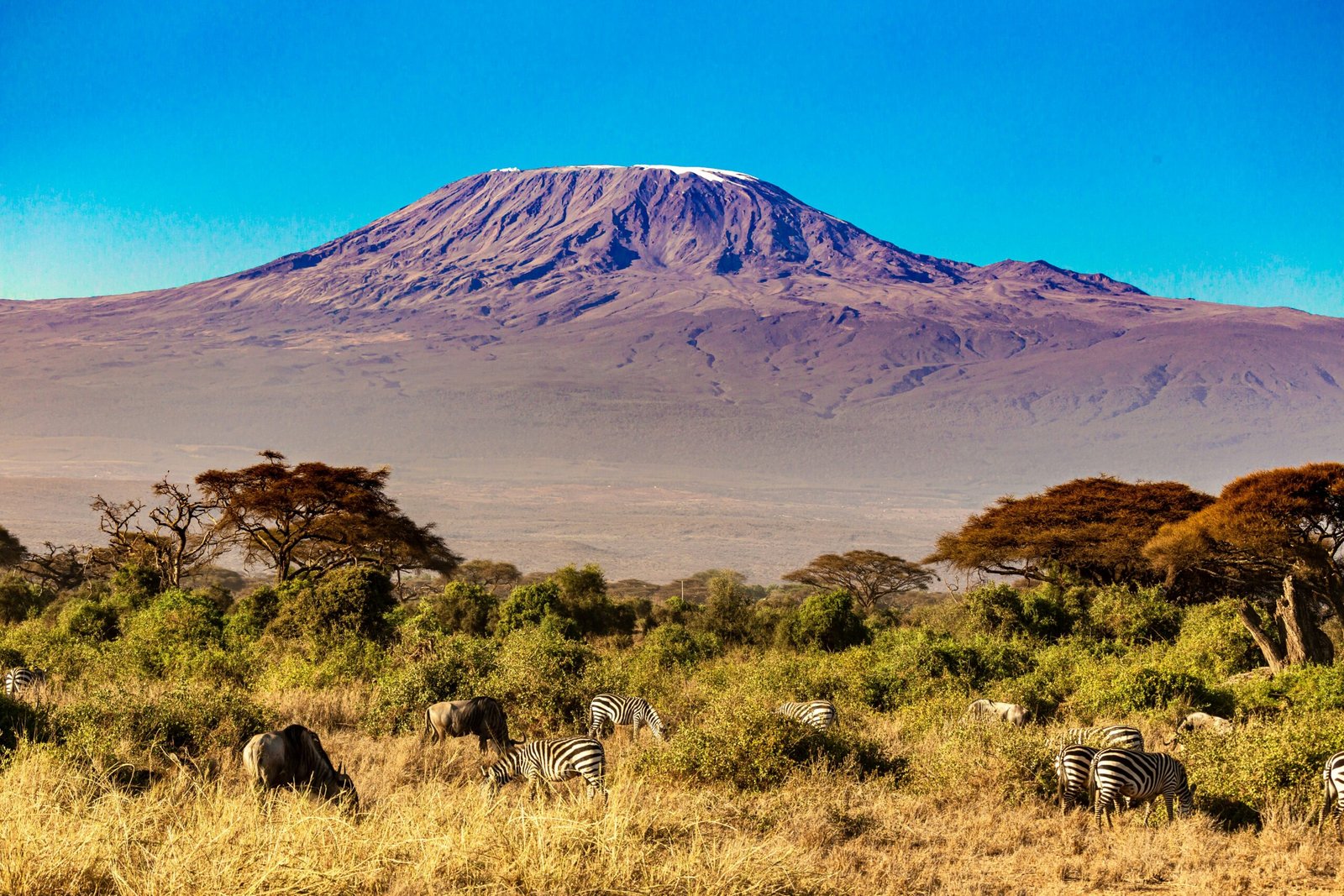
Landscapes are both physical and imagined spaces that emerge as communities interact with the environment over time. In this article, I examine accounts of lived experience on the slopes of Mount Kilimanjaro to explain grassroots strategies for coping with and adapting to dynamic landscapes and opportunities. The introduction of new crops and colonialism in the nineteenth century shaped the nature of relationships between people and the environment, but also between people. I suggest that the dynamics of interactions with the mountain slopes resulted from locally generated practical experiences and the need to adapt to new opportunities and colonial policies.
histories of landscapes, coffee economy, banana gardens, sacred landscapes.
Landscapes are both physical and imagined realities that are negotiated through the interactions and struggles of human actions. These human actions can include the manipulation of physical spaces into settlements, pastoralism, cultivation, industries, ritual practices and many others (Bridges & Osterhoudt, 2021). These activities and interactions with the environment create memories that live on for generations. According to Holtorf and Williams, it is through such memories of the environment that landscapes become ‘historic landscapes’ because they have acquired value through interactions (Holtorf & Williams, 2006).
Steven Feierman (1990) characterized farmers and pastoralists as ‘intellectuals’ as they navigated environmental challenges and opportunities. They became intellectuals because they managed their environment without the help of expert knowledge. This observation was made at a time when there were already numerous studies blaming human actions as the source of environmental degradation. However, new studies from the 1990s onwards argued the opposite: that local agency was important for sustainable environmental management and conservation practices (Annear & Waylen, 2019; Fairhead & Leach, 1996; Mortimore & Tiffen, 1994). Local environmental agency draws on memories of how a particular society has used an environment over time and relies on which practices have worked and which have not.
The slopes of Kilimanjaro have been inhabited for centuries. People living in this part of the world interacted with their environment throughout the pre-colonial period. The pre-colonial period was characterized by the large-scale application of local knowledge and experience in production activities, disease control and environmental management (Giblin, 1996; Kjekshus, 1996; Koponeni, 1988). James Giblin and Helge Kjekshus, for example, argue that the arrival of colonialism disrupted the environmental and ecological systems that had sustained societies for centuries. As a result of this change, societies had to develop new strategies to seize opportunities and meet the challenges posed by colonial policies on land, agriculture and livestock.
Like other colonial subjects, the people from the highlands had to adapt their ways of interacting with the environment soon after colonialism introduced new crops. In general, access to land and other environmental resources was restricted throughout colonial Africa, but to varying degrees depending on the nature of the colonial economy established (Beinart, 2000; 2016). In settler-dominated colonies such as Zimbabwe, South Africa and Kenya, the situation was worse than in non-settler colonies such as Tanganyika or Uganda (Gordon, 1981; Fox & Rowntree, 2006; Gobo & Isaac, 2021). In peasant Tanganyika and Uganda, the rate of land alienation was less disruptive than in the settler-dominated colonies. Although this was a general experience for Tanganyika as a territory, the situation in Kilimanjaro was different. The alienation of land in Kilimanjaro (colonial Moshi District) presented many challenges to be negotiated on the peasant side.
The landscape on the slopes was classified by the people into two categories: the highlands (above 1,000 meters – kihamba landscape), perceived as the ancestral home of the Chagga, and the lowlands (below 1,000 metres – shamba landscape), perceived as landscapes for non-Chagga communities. Such characterization resulted from what could be done socially, spiritually and economically under each category of landscape (Chuhila, 2021). Comparatively, the highlands were able to fulfil many more functions than the lowlands because they were well drained, had reliable rainfall and supported both cash and food crops. No one would voluntarily move from the highlands to the lowlands because their socio-economic identity did not include the lowlands. The lowlands were arid, tsetse-infested and could not support banana and coffee cultivation before the 1950s. This article explores how landscapes shaped people’s memories and mobility as communities engaged in dynamic rural economic activities.
This article draws on oral testimonies gathered through fieldwork interviews conducted in the Kilimanjaro region between 2014 and 2023. I organized several fieldwork visits, each lasting between one and three months, in an attempt to speak to farmers, cultivators and pastoralists. I was initially introduced to informants by village leaders, and then the informants referred me to other potential informants. As most rural activities were controlled by a patriarchal system, most informants were men. Interviews were recorded on audio recorders and then transcribed into Kiswahili. Each interview was given a unique number to conceal the identity of the informant. With their oral consent, I asked them about land, agriculture, pastoralism, culture and traditions. The interviews were conducted in Moshi Rural, Siha, Hai and Rombo districts to capture both highland and lowland experiences and the different environmental characteristics of the districts.
In addition to oral histories, colonial archives were consulted to corroborate grassroots accounts of landscape experiences. Archives were obtained from the UK National Archives (UKNA, London) and the Tanzania National Archives (TNA, Dar es Salaam). Archives provide valuable insights into colonial government interventions aimed at shaping rural development and determining the optimal use of environmental resources. Archival sources and oral interviews were corroborated and triangulated to understand the dynamics of land and resource use.
Johann Rebmann, who is credited with being the first European to climb Mount Kilimanjaro, recorded an impressive experience of the physical environment in the 19th century. On his first visit, for example, he did not observe any large settlements, but only a highland with a scattered population. In his own words:
There are in Jagga [Chagga] no compact villages or towns, but only isolated inclosures [sic], separated from each other by open spaces extending about the eighth of a mile, and always covered with banana-trees. Each yard is occupied by a single family, in several huts, protected by hedgerows of growing bushes, or of dried branches, which serve as a defense against wild beasts, more especially hyenas (Krapf, 2013:244 [1860]).
Although Krapf’s statement does not depict the reality of the Chagga precolonial community, it later influenced European exploration of Kilimanjaro, as well as the colonial encounters of the century. In environmental terms, it highlighted the importance of the banana in people’s livelihoods at a time when the highland’s twin crop, coffee, had not yet been introduced to compete in the landscape. Later in the century, and beyond, the intensification of land use was inevitable to accommodate the newly introduced crops. Local people showed resilience even when coffee was introduced: they did not abandon banana production, but tended to produce both crops in the same environment.
Farming was facilitated by traditionally constructed irrigation structures that captured free-flowing water from the top of the ice-covered Kilimanjaro. Irrigation structures belonged to clans under the supervision of clan chiefs, which simplified control and management (Bender, 2019; Tagseth, 2008). The presence of irrigation enabled the development of home gardens in the highlands, making these areas more desirable for settlement. Harry Hamilton Johnston, one of the earliest missionary explorers of Kilimanjaro, described the irrigation structures as follows:
This, of course, is the handiwork of man, but so industrious have been at varying times the Bantu inhabitants of Kilimanjaro, that there is scarcely a spur descending from the southern base of the mountain that is unprovided with the irrigating channel – or, it may be, three or four channels at different elevations – running along its sloping crest or flanks, and keeping its terraced gardens supplied with water (Johnston, 1886, p.120).
Landscapes were also manifested in people’s social relationships.[1] Housing and settlement, for example, indicated memories of ancestry, relationships or hostilities. For example, when a house was built, the door would face a particular history. Doors faced areas of origin – communicating with and being open to the ancestors. Also, doors never faced former enemies – clans that had fought one another in the past. This practice passed through one generation to another through oral traditions. Kibosho and Machame, for example, who had historical enmities, did not face their doors to one another. Settlement systems and patterns reflected history, defense and security strategies as chiefdoms lived in mutual suspicion (Silayo, 2017).
Communities on the mountain slopes have found unique ways to use natural resources such as land, water and vegetation while preserving them. Agroforestry, for example, has been recognized as one of the most environmentally friendly and sustainable practices in home gardens. Bringing these communities together was the way they were socially connected to the spiritual world before the introduction of Christianity. They regarded the mountain space as sacred, believing it to be the dwelling place of gods and ancestral spirits. Rituals and ceremonies were performed to honor the mountain, asking for blessings for good harvests and protection from natural disasters. The slopes were dotted with sacred sites, making the intersection of the spiritual and natural realms lively.[2]
Rituals and sacred sites sanctified particular pieces of land that could no longer be transferred from one clan to another or between individuals from different clans. No one could sell such land because it remained a permanent clan asset where anyone could go back for prayers. The land became part of the clan identities that were respected across the board. Land did not only mean agriculture and pastoralism, but also meant life today and the afterlife of clan members. These meanings were maintained through socio-cultural networks. One could only transfer or sell land that was acquired by purchase, which was typically located on the lowlands below 1,000 meters, lands considered marginal and not associated with ancestral origin and belonging.[3]
Lowlands were described with negative connotations, associating them with harsh environmental conditions:
We called these areas (lowlands) nuka, which means an area with no people. An area with no people, no banana groves and no coffee. The few people who lived there, or anywhere outside the highlands, were called chundo nuka. Nuka had diseases like fever, malaria and wild animals. Our grandfathers did not like such areas and decided to settle higher up on the mountain slopes.[4]
Clans were identified with specific areas and sacred sites used for prayers and veneration of ancestral spirits. These areas were known as Kiunguni and were identified with particular clans. For example, a tree locally called mchio or loliondo (East African olive) was used by Mshiu clan, while mvule (African teak) was used by Kimalinyi clan.[5] These trees have been maintained in different parts of the highland slopes where ancestor veneration and prayers are still practiced, though to a limited extent, as many people have adopted global faiths such as Christianity and Islam. People would visit these sites to be healed when they fell sick. Such habits started to change after missionaries landed in Kilimanjaro, but reminiscences of the trees and practices have been carried forth by the generations. Graziella Acquavivaexpounded that trees are symbolic features of social identity as communities make them an integral part of their day-to-day undertakings (Acquaviva, 2019). Using examples from Tanzania and Kenya, she demonstrates how particular tree species have been made integral to particular cultural doings. While some societies put emphasis on sacred forests as symbolic features of identity, the landscapes of Kilimanjaro were marked by selected tree species not shared across the ridges but within a clan.
Land in the precolonial period was demarcated as productive or wasteful. These demarcations made a lot of sense. Productive lands were where everyone settled, produced and reproduced, while unproductive lands were deserted and designated as wasteful. Commonly, wasteful lands were used to throw away dead bodies who were not to be associated with clan heritage and identity.[6] They included those who died prematurely, meaning no one could die by natural causes at a young age. Those who were born with physical deformities were also thrown to die. Ashira, literally meaning a smelling area, was chosen in Marangu as a wasteful land where dead bodies were thrown, while Kitimbilihu was chosen as a wasteland in Old Moshi. If anybody died suddenly, this was not seen as a natural death. They thought it was a bad death, and therefore, they did not deserve to be buried on clan lands because they would bring misfortunes to the entire clan. Children who died shortly after they were born at home were thrown into the forest. The society believed that such children “were not part of the clan” and accommodating such dead in clan land “would bring misfortune to the entire family. All children in the family would die”.[7] In this case, the society became careful in handling social values, identities and customs for posterity.
Colonial landscapes involved a range of activities, policies and management plans that were used to exploit environmental resources. Colonial activities such as commercial farming and cattle ranching on alienated land created land scarcity for local people. Despite attempts by the colonial government to address the challenges of land shortage by encouraging migration to the lowlands, these efforts were largely unsuccessful due to the socio-cultural affiliation of the people to the highlands (Chuhila, 2021). Recalling the colonial period, one respondent noted, “one person could be allocated up to five acres of land in the lowlands, but nobody wanted to go there. The Chagga viewed the lowlands as wilderness inhabited by wild animals and plagued by malaria.” [8]
The reluctance of the local population to settle in the lowlands underscores the deeply ingrained cultural and environmental perceptions that shaped land use patterns in the region during the colonial era. In 1948, the Chagga Council (the top organ of the Chagga local administration) petitioned to the United Nations Trusteeship Council, rejecting government plans to relocate them to the lowlands. They made three major points to justify their claims to remain in the highlands. The points included: limited areas for local people’s expansion because of land alienation, shortage of water in the lowlands and bad environmental conditions of the lowlands, including infestation with dangerous malaria and tsetse fly.[9] As a condition to comply with the government’s suggestions, the Chagga Council proposed three issues that the government needed to consider. They suggested that the government should ensure the availability of water, the eradication of tsetse flies and the establishment of medical facilities.[10] All these were difficult to achieve on the government’s side. Even when they tried to establish pilot irrigation schemes on the lowlands, it was not enough to attract the population from the highlands of Mount Kilimanjaro in the 1940s.[11]
Since the 1950s, there has been a notable migration of highland populations into the lowlands, traditionally inhabited by pastoralists throughout the precolonial era. The move was motivated by desires to get more land intended to fulfil their socio-cultural requirements. It was a social requirement that every grown young man should have land where to start a new family. However, this transition was not without its challenges. Cultivators had to navigate the pastoralist economy already established in the lowlands, leading to complex negotiations between the two communities. One Maasai pastoralist reflected on this process, recalling how several Chagga individuals, including Mzee John Fundi, Zakayo Mosha, Joel Ngomuo, Elia Leman and John Saenda, relocated from Marangu to establish new settlements in Siha.[12] Despite their efforts in the lowlands, these areas were traditionally designated for pastoralist activities.
Chief Lemamri of the Maasai clans was particularly vigilant in preventing the encroachment of agricultural practices in the lowland areas of Siha. But the seasonal grazing patterns of the pastoralists, which saw them move from Siha to other areas between February and October, created opportunities for cultivators to expand into pasture lands.[13] This posed challenges not only in terms of farming but also in clearing vegetation previously utilized by livestock. In the long run, pastoralists found themselves increasingly disadvantaged by remaining in Siha, prompting their migration to other areas such as Arusha. By 1952, the Siha areas were distributed to the Chagga community under the leadership of Mangi John Gidion, making the areas available for permanent occupation and indirectly discouraging pastoralists’ activities.[14] This shift reflects the complex dynamics of land use and resource management, shaped by historical, environmental and socio-economic factors.
The lowlands offered favorable conditions for pastoralism, attracting an influx of highland dwellers seeking land due to scarcity in the highlands. As more highland inhabitants migrated to the lowlands, the traditional Maasai pastoralists faced the challenge of adjusting their nomadic practices to avoid encroachment by farming communities. One individual recollected their family’s move to Kambi ya Nyuki in 1949, stating, “We moved to Kambi ya Nyuki when I was still young. My parents came here to open new farms, but there were many Maasai pastoralists.”[15] This migration pattern highlights the competition for land between settlers and pastoralists. Similarly, another migrant to Kambi ya Nyuki observed, “Kambi ya Nyuki was originally for Maasai pastoralists, but due to land shortages in the highlands, we were compelled to settle in this area.”[16] This testimony accentuates how environmental pressures and land scarcity drove migration patterns, leading to the coexistence of farming and pastoralist communities in the lowlands.
Adapting to the environmental conditions was imperative for survival in the mountainous regions. Transitioning from the highlands to the lowlands necessitated a shift in agricultural practices and dietary habits. Traditionally, highland communities relied on banana and coffee cultivation, which were central to their experience and cultural identity. However, upon relocating to the lowlands, they had to adopt the crops that were better suited to the new environment. These included maize, beans and millet.[17] One individual who migrated from Uswaa village in the highlands to the lowlands recounted their transition, stating, “when I was in Uswaa, I grew bananas and coffee and kept some livestock because we did not have enough land. When I moved here (Kwasadala/lowland), I cultivated maize, and the crops and livestock increased because we got more land.”[18] This shift was a pragmatic response to the environmental constraints of the lowlands, where poorly drained soil inhibited the cultivation of perennial crops like bananas and coffee.
The introduction of coffee to the mountain slopes during the colonial period marked a significant shift, as its importance and market value increased over time. This transformation not only defined the physical landscapes but also exerted influence on the social and cultural dynamics of the region (Clark, 2011). Land was alienated, legal provisions safeguarding land alienation were made, especially the Land Act of 1923.[19] Alienation left behind local populations with land shortage and marked the beginning of a long struggle over land ownership and use.
Cultivation of bananas and coffee on the slopes of Mount Kilimanjaro dates back centuries, intertwining with the region’s rich history and cultural traditions. Bananas, believed to have originated in Southeast Asia, were introduced to East Africa by early traders and settlers (Vansina, 2003; Mbida et al, 2005; Neumann & Hildebrand, 2009). They quickly became a staple food crop, valued for their nutritional content and versatility in local diets. Coffee, on the other hand, has a more recent history in the region, with Arabica coffee introduced to Tanganyika in the 19th century by Missionaries. Since then, coffee cultivation has flourished on the fertile slopes of Mount Kilimanjaro, earning global recognition for its high-quality beans and distinct flavor profiles. The colonial government made provisions to control settler and peasant coffee cultivation to prevent disease and establish reliable marketing structures for coffee – a trend that encouraged progressive farming.[20] Coffee farming is typically expensive and labor-intensive as it requires several farm inputs to produce high yields. Banana farming, on the other hand, is relatively easier. According to local articulations:
It is less labor-intensive and integrates the Chagga’s daily livelihood activities. When a woman wakes up early in the morning, she cleans the house and the cattle shed and spreads the rubbish in the banana grove. Similarly, when the husband wakes up, he would check to see if there are any banana leaves to cut or grasses to weed.[21]
No further labor was needed to grow a banana grove. This made the banana easily adaptable to people’s cultural practices, as families could easily grow it in their home gardens. It fitted well into a rural economy that included animal husbandry, forestry and agriculture.
Bananas were classified according to the purpose they served rather than their scientific nomenclature. For example, seven major banana varieties were grown on the slopes of the mountain. As such, kitarasa, mkodosi, mshare, ndishi and kisukari were used for food, be it for cooking or eating as ripe fruit. On the other hand, kidungara and mnyengere were used for making traditional beer.[22] While these banana varieties were most common in Rombo, other areas would have variations on how they named them, but the purpose for each variety was the same across the mountain slopes. Traditional banana varieties were preferred over the newly introduced varieties such as matoke, malindi and mshare mrefu. In Machame, banana varieties were named nderembo, mshare, msharambowe, kisukari, inamambo, ifanaiya, irari and mshonowe.[23] The difference in the way they were named emanated from the linguistic diversity that the mountain slopes inhibit, but also indicated how banana was locally accommodated on the slopes. During the colonial period, while bananas were mainly used for food, coffee remained a dependable cash crop.
Coffee cultivation was associated with masculinity, while bananas were looked as a feminine crop primarily used for household consumption as a staple food (Miller, 2001; Williams, 2022). Coffee and banana farming were gendered in the way they were organized. When coffee was doing well, men controlled its marketing systems while women controlled bananas. The logic behind women’s control of bananas was that they could approximate what was required for domestic food before disposing of any remaining surplus. The decline of coffee value has made banana an all-inclusive crop for both men and women. In the past,
coffee belonged to men, while bananas and milk belonged to women. Coffee belonged to men because it was a cash crop. More recently, bananas have also become a cash crop, and once sold, men also get some dividends to put in their pockets. Now we have avocados. If we get money from them, it belongs to both of us.[24]
Most farmers have even converted their coffee farms into banana gardens to take advantage of the banana prices. The only danger in this process is that traditional land use practices are threatened, and the ecology of the highland gardens is less sustainable. Home gardens have been sustained by a combination of coffee, bananas and livestock.[25] The removal of coffee from the equation means that competition for land use in other areas is intensifying. Again, income diversification has been limited, as only the income from banana sales sustains families.[26] During the colonial period, coffee became socially and economically transformative as almost all families attempted to grow it. In an interview, an informant, who later became the first Chagga to be ordained a priest in the Catholic Church in 1957, noted the importance of coffee to the landscape on the slopes of Mount Kilimanjaro. He remarked: “My father had five acres of Kihamba where he grew coffee, and at times when it was productive, he was able to do better things with the income from selling coffee”.[27] Collectively organized by the Kilimanjaro Native Cooperative Union since the 1920s, the coffee economy has had a long-lasting impact on the landscape, which has only declined significantly in recent decades.
Dependence on the coffee economy was not inviolable. Population increase made land parceling continue to reduce arable land, thereby making agriculture unsustainable and challenging the social binding to the highland landscapes (Soini, 2005; Chuhila, 2021). Reduced land that went together with declining coffee prices made coffee “a white elephant” crop on the mountain slopes, as inhabitants started to think of an alternative livelihood option (Soini, 2005). Informants on the slopes of the mountain reckon that declining coffee prices resulted in the conversion of coffee plots into commercial banana farming, while in other areas vegetable crops such as cabbage, onions, tomatoes, and fruits like avocados have begun to be produced commercially.[28] The oral histories of landscape make it clear that soil quality has changed as compared to what it used to be in the past in relation to coffee farming. In Kelamfua village, a former coffee peasant remarked that:
the soil has deteriorated to withstand coffee farming. In order to produce more coffee, one needs to spend a lot of their time on the farm and use artificial fertilizers, which are increasingly expensive. Such production cost is not commensurate with coffee prices at the end of the season.[29]
The introduction of bananas to the market helped to integrate maize into the Chagga diet. Initially, maize meal in the Chagga society had connotations of food scarcity and deprivation, symbolizing a mark of starvation, but when bananas switched into a commercial crop, maize became a dependable food crop.[30] This reflects the complex interplay between economic pressures, cultural norms and dietary habits in colonial landscapes, highlighting the multifaceted nature of food production and consumption during this period. While the colonial government encouraged maize farming on the slopes of the mountain, the local communities still considered maize as food for other ethnic groups, especially migrant laborers, until later towards the end of colonial rule.[31]
According to an elder in Wandi village;
in recent days, the Chagga have been eating ugali and rice as part of their diet. They cannot eat a banana for two or three days in a row without changing it. Those living in the lowlands depend on maize as their main food because they cannot grow bananas.[32]
Another farmer said: “There is a big change in food preferences. Many people eat ugali. Banana has become a cash crop and people are replacing coffee plants with cabbage and other vegetables”.[33] From a crop of no commercial value in Kilimanjaro to a reliable cash crop, banana farming illustrates the changing role of the environment and socio-economic organization.
Food production is strongly influenced by both social constructs and environmental factors. The environment dictates which crops can thrive, leading societies to adapt to the resources readily available in their environment. In the highlands of Kilimanjaro, food production carries deep ancestral ties and a sense of belonging. For generations, bananas have been a staple food for the Chagga people, sustaining both their diet and the ecological balance of the highlands, where bananas, coffee, trees and vegetables coexist harmoniously.
However, changes in the food landscape began when bananas began to dominate the market, capitalizing on the decline of the coffee industry. This transition changed perceptions of what constituted food, as bananas progressively became a market crop. The dynamic evolved further during the Second World War, when permanent settlements were established in the lowlands, where bananas could not thrive. In response, maize emerged as an environmentally sustainable alternative. Over time, maize meal became an integral part of the daily diet, with families unable to survive on bananas alone.[34] This transformation shows the dynamic interplay between societal needs, environmental constraints and evolving food preferences in shaping diets over time.
Since the 1990s, studies of grassroots experiences and initiatives have demonstrated the power of communities to negotiate their interactions with the environment. This article has shown how farmers and pastoralists shaped landscape experiences on the slopes of Mount Kilimanjaro in response to colonial policies and economies. Mobility from the highlands to the lowlands created new experiences while maintaining some old practices, such as classifying land as wasteful or productive. It also maintained spiritual links to the landscape, which had been embedded in values, identities and customs for generations. The coexistence of pastoralism and cultivation in the lowlands demonstrated the extent to which societies can adapt to changing environmental opportunities.
Acquaviva, G. (2019). Cultural values of trees in the East African context. Kervan, 23(1), 29–47.https://doi.org/10.13135/1825-263X/3290
Annear, C. M., & Waylen, P. R. (2019). Socializing the rain: Human adaptation to ecological variability in a fishery, Mweru-Luapula, Zambia. Journal of Political Ecology, 26(1), 224–242. https://doi.org/10.2458/v26i1.23246
Beinart, W. (2000). African history and environmental history. African Affairs, 99(395), 269–302.
Beinart, W. (2016). Beyond the colonial paradigm: African history and environmental history in large-scale perspective. In S. Dubow (Ed.), The Rise and Fall of Modern Empires, Volume II (pp. 437–454). Routledge.
Bender, M. V. (2019). Water brings no harm: Management knowledge and the struggle for the waters of Kilimanjaro. Ohio University Press.
Bridges, B., & Osterhoudt, S. (2021). Landscapes and memory. In Oxford Research Encyclopaedia of Anthropology. https://doi.org/10.1093/acrefore/9780190854584.013.304
Chuhila, M. J. (2021). Whose history is our history? Six decades of the production of historical knowledge in Tanzania. Tanzania Zamani, 13(2), 97– 115.https://journals.udsm.ac.tz/index.php/tz/article/view/4954
Clack, T. (2011). Thinking through memoryscapes: Symbolic environmental potency on Mount Kilimanjaro, Tanzania. In T. Myllynatus (Ed.), Thinking through the Environment. Green Approaches to Global History (pp. 115–134). White Horse.
Fairhead, J., & Leach, M. (1996). Misreading the African landscape: Society and ecology in a forest-savanna mosaic. Cambridge University Press.
Feierman, S. M. (1990). Peasant intellectuals: Anthropology and history in Tanzania. University of Wisconsin Press.
Fisher, T. J. (2012). Chagga elites and the politics of ethnicity in Kilimanjaro, Tanzania [Doctoral dissertation, University of Edinburgh] http://hdl.handle.net/1842/6452.
Fox, R., & Rowntree, K. (2006). The land question in South Africa, Zimbabwe and Kenya: A geographical perspective on resource endowment. In: Regional Conference of the International Geographical Union, 4-7 Aug 2002, Durban.
Giblin, J. L. (1996). The politics of environmental control in Northeastern Tanzania, 1840-1940. University of Pennsylvania Press.
Gobo, P. A., & Isaac, U. N. (2021). Land Alienation in Settler Colonies Compared: Kenya, Zimbabwe and South Africa. South-South Journal of Humanities and International Studies, 4(4), 281– 298.
Gordon, D. F. (1981). Decolonization and development in Kenya and Zimbabwe: A comparative analysis. African Issues, 11(3-4), 36– 40. https://doi.org/10.2307/1166595
Harvey, D., & Riley, M. (2005). Country stories: The use of oral histories of the countryside to challenge the sciences of the past and future. Interdisciplinary Science Reviews, 30(1), 19–32. https://doi.org/10.1179/030801805X19681
Holtorf, C., & Williams, H. (2006). Landscapes and memories. In The Cambridge Companion to Historical Archaeology, 235– 254. https://doi.org/10.1017/CCO9781139167321.013
Johnston, H. H.(1886). The Kilima-Njaro Expedition: A record of scientific exploration in Eastern Equatorial Africa and a general description of the natural history, languages, and commerce of the Kilima-Njaro district. K. Paul, Trench & Co.
Kjekshus, H. (1996). Ecology control and economic development in East African history: The case of Tanganyika 1850–1950. Mkuki na Nyota
Koponen, J. (1988). People and production in late precolonial Tanzania: History and structures. Finnish Society for Development Studies; Nordiska Afrikainstitutet.
Krapf, R. D. J. L. (2013). Travels, researches and missionary labours during an eighteen-year residence in Eastern Africa. Routledge.
Mbida, C., Doutrelepont, H., Vrydaghs, L., Swennen, Ro., Swennen, Ru., Beeckman, H., Langhe, E.De., & de Maret, P. (2005). The initial history of bananas in Africa. A reply to Jan Vansina, Azania, 2003. AZANIA: Journal of the British Institute in Eastern Africa, 40(1), 128-135.https://doi.org/10.1080/00672700509480419
Miller, J. B. (2001). Land, labor, and gender relations: The Chagga home gardens of Mt. Kilimanjaro, Tanzania. Michigan State University.
Mortimore, M., & Tiffin, M. (1994). More people, less erosion: Population and land use in Machakos District, Kenya. London: Overseas Development Institute.
Neumann, K., & Hildebrand, E. (2009). Early bananas in Africa: the state of the art. Ethnobotany Research and Applications, 7, 353–362. Retrieved from: https://ethnobotanyjournal.org/index.php/era/article/view/361
Neumann, R. P. (1995). Ways of seeing Africa: Colonial recasting of African society and landscape in Serengeti National Park. Ecumene, 2(2), 149–169. https://doi.org/10.1177/147447409500200203
Portelli, A. (2018). Living voices: The oral history interview as dialogue and experience. The Oral History Review, 45(2), 239– 248. https://doi.org/10.1093/ohr/ohy030
Riley, M., & Harvey, D. (2007). Oral histories, farm practice and uncovering meaning in the countryside. Social & Cultural Geography, 8(3), 391– 415. https://doi.org/10.1080/14649360701488823
Silayo, V. (2017). Reconnoitring the Pre-Colonial Chiefdoms and the Emergence of Social Complexity in Kilimanjaro, Tanzania [Doctoral dissertation, La Trobe University.
Silayo, V. V. M. (2022). Land and culture as symbols of remembrance, ancestry, rituals and initiations: The case of kihamba, kyungu and kifunyi among the Chagga of Kilimanjaro, Tanzania. African Journal on Land Policy and Geospatial Sciences, 5(4), 891– 902.
Soini, E. (2005). Changing livelihoods on the slopes of Mt. Kilimanjaro, Tanzania: Challenges and opportunities in the Chagga homegarden system. Agroforestry Systems, 64, 157– 167. https://doi.org/10.1007/s10457-004-1023-y
Soini, E. (2005). Land use change patterns and livelihood dynamics on the slopes of Mt. Kilimanjaro, Tanzania. Agricultural Systems, 85(3), 306– 323. https://doi.org/10.1016/j.agsy.2005.06.013
Tagseth, M. (2008). The expansion of traditional irrigation in Kilimanjaro, Tanzania. The International Journal of African Historical Studies, 41(3), 461– 490.
Vansina, J. (2003). Bananas in Cameroun c. 500 BCE? Not proven. Azania: Archaeological Research in Africa, 38(1), 174–176. https://doi.org/10.1080/00672700309480367
Williams, B. A. (2022). Bananas are for women, coffee is for men: Gendered narratives of agricultural histories on Mount Meru, Tanzania. African Studies Review, 65(1), 143–165. https://doi.org/10.1017/asr.2021.120
[1] Interview, KOT 1, 19th August 2013, Moshi. All interview quotations have been translated from Swahili by the author.
[2] Interview, KOT 83, 18th May 2023, Kidia.
[3] Interview, KOT 80, 14th May 2023, Ashira.
[4] Interview, KOT 80, 14th May 2023, Ashira.
[5] Interview, KOT 83, 18th May 2023, Kidia.
[6] Interviews, KOT 80, 14th May 2023, Ashira; KOT 81, 17th May 2023, Himo and KOT 83, 18th May 2023, Kidia.
[7] Interview, KOT 80, 14th May 2023, Ashira.
[8] Interview, KOT 20, 17th February 2015, Wandi Kati Village.
[9] UKNA CO 691/200/2: Memorandum to be placed before the UNO Trusteeship Mission by the Chagga Council, 8th September 1948.
[11] TNA 5/24/17: Development of lower areas and TNA 5/20/16/Vol.III Moshi: Expansion of Chagga lands: Uru – Rau – Himo Areas.
[12] Interview, KOT 64, 23rd August 2015, Ngaritati village.
[13] Interview, KOT 64, 23rd August 2015, Ngaritati village.
[14] Interview, KOT 64, 23rd August 2015, Ngaritati village.
[15] Interview, KOT 41, 19th February 2015, Kambi ya Nyuki.
[16] Interview, KOT 42, 19th February 2015, Kambi ya Nyuki.
[17] Interview, KOT 44, 23rd February 2015, Kwasadala.
[18] Interview, KOT 44, 23rd February 2015, Kwasadala.
[19] UKNA CO 737/3 Tanganyika Territory Gazette, Vol VI. No. 1, 1925.
[20] TNA H.5/11908: Coffee cultivation by Natives Vol.I and TNA 13060: Coffee ordinance and regulations attitude of Kilimanjaro Native Planters Association.
[21] Interview, KOT 68, 22nd August 2015, Kwasadala.
[22] Interview, KOT 4, 26th August 2014, Kelamfua.
[23] Interview, KOT 6, 2nd September 2014, Uswaa.
[24] Interview, KOT 84, 19th May 2023, Rauya.
[25] Interview, KOT 3, 26th August 2014, Kelamfua.
[26] Interview, KOT 68, 22nd August 2015, Kwasadala.
[27] Interview, KOT 1, 19th August 2014, Moshi.
[28] Interviews, KOT 2, 25th August 2014, Ushiri and KOT 18, 14th January 2015.
[29] Interview, KOT 3, 26th August 2014, Kelamfua.
[30] Interview, KOT 18, 14th January 2015, Dar es Salaam.
[31] UKNA CO 691/191/2: War revenue; CO 691/209/1: Alienated and tribal land; Kilimanjaro and Meru Mountains and CO 691/209/2: Alienated and tribal land; Kilimanjaro and Meru.
[32] Interview, KOT 21, 17th February 2015, Wandi Kati Village.
[33] Interview, KOT 30, 27th February 2015, Tarakea.
[34] Interview, KOT 21, 17th February 2015, Wandi Kati Village.
25 / August / 2026
By: Ngaka Mosiane, Phathutshedzo Eugene Ratshiedana, and Wendy Tsoriyo
25 / August / 2026
By: Jackson Tamunosaki Jack
25 / August / 2026
By: Tholithemba Lorenzo Ndaba, Madoda Mkhobeni, and William Matlala
14 / August / 2026
By: Timothy Elikem Harvor and Alena Thiel
14 / August / 2026
By: Matthias C. J. De Groof