
November / 16 / 2026
By: Sara de Wit , Iva Peša , Timo Makori , Ismay Milford , Joseph Mujere
What can African grassroots perspectives on the Anthropocene reveal about the structural and historically produced injustices of communities who are at the forefront of planetary transformations? And do they have the potential to re-imagine and recreate futures that are more inclusive and just for people at the margins? The rich bundle of essays collected in this special issue shows that historical and ethnographic methods have the power to bring into view the local experiences, injustices, frictions, and politics that are often obscured by the universalizing and depoliticizing appeal of global discourses, new sociotechnical fixes, and imaginaries characteristic of the Anthropocene. In this Introduction, we critique the Anthropocene’s implied temporality; its hegemony over knowledge production; and its tendency to deny human agency, or more precisely, foreground certain forms of human agency and sociotechnical imaginaries over others – notably shrouding the grassroots and the humanities. We argue for innovative methods that trace global developments and local realities by centering the social sciences and humanities in debates on planetary challenges, which are grounded in grassroots experiences and ideas of ecological conviviality, to develop more just futures for Africa
Anthropocene injustices, ecological conviviality, grassroots resistance, Africa
“If the Anthropocene is to have real value as a category of thought and call to action, it must federate people and places, not just disciplines. It requires thinking from, and with Africa.” (Hecht, 2018)
“This planetary turn of the African predicament will constitute the main cultural and philosophical event of the 21st century.” (Mbembe, 2016)
Since the inception of the term Anthropocene in the year 2000 (Crutzen & Stoermer, 2000), it has become a “charismatic mega category” (Reddy, 2014). Having sparked a wild array of controversial debates about time, space, the end and future of humanity, transspecies ontologies – indeed about almost everything – the concept has increasingly been beset with vagueness. Consequently, social science and humanities (SSH) scholars have proposed manifold alternatives[1], and leveraged important critiques on the Anthropocene (Chakrabarty, 2009; Demos, 2017; Haraway, 2015; Malm & Hornborg, 2014). Natural scientists, on the other hand, after two decades of pondering the Earth’s crust in search of the Golden Spike (the physical marker of this new geological epoch, as if it had ontological status of truth), have after all rejected it[2]. Our intention is not to engage with the conceptual politics around the Anthropocene, but to render it useful as a framework for critique. Thinking with and from Africa as humanities scholars, it is important to note that the Anthropocene has had many different socio-temporal scales and manifestations that can be found not only in the Earth’s crust, but also in African bodies, experiences and environments long before the ‘Great Acceleration’ of industrialized nations (McNeill & Engelke, 2016). Scholars have critiqued this proposed Eurocentric temporality of the Anthropocene (Erickson, 2020) and the climate crisis (Whyte, 2018), but also how the term has attributed planetary destruction to a singular humanity, thereby erasing violent histories and lived realities of colonial and capitalist extraction, and ongoing forms of toxicity and pollution that continue to be ‘offloaded’ from richer to poorer parts of the world (Hecht, 2023; Yusoff, 2018; Peša, 2023). These worlds of harm and destruction at the ruins of capitalism, or the ‘unseen’ Anthropocene, continue to be obscured in discussions on the green energy transition. Tracing the politics and geological timescapes of the Anthropocene along color lines, Yusoff invokes ‘A Billion Black Anthropocenes’, that is, the closeness of black and brown bodies to harm due to their proximity to the inhuman through long histories of extractive economies under colonialism and slavery. She reminds us that indeed no geology is ever neutral (Yusoff, 2018).
Among the most paradoxical unfolding of the Anthropocene framework has been its depoliticizing effects, by which we mean the apolitical manifestation of sociotechnical imaginaries and solutions that have, in fact, elevated the Anthropos to new cosmic orbits. Introducing the Anthropo-obScene, Swyngedouw and Erntsen (2018) critically observe how the depoliticizing effects of the Anthropocene off-stage certain political possibilities, actors, and narratives, while staging “those promoting geo-engineering and earth system science as an immunological prophylactic to our situation” (Swyngedouw & Erntsen, 2018: 4)[3]. They observe that such “immunological biopolitical fantasies” that promise resilient adaptation and management of the Earth allow life to continue comfortably for some, while leading to necropolitics for others (ibid).
This special issue takes on board and thinks with these critiques, arguing for continued engagement with a critical Anthropocene framework, while acknowledging and scrutinizing which narratives and actors are made in/visible. The contributions collected here are organized around three of the most important challenges levelled at the Anthropocene, which we phrase as guiding questions below: the Anthropocene’s implied temporality; its hegemony over knowledge production; and its tendency to deny human agency, or more precisely, foreground certain forms of human agency and sociotechnical imaginaries over others – notably shrouding the grassroots and the humanities. Before introducing these questions and the articles themselves, we outline why grassroots perspectives from the African continent are particularly generative for engaging with the tensions and paradoxes of the Anthropocene.
Minerals and natural resources from Africa – and other places in the Global South – have played a huge role in powering colonialism and industrialization. Indeed, harmful forms of extractivism (even so-called ‘green’ extraction) continue to fuel the Anthropocene (Hecht, 2018). In addition to these historical injustices, new forms of environmental interventions in the name of climate change adaptation (de Wit, 2018), mitigation, or ‘climate solutionism’ follow colonial legacies and forms of exploitation that “do not emerge in spite, but rather because of”, decarbonization efforts (Sultana, 2022; De la Hoz, et al. 2024; Peša, 2024). It is against this background that Amponsah recently argued “against climate resilience”, since he observed that “development agendas framed around resilience promise empowerment but often reproduce colonial power dynamics in the guise of climate adaptation” (Amponsah, 2025). In a similar vein, nature conservation may lead to double injustices (Omokutu, 2021) or environmental colonialism, for example, when people are displaced from their forest lands to create national parks or conservation areas (Nelson, 2003), or through increasing forms of ‘green militarization’ (Duffy, 2001) and ‘fortress conservation’ (Brockington, 2002) for safari tourism. Such efforts can be observed all over the African continent, resulting in ‘conservation refugees’ (Dowey, 2011) and grave human rights abuses, which continue to be legitimized by the need to protect Africa’s iconic animals from Africans by foreign corporate ‘wildlife entrepreneurs’ (van Beemen, 2024). What these interventions and discourses have in common is the structural violence, neglect, and sidelining of grassroots epistemologies and ontologies.
Against these past and ongoing injustices, social scientists have begun to ask what a ‘just Anthropocene’ might look like (Stevis et al., 2021). Calls for environmental and climate justice have recently become more pronounced in global environmental governance and in human rights frameworks. Scholars have observed a ‘justice turn’, which acknowledges that there can be no planetary health without planetary justice (Biermann, Dirth, and Kalfagianni, 2020; Biermann & Kalfagianni, 2020)[4]. However, as this special issue also shows there is a lack of concrete proposals that take into consideration the fate of the poor in earth system governance, which means that abstract ideas of planetary justice need to be connected to the lives and realities of local communities who live at the frontiers of planetary challenges (Kashwan et al., 2020)[5].
In this special issue, we deliberately pluralize and situate the Anthropocene in different scenes and ask how theorizing looks if we begin by exploring and foregrounding grassroots perspectives and lived experiences situated in different African contexts. Moving from technologies of anticipation and grassroots predictions in Ghana (Harvor & Thiel); to e-waste and space colonization’s impact in Congo (de Groof); to township environmentalism around gold mine dumps in Johannesburg (Ndaba et al.); to mining waste and citizen science in Johannesburg (Mosiane et al.); to the localization of toxic extractivism in the Niger Delta (Jackson); to the role of sacred forests and ancestral spirits in conservation efforts in northern Tanzania (Alvarez); to oral histories of landscapes and environmental change on the slopes of Mount Kilimanjaro (Chuhila); to more-than-human lifeforms for sustaining healthy socio-ecological systems among Shona agriculturalists in Zimbabwe (Magaya & Ruguwa); to land evictions and biodiversity offsets in Madagascar for large-scale mining of cobalt and nickel (Rabemanantsoa); the articles underline that all our lives are interconnected, yet planetary precarity is vastly differently experienced. Rather than presupposing something inherently or singularly ‘African’ about the scenes we bring into view here, the special issue refers to AnthropoScenes in and views from Africa. The question is how these scenes become manifest and how they can (and are) be(ing) witnessed.
How can alternative futures and temporalities be imagined and enacted in the Anthropocene? Let’s start with a simple premise: despite all the blinders we have constructed to fictionalize our differences, we – humans – are all connected. Yet notwithstanding our life-affirming connectedness, modern social order appears to be far more adept at producing negative and depleting entailments, rather than emphasizing that which is enlivening and vitalizing.
This issue is at the core of simple interactions. Take the example of the isiZulu greeting, ‘sawubona.’ When two Zulu-speaking people meet, one will recognize the other by saying ‘sawubona’, which translates to “we see you”. Crucial here is the acknowledgement that a ‘we’ is affirming co-presence; it is a ‘we’ that is doing the ‘seeing’ and not an individual ‘I’. Orland Bishop, a community leader and Director of the Shadetree Multicultural Foundation in Los Angeles, California, explains that invocation of plurality of being seeks to communicate that the speaking subject is connected to others who have come before them and who, at that moment, are ‘seeing’ through the speaker’s eyes. What this means for Bishop is that “my seeing includes my ancestors and other divinities.” Now, in response to this greeting, the other interlocutor will customarily respond by saying ‘Yebo sawubona’, meaning “Yes, we see you too.” The mutual recognition establishes an obligation between the speakers to see each other in all their variety and to communicate. At its deepest level, Bishop makes clear that Sawubona is a form of witnessing; it is a way of seeing each other that “empowers us to investigate our mutual potential for life […] if we are indeed seeing each other, we are here at the same time, what has this moment in time invited us to do? At a personal level, Bishop mentions that Sawubona really begs a response to the question: “how do I have to be in order for you to be free?” (Bishop in Global Oneness Project, 2006-2025).
A lesson to take from sawubona is that connection is a way of reasoning that leads us to commitment (Muecke, 1997: 184-5 in Rose 2015, 4). To be connected is to be complicit, implicated, enmeshed, affected, and porous to others and to the outside. A second lesson is the imperative to witness planetary change in a way that affirms presence, habitation, and endurance of being. This means asking at a basic level: what are we seeing unfolding in spaces where life still exists in Africa? What does that which we see appear to mean? How can we name it, and what does such naming imply for collective human and non-human life? If life itself is at the center of our analytic focus, emplacing the Anthropocene crisis on the African continent becomes a strategy of witnessing what wants to live, but is at risk of extinction. It is, as Mary Graham (2008), an Australian Aboriginal philosopher, says, a logic of commitment to life on Earth. For Graham (2008), Indigenous cultures of land and place hold fast to two core tenets: the first is, the land is the law, meaning that all living things must recognize and submit to laws of the living world; humans are no exception. The second, “you are not alone in the world”, registers the world of encounters between humans and other forms of living and non-living entities (Graham in Rose, 2015: p. 5).
This holiness of land and the interconnectedness of life become very clear in Carole Rabemanantsoa’s paper on the Ambatovy mine, for which local communities had to be evicted from their ancestral land. For the Malagasy, land is not just a common and shared source of living; the tanindrazana, which is the ancestral land, is intimately bound up with practices of sharing and caring, best captured by the term fihavanana, relationality, solidarity, or ‘togetherness’. It encompasses all life forms, extending from unborn generations to the ancestors. Through local conservation practices and values, local communities have always cared for their natural environment. Yet Ambatovy mine employs internationally recognized strategies of corporate social responsibility, such as biodiversity offsets and selling communities the false dream of compensation measures, which have disrupted local livelihoods and environments, to ultimately achieve international status as a development and conservation champion. However, the Malagasy communities are not passive victims in this story but invoke the power of the ancestors through ritual performances, which allows them to reclaim ancestral connections to their land.
Taken together, the point is that we humans are enmeshed in a web of life larger than our own, and therefore, if threatened, naturally threatens our own. The irony here is that while such ontologies that appreciate the interconnectedness between the environment, human health, and well-being are increasingly being acknowledged in new medical and environmental fields of practice, such as One Health and Planetary Health, these forms of knowing and being have always been present in Indigenous lifeworlds. Yet their voices continue to be excluded from policymaking and rendered ignorant. Indigenous communities, who live in the most biodiverse places on earth, are increasingly at risk of being expropriated from their own source of existence in the name of biodiversity and nature conservation (Nelson, 2003), ‘green energy transitions’ or climate adaptation and ‘green grabbing’ (Cavanagh, 2017; Fairhead, Leach & Scoones, 2012). Attending to AnthropoScenes in Africa through a centering of life itself is particularly crucial in historical terms. Not only is the continent home to the earliest known human beings, but it is also the forebearer for some of the most violent and epoch-defining processes of modern history. Situating the Anthropocene in Africa invites us to consider the enduring consequences of the transatlantic slave trade as a structuring order of the capitalist present on the continent. Thinking from the empirics of experience on African soil enables us to observe the liminal zones produced by capitalism’s march through nature, and how particular forms of nature guarantee the proliferation of capital – what Moore (2015) has referred to as the Capitalocene.
What role can the social sciences and the humanities play to redress the power imbalances of Anthropocene narratives and solutions?
Global Anthropocene narratives conjure up eschatological anxieties about ecological collapse and climate disaster, thereby engendering solution-oriented quick-fixes and technocratic politics of control and anticipation. Indeed, Anthropocene narratives are permeated with crisis thinking, which has become the defining narrative marker of our time (Roitman, 2014). Such crisis narratives do not only fail to address the root causes of planetary challenges and related vulnerabilities but also foreclose the possibility of alternative narratives and imaginaries that are grounded in more sustainable and bottom-up approaches. Arguably one of the most extreme manifestations of this apocalyptic disaster preparedness is what Klein and Taylor (2025) have recently called “the rise of end time fascism”, which is characterized by an elite, supremacist bunker mentality that seeks to rescue a very select part of humanity by building new techno-utopias. This, obviously, “is a darkly festive fatalism – a final refuge for those who find it easier to celebrate destruction than imagine living without supremacy”. While the ecological crisis has resulted in the creation of “sacrifice zones”, and “derelict landscapes”, the extremely wealthy are increasingly “curating landscapes” as exclusive safe havens to escape climate-related distress, for example in private luxury wildlife estates or conservation areas in Africa (Lenggenhager & Moore, 2025). Historical insights have long demonstrated that Africa’s nature has served as Western aristocrats’ hunting playground, always justified by the idea that “African wildlife is under threat from African people” (Duffy, 2001). This environmental colonialism, which is often couched in religious language, is justified by the need to preserve the “remaining wild areas; and take steps to protect what is left of ‘the creation’ on earth” (Nelson, 2003: p. 67).
This brings us to another absurd Anthropocene reality of our time: while living through a triple planetary crisis of biodiversity loss, climate change, and pollution, trips to Mars and space colonization are no longer confined to our imagination. Urgent planetary challenges such as climate change and pandemic threats are increasingly being solved through energy-heavy computational models and AI technologies, justified by growth-driven ideologies. This ‘colonization of the future’ (de Groof, this issue) is a condition that can be described as the ‘postpolitical’, in which solutions are sought within the confines of the same system that produced it, thereby foreclosing alternative pathways (Swyngedouw, 2011). This digital absurdity has been underscored by Mbembe during the unfolding Covid-19 pandemic and the stark inequities in global health that became painfully visible:
“In Africa especially, but in many places in the Global South, energy-intensive extraction, agricultural expansion, predatory sales of land, and destruction of forests will continue unabated. The powering and cooling of computer chips and supercomputers depends on it” (Mbembe, 2021: 61).
The African Anthropocene, as proposed by Hecht, may be invoked here as an analytical “interscalar vehicle”, revealing connections between different scales and times to explore how “American cars are connected with African lungs” (Hecht, 2018). In this special issue, we begin by foregrounding grassroots lived experiences, to spark the imagination which enables us to scrutinize wider global connections that at first may appear uncanny. How do narratives and technologies of “end time fascism”, high-tech space colonization and computer games link to Congolese extractive realities, defense industries and rebels? How does the eviction of local farmers in Madagascar from their ancestral land link to the growing demand for renewable energy? How can we bring these off-scenes on stage? The temporal and spatial scale implied by the Anthropocene has led many scholars to question not only what the term obfuscates (Winter, 2021), but also its political usefulness (Nordblad, 2021). Geological time unfolds in ways unrelated to human lifespans, and a planetary view is one that no human sense can capture. How can individuals draw the lines between their own day-to-day, bodily experience and the geological, planetary scale of the Anthropocene? And if they cannot, if the future appears predetermined, then where lies the incentive for critical thought and political action?
The article by Matthias de Groof and members of Yole! offers a powerful reflection on these difficulties. Through this wide-ranging, experimental, interdisciplinary text, we can see a possibility for connecting the vast and the minute, the bodily and the planetary, the distant future and the immediate present. The authors trace the critical mineral tantalum, a “product that promises us a future and its extraction that deprives us of one”. In doing so, they unearth the very real connections between conflict in eastern DRC, e-waste in Ghana, and space colonization. The figure of Doka, a pseudonym for the mineworkers who spoke to the team of researchers, refuses a disembodied Anthropocene and insists on a human scale. This is coupled with an attention to the stories that humans tell to make sense of the world, bringing ancient Greek and Congolese mythologies about the earth and its punishments into conversation with the high science and politics of critical mineral extraction.
Another significant marker of the Anthropocene framework is the omnipresence of the future, for example through innovative predictive science and technologies in the fields of anticipatory humanitarian action and disaster risk reduction (DRR). The paper by Timothy Harvor and Alena Thiel explores the encounter or disconnect between science and grassroots predictions, and the manifold ways in which different people and communities of expertise come to ‘know’ impending disasters such as floods. Anthropocene narratives and technologies based on ideals of datafication and evidence increasingly permeate the DRR landscape. In the case of Ghana, such narratives inform the hubristic datafication of disaster risk management, in which humanitarian aid is becoming increasingly contingent on data, standardization, evidence, and probabilistic weather forecasting. Technocratic narratives stand in stark contrast to how grassroots predictions unfold: through carefully observed and situated practices, the predictive skills of other-than-human sentient species are translated into vital early warning systems in the anticipation of floods. Indeed, sometimes the movements of ants or the singing of birds can be a more immediate, localized early warning sign than weather forecasts based on abstract earth system observations that first need to be translated into the bureaucratic world of disaster management. The paper identifies hopeful trajectories for fruitful cross-fertilization between meteorology, climate science, and vernacular science, pointing towards the need to incorporate situated knowledge practices and local disaster volunteers to translate between those worlds.
The move towards the anticipation of weather-related disasters in the field of humanitarianism is partly due to large investments in supercomputers, advances in computational modelling, and improved weather forecasts. The focus on datafication and technologies of anticipation offers great predictive power to act earlier ahead of disasters (Emerton et al., 2020). However, the rise in probabilistic weather forecasts has inadvertently shifted the focus in humanitarianism to “getting the science right”, while somewhat silently reconfiguring the humanitarian imperative from acting based on existing needs to acting based on potential risks (de Wit, 2019). The point here is that the hegemony of the natural sciences has resulted in a focus on anticipating and controlling the future, which consistently fails to address the root causes of vulnerability and inequality, and rather risks exacerbating them. Planetary challenges are increasingly framed as techno-complexes that are predominantly driven by natural sciences epistemologies at the expense of SSH approaches (for global health, see Holst (2020); for planetary health see Rottenburg and Farman (2019), for antimicrobial resistance see Varadan et al., (2025); and for climate change see Hulme, (2011)).
How can the Anthropocene allow for multiple ways of knowing and being in the world?
Recent debates on the Anthropocene from Africa have proposed to Africanize the term, by grounding it in local epistemologies and ontologies that may be captured by what Nyamnjoh (2024) has termed ‘incompleteness’ as a framework for ‘conviviality’. Some scholars have explored how Indigenous Knowledge Systems or Traditional Ecological Knowledge (IKS or TEK) and land stewardship practices can offer valuable insights into conservation, ecological balance, and sustainability in the context of a world ravaged by climate change (Fa & Luiselli, 2025). They highlight the importance of integrating Western scientific knowledge and TEK into meaningful dialogue without subordinating or marginalizing the latter (Fa & Luiselli, 2025). For example, Fraser et al. critique concepts like ‘disturbance’ and ‘landscape domestication,’ which are used to analyze both natural and human-induced environmental changes in tropical forest landscapes. They draw on Nyamnjoh’s concept of conviviality to show the limitations of these concepts, demonstrating how they “yield an incomplete understanding of tropical forests in the Anthropocene, and should be complemented with concepts from the worldviews of forest peoples themselves” (Fraser et al., 2024: 627). In making this point, the authors stress that terms such as ‘disturbance’ and ‘landscape domestication’ are rooted in Western worldviews, which tend to marginalize alternative knowledge systems, especially the environmental knowledge of Indigenous peoples.
Evidence from diverse communities in Africa, such as pastoralists, hunter-gatherers, and farmers, shows how these groups have continuously developed vital environmental and ecological knowledge (Davis, 2016; Richards, 1985) that is often preserved through environmental taboos and ritual practices led by territorial cults (see also Alvarez, this issue). Anthropologist Schoffeleers (1979) argues that apart from having a social and religious role, territorial cults in Central Africa served a critical function of maintaining ecological balance by performing rituals that counteracted “droughts, floods, blights, pests and epidemic disease afflicting cattle and man.” These “guardians of the land” imposed environmental taboos that ensured the preservation and maintenance of sacred forests, pools, and wetlands to sustain ecological balance. Furthermore, they sought methods to explain ecological disasters like droughts, pestilence, and locust invasions, and recommended rituals to end these catastrophes and to ‘heal’ the land (see Ranger, 1999). For instance, Schoffeleers (1979) highlights how the Bunda shrine among the Chewa in Malawi played an important fire management role, which was crucial for maintaining biodiversity until its collapse in the 1940s. To control fires, the priesthood at the shrine would announce the start and end of the burning season, as well as areas that could be burnt, since transgressions were believed to cause droughts and pestilence. After its collapse, in the second half of the twentieth century, incidences of uncontrolled veld fires increased and extensive forests were destroyed, which evinces the critical ecological dimension of territorial cults. It is striking but perhaps not surprising that in conservation discourse, such Indigenous conservation practices continue to be considered a byproduct of their worldview rather than intentional and intrinsic to their knowledge systems (see Alvarez, this issue).
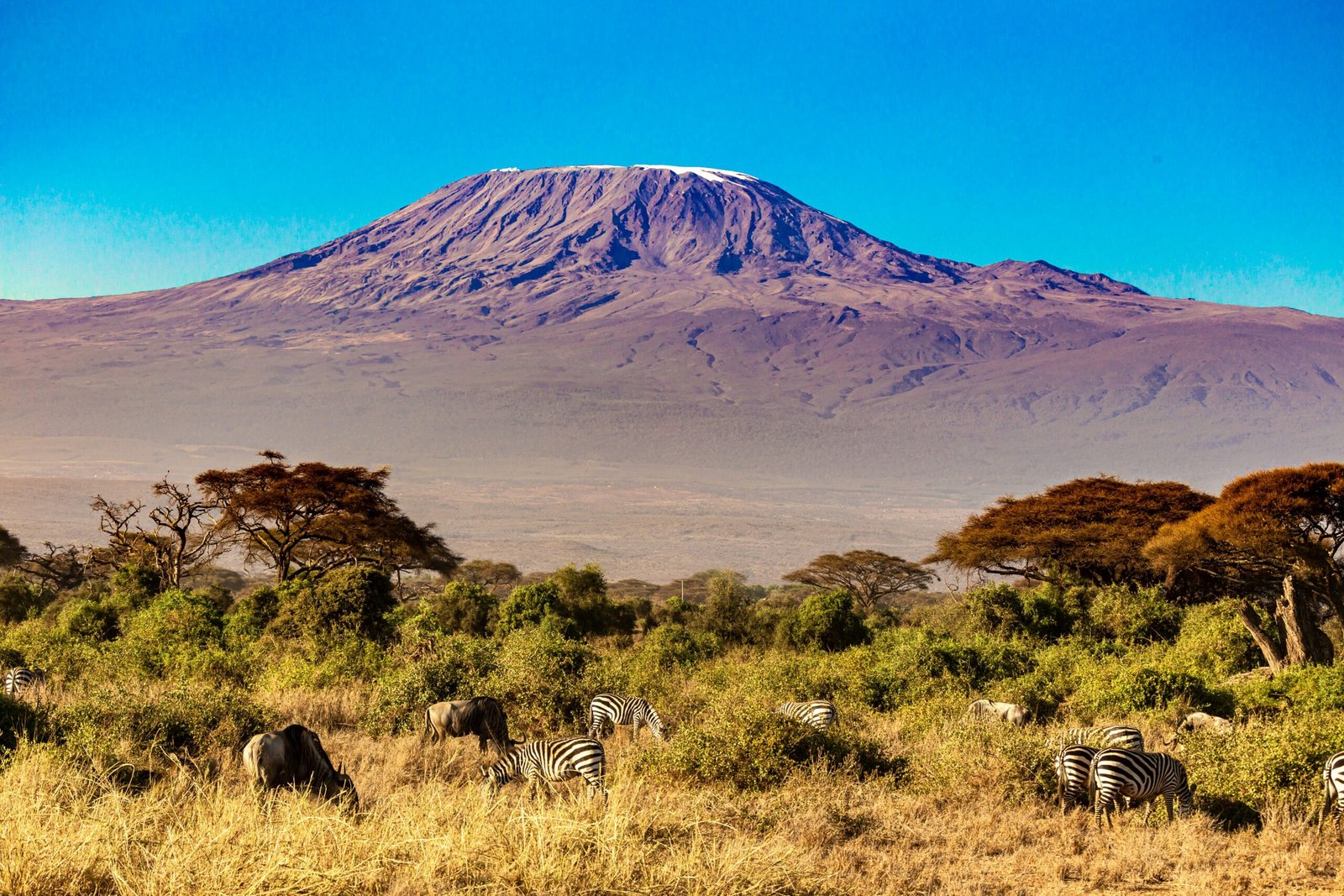
Maximilian Julius Chuhila’s article responds to this debate by using archival records and oral histories co-created with members of the Chagga community on the slopes of Mount Kilimanjaro in Tanzania to highlight intimate Chagga knowledge of the mountain’s environments and ecologies. Chuhila shows how the Chagga used this knowledge to maintain an ecological balance and address the various challenges they encountered. The article explores how these communities’ intimate relationships with their environment were violently disrupted by colonial displacements and their resettlement to new environments in which they had to grow new crops. It shows how Indigenous communities gained extensive knowledge of Mount Kilimanjaro’s slopes and adapted to their environment, and how colonial displacement to the lowlands disrupted their way of life. It demonstrates how the Chagga acquired an essential understanding of different types and values of land, differentiating between what they called “wasteful land” (for burying the dead) and “productive land” (used for agricultural purposes). These Indigenous ways of conceptualizing and categorizing land reveal the Chagga people’s deep understanding of their environment and demonstrate how communities have sustained themselves from the land and adapted to new environments following their displacement during the colonial period. The article demonstrates how oral histories and ethnography are critical sources for reconstructing Indigenous people’s rich ecological knowledge and experiences. This echoes Feierman’s (1990) classic work on peasants, in which he described them as ‘intellectuals’ due to their deep understanding of their environment, which helped them navigate the everyday environmental challenges they faced.
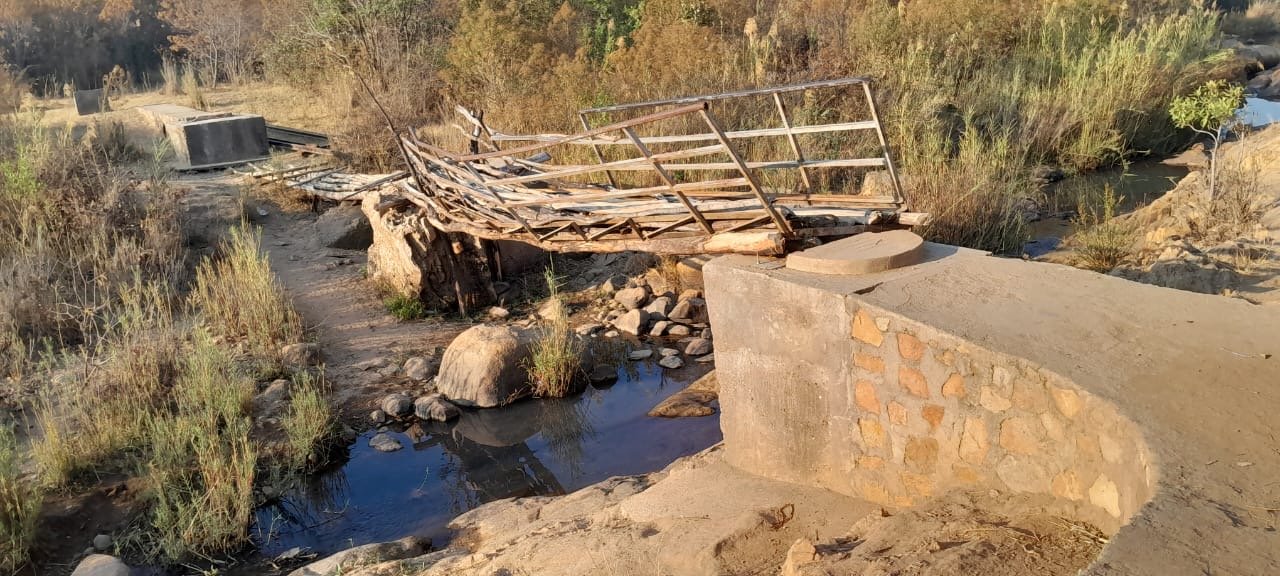
In the paper by Aldrin Magaya and Mathew Ruguwa, focused on Shona agriculturalists in Zimbabwe, ideals and practices of conviviality transcend the human realm to include spiritual and more-than-human lifeforms for sustaining healthy socio-ecological systems. According to farmers, sacred water sources, such as pools and springs, symbolize the boundary between the living and the metaphysical, a realm that requires utmost care. Yet, while these ontologies form part and parcel of vital conservation and adaptation strategies in the face of drought, local farmers are denied access to their lands which are fenced off for wetland protection, being rendered ‘useful’ by private conservationists who employ the universal language of science. This forms part of a long history of medical, developmental, and environmental interventions in Africa in which local worldviews have been structurally relegated to the realm of “intuition, witchcraft and magic” (Agrawal, 1995) to pursue projects in the name of ‘modernity’.
The value of local ecological knowledge for nature conservation also becomes clear in the paper by Agustina Alvarez, which explores the role of sacred forests and ancestral spirits in local conservation practices in northern Tanzania. The paper argues that conservation narratives and practices among the Pare people are embedded in a relational ontology in which non-human actors and relations need to be recognized as legitimate stakeholders, integral to the larger socio-ecological system. While the global conservation agenda tends to focus on metrics and the quantifiable benefits of forest conservation, the ultimate value of sacred forests for their caretakers resides in the intangible connection to and appreciation of the invisible world. Another lesson here is that in conservation agendas the focus is on interventions, while the Pare taboos emphasize that the key to conservation is regulated non-interventions. These grassroots narratives and practices in which humans are decentered and (more-than-human) relationships of care and reciprocity are fostered form an important antidote to the Anthropocene narratives of control detailed above. Appreciating agency as distributed across a range of human and non-human relationships not only has immediate practical value in anticipating floods and protecting biodiversity, but also opens up alternative possibilities that contain elements of sustainability and care towards the future. However, some caution is in place here since more-than-human ontologies have been rightfully critiqued for flattening power relations (Swyngedouw and Erntsen, 2018). Even emergent paradigms such as Planetary Health and One Health, which appreciate the interconnectedness between human health, animals, and the environment, have failed to address complex and intersecting power asymmetries and global inequities in disease burden (Davis et al., 2025).
The history of conservation efforts and their colonial roots reveals the deeply unequal power asymmetries between Big International Non-Governmental Organizations (BINGOs) and local communities, as the terms and conditions of conservation are rarely ever decided by Africans themselves (Garland, 2008; Dowie, 2011; Duffy, 2001). Garland describes how, in early European encounters with Africa’s nature, “Africa came to figure as an important space of nature in an emerging Western imaginary—a wild and natural backdrop against which people of European descent could define themselves as belonging to a civilized, specifically Western, world” (Garland, 2008). Such imaginaries that have emptied nature of humans, resulting in violent conservation practices that privilege nature protection over the protection of people, continue to haunt conservation practices and the safari tourism industry today. The question that emerges here is not just about how global conservation discourses can learn from local practices that are embedded in relational ontologies, but foremost about how power and knowledge are negotiated across different stakeholders and who has access to such discourses, resources, and decision-making.
How is resistance practiced in the Anthropocene and how can it be made visible?
The sheer scale of planetary transformations in the Anthropocene can make resistance seem futile. Our special issue focuses on how people live with and try to resist these planetary transformations in a variety of ways, even if they leave them in structurally disadvantaged and vulnerable positions. Through examples of artisanal oil refining in the Niger Delta (restitution), citizen science initiatives on toxic mine dump soils in Johannesburg (reclamation), and responses to land evictions in Madagascar (refusal), the articles show how African farmers, pastoralists, and urban dwellers display agency and develop activism in situations of environmental injustice.
Asserting African agency and activism in the Anthropocene is a profoundly political act, as Hecht (2023) argues. Yet this agency and activism rarely receives the attention it deserves. In the media and public discourse, African voices are at times deliberately obfuscated. This became painfully clear in 2020 when Ugandan climate activist Vanessa Nakate was cropped from a picture by the Associated Press (AP) in which she stood next to Greta Thunberg and other young (white) activists during the World Economic Forum in Davos. Hasan (2023) called this a form of ‘symbolic annihilation’, a widely experienced phenomenon faced by Black activist women in Western media (Hasan, 2023). While diplomatic and often technocratic, responses of international actors at various COP summits have been highly publicized in recent years, African actors are hardly ever key players in the negotiations, not even when the Loss and Damage Fund is concerned. Evans Njewa, Chair of the UN’s Least Developed Countries Group, left COP29 in Baku feeling “pained that our hopes for true climate justice have not been met” (African Arguments, 2024). Nonetheless, authors such as Olúfẹ́mi O. Táíwò (2022) argue that climate reparations can lead to a more hopeful future with issues of distributive justice at the core. In this view, reparations “should be seen as a future-oriented project engaged in building a better social order.” Grassroots struggles for environmental justice have also been prominent – famous examples being those led by Wangarĩ Maathai and Ken Saro-Wiwa. In this special issue, we pair a focus on political ecology protests with more everyday ways of living with and resisting the Anthropocene.
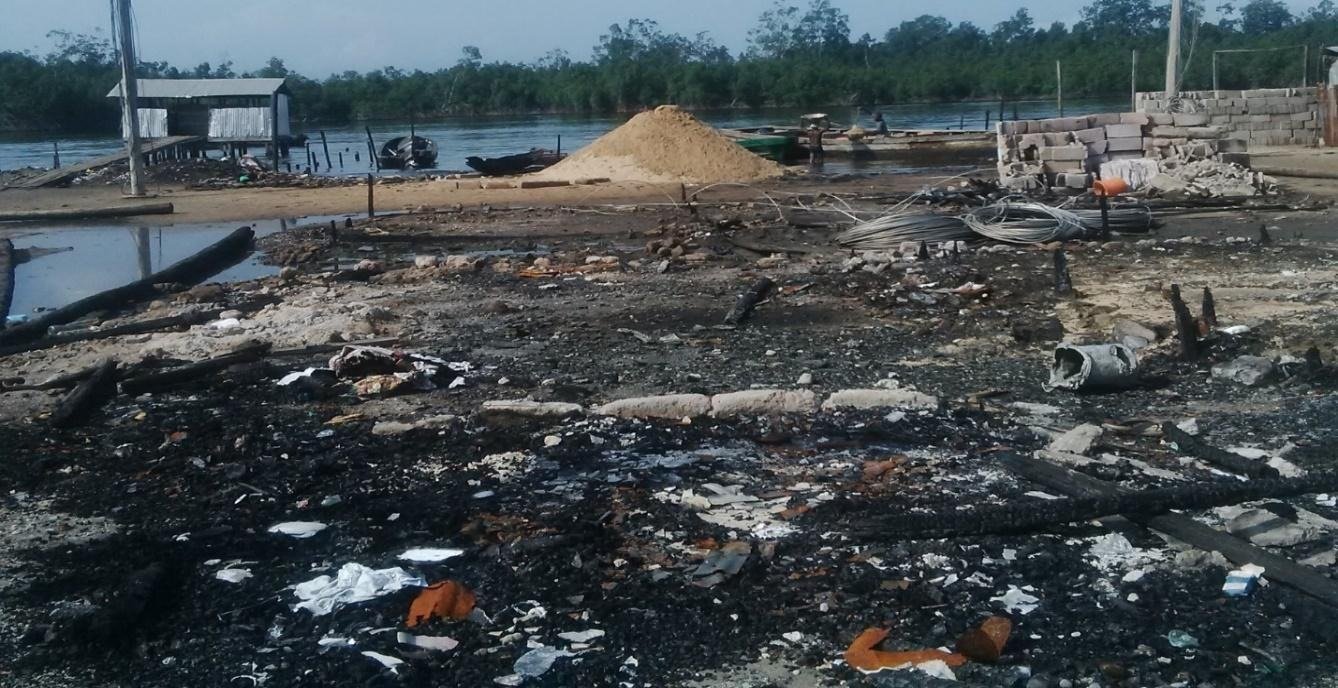
Seven decades of oil drilling and gas flaring have made the Niger Delta one of the most polluted places on Earth. The Niger Delta has endured ecological destruction through severe toxic exposure, resulting in slow forms of violence (Nixon, 2011) that have made life itself nearly impossible. Jackson Tamunosaki Jack’s article takes this ‘deathlihood’ as his starting point by examining ‘Kpo Fire’, artisanal crude oil refining. Jack argues that Kpo Fire is a response to the environmental ruination and unequal profit sharing of the oil industry in the Niger Delta, whereby Niger Deltans take matters into their own hands, even if this leads to further pollution. Ultimately, Kpo Fire is a perverse form of resistance, because it engenders violence (through notorious warlords) and environmental risk (through spills and explosions) in the pursuit of fleeting profit. Jack’s sociological approach offers fine-grained insights into the lifeworlds of artisanal refining in the Niger Delta.
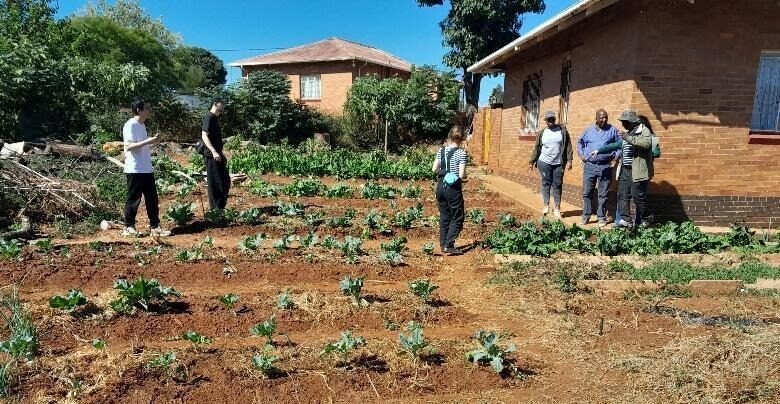
In another locality of resource extraction, Ngaka Mosiane, Phathutshedzo Eugene Ratshiedana, and Wendy Tsoriyo examine what it is like to live amongst mining waste in Johannesburg. Hecht (2023: 6) powerfully framed the concept of “residual governance”, referring to state regulation of waste and pollution as well as to how people and places themselves come to be treated as wastelands. Mosiane et al.’s article details how Johannesburg residents respond to conditions of toxicity by developing citizen science initiatives to measure pollution in the soils and water. The article shows that environmental justice concerns can exist side by side with livelihood preoccupations. Taken together, these articles question what (the struggle for) environmental justice means in an African AnthropoScene.
One of the key concerns of this special issue is how the people least responsible for and most vulnerable to the effects of racial capitalism and extractivism respond as their environment changes. The toxicity of dumped waste and the multiplying of climate disaster events are existential issues for many, but to dismiss grassroots responses as merely attempts to survive is reductive. Scholars working with the concept of “Black ecologies” have expanded the horizon for thinking about how bodies and communities act in the environment (Hosbey, Lloréns, and Roane, 2022). Coined by Nathan Hare in his 1970 essay, “Black ecology” has recently been taken up in the plural to make clear the active resistance to other ecologies – enlightenment ecologies, plantation ecologies, ecologies of extinction – in the past and present. Imani Jacqueline Brown frames Black ecologies as “an opening, an offering”, one that can help to describe the creativity, wisdom, kinship, and philosophy involved in Black bodily engagement with ecological reintegration (Brown, 2021). This conceptual insight shines through in the archival record. Historian Khanakwa (2023), for example, has shown how communities in eastern Uganda have managed the risk of landslides over more than a century, not only through relocation as a response to the landslides themselves, but by building social and cultural structures that assign responsibility in communities and mark the years and generations affected by landslides – structures systematically eroded by colonialism.
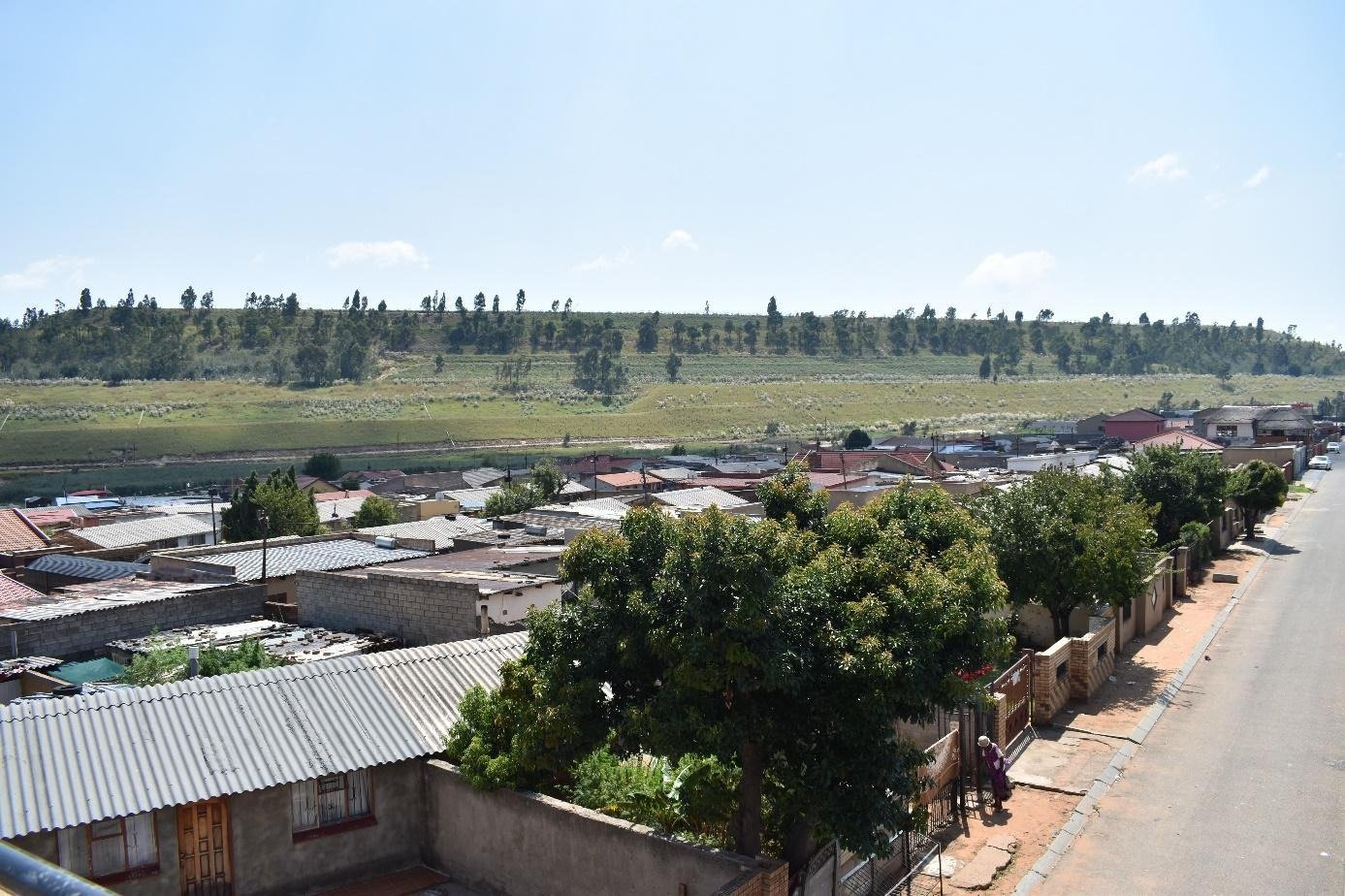
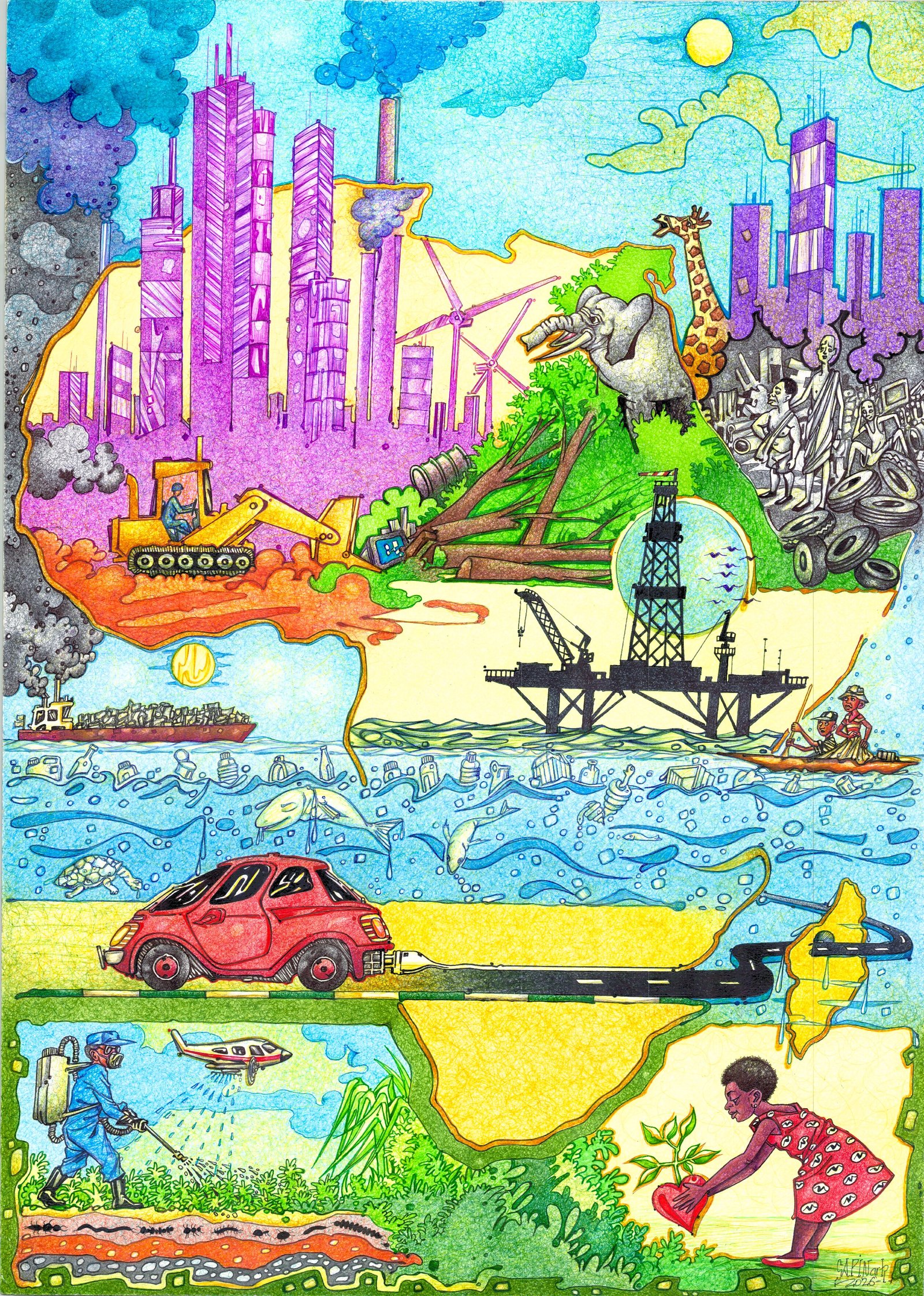
The essay by Tholithemba Lorenzo Ndaba et al. contributes to this conversation by studying the “township environmentalism” practiced by residents of Diepkloof, South Africa, living on and with the mine dumps that resulted from the rush for gold around Johannesburg. Ndaba focuses on ‘backstage’ forms of resistance and resilience that are often obscured by ‘front stage’ activism. Using photography alongside oral testimonies, he documents past and present efforts to recreate the mine dumps as livable spaces by covering them with vegetation, while women take responsibility for managing the asthma-causing dust that encroaches on their households. The essay opens our understanding of what resistance can look like: bodies living intimately alongside toxicity. Bodily testimonies of toxic exposure from mine dumps are carried across generations and become painfully visible in Dhlamini’s activist photo essay, where too many children and animals are born with diseases, deformities, and disabilities, such as cerebral palsy. Her poem bears witness to what it means when resistance does not seem to make any difference. Yet even when justice is seemingly unachievable, and activism itself seems futile, remaining silent is not an option, and environmental activism appears stronger than despair. Also, the cover painting of this special issue by Sapin Makengele visibilizes African AnthropoScenes as a political act, which places Africa not at the margins but at the center of the world economy and global connections, where waste, extractivism, resistance, grassroots environmentalism and hope all come together.
What sort of ancestors do we want to be?
This existential question was raised by Māori scholar and Indigenous activist Christine J. Winter (2021) to reflect on how a just Anthropocene might look from an Indigenous perspective. Drawing on her ancestors’ knowledge and being on Earth, time collapses into the past, the present, and the future. As the articles in this Special Issue show, the quest for more just Anthropocene futures – futures that are embedded in cosmologies with deep reverence for nature through ancestral and more-than-human connections –resonates with some of the African grassroots’ accounts presented here. These ontologies and cosmologies that have been rendered for too long insignificant in science and policy, even in biodiversity conservation and now climate change solutionism, deserve to take center stage when imagining more just Anthropocene futures. While natural scientists have rejected the Anthropocene by looking at the biosphere, from this collection of grassroots living at the frontiers of planetary change and profound ecological destruction, we glean that it has long been witnessed as a lived reality. If anything characterizes the Anthropocene, it may be the paradoxical development of market-driven, socio-technical complexes that have contributed to the planetary predicament to begin with, which are now proposed to fix it by foregrounding more Anthropos, impact and control rather than more relationality and connection with nature (de Wit et al. 2026, p. 7). We posit the grassroots’ accounts that foreground (more-than-human) connectivity and conviviality here as a critical antidote to the Anthropocene mindset that we have detailed above.
The essays collected here suggest that AnthropoScenes in Africa are not only scenes of despair, but also of repair, regeneration, and resistance. They offer resources not only for living in the Anthropocene, but also scholarly resources for working through the challenges levelled at the notion of the Anthropocene. These scenes of resistance, knowledge, more-than-human connectivity and agency at the frontline of planetary challenges stand in stark contrast to the scientific and age-old development framings of Africa in terms of disaster, decay, and despair, which are now seamlessly repeated in scientific reports on climate change (IPCC, 2022). While acknowledging Africa’s vulnerability to planetary transformations such as climate change, these vulnerability framings that render an entire continent in victimhood have disempowering effects (Mbembe, 2016; Amphonsah, 2025; de Wit, 2018). As the articles in this volume attest, it is clear that when deeply uneven and historically produced inequalities are not considered, narratives about and proposed solutions to the planetary crisis for Africa have the power to cause more socio-ecological disruption, as existing power structures are reproduced (see also De la Hoz et al. (2022) on climate coloniality).
When zooming in on the different AnthropoScenes, intentionally invoked here to disrupt the apolitical workings of the singular, we believe it remains a crucial task of the humanities to make visible the ongoing injustices inflicted on the marginalized (Peša, 2023) – either in the name of biodiversity and nature conservation, climate solutionism or the green energy transition – which still too often remain unseen and off-scene. More just, equitable, and plural possibilities in the Anthropocene for the African continent in times of planetary duress, we argue, may very well begin by reframing the problems and creating new narratives by moving away from crisis thinking and “doomsday scenarios” that infuse development thinking and always render Africa exceptional (Roe, 1999). Instead of the endless recycling of development and vulnerability discourses that seek to fix, predict, and control the Anthropocene with (Western) ‘technical expertise’ (Bankoff, 2002), now unfolding in the name of disaster risk reduction and climate change adaptation and mitigation, we ask which narratives and solutions emerge if we center grassroots lived experiences, histories of injustice and more-than-human ontologies. A “just Anthropocene” for Africa may lie not only in taking African agency seriously (O. Táíwò, 2022), but in thinking about historical reparations that redress longstanding economic inequalities and climate injustices that are deeply intertwined with histories of slavery, colonialism, and extraction (O.O. Táíwò, 2022). As researchers and climate activists such as Alex Lenferna have argued, planetary justice also requires moving away from the focus on individualist behavior that puts the blame on consumers or even victims of environmental change. The longstanding environmental mantra that promoted “reduce, reuse, recycle” is corporate gaslighting that deflects attention away from systemic harm produced by the fossil fuel industry. Instead, he argues for 3 different Rs: Regulation to rein in polluters, Redistribution to fund a just transition, and Reparations to repair and rebuild worlds (Lenferna, 2025).
In addition, we ask what kind of alternative realities can be brought into being if local ontologies, ideas of justice and inclusivity were centered at the heart of decision-making. Which alternative futures emerge when grassroots’ perspectives are foregrounded, such as more hopeful ontologies of connectivity, repair, care, and conviviality (Nyamnjoh, 2024). Against the background of colonial legacies, ongoing forms of pollution and toxicity, and the new Scramble for Africa in the name of the ‘green’ energy transition or the new Space Race, how can planetary health and climate justice be achieved if epistemologies and ontologies from the Global South and the SSH are taken seriously? To move beyond reductionistic Anthropocene narratives that seek to control and colonize the future, innovative methodologies are needed that explore the politics of the Anthropocene and knowledge production that transcend disciplinary boundaries and trace uncanny connections between technologies, the mind, the planetary, the bodily and the extraplanetary. We propose that local epistemologies and critical SSH perspectives – that have long traditions of listening to the world and scrutinizing, decentering, and diversifying hegemonic epistemologies – should be included from the beginning when problems are framed and not as an afterthought, only to become instrumental or a corrective to natural sciences questions and solutions (de Wit et al. 2026). As many social scientists have shown, the knowledge and wisdom of being a good ancestor is already out there in the world, among grassroots and Indigenous communities embedded in relational philosophies of being such as the Malagasy concept of fihavanana, that sees humanity’s relationship to the land not as individual property to be owned, but as collective custodianship of a living Earth that we inherit from our ancestors and borrow from future generations.
Agrawal, Arun. 1995. Dismantling the divide between Indigenous and scientific knowledge. Development and Change 26(3): 413-439.
Armiero, M. 2021. Wasteocene. Stories from the global dump. Cambridge University Press.
Amponsah, C. 2025.Against climate resilience. Africa is a country. Against climate resilience
Bankoff, G. 2002. Rendering the world unsafe: ‘Vulnerability’ as Western discourse. Disasters 25: 19-35. https://doi.org/10.1111/1467-7717.00159
Biermann, F., E. Dirth, and A, Kalfagianni. (2020). Planetary justice as a challenge for Earth system governance: Editorial. Earth System Governance 6 (December): 100085. https://doi.org/10.1016/j.esg.2020.100085.
Biermann, F., and A. Kalfagianni. (2020). Planetary justice: A research framework. Earth System Governance 6 (December): 100049. https://doi.org/10.1016/j.esg.2020.100049.
Biermann, F., and I. Möller. (2019). Rich man’s solution? Climate engineering discourses and the marginalization of the global south. International Environmental Agreements: Politics, Law and Economics 19 (2): 151–67. https://doi.org/10.1007/s10784-019-09431-0.
Bishop, O. Global Oneness Project, 2006-2025. https://www.globalonenessproject.org/library/interviews/sawubona
Brown, I. J. Black ecologies: An opening, an offering, March (2021), at https://march.international/black-ecologies-an-opening-an-offering/
Cavanagh, C. J. (2017). Enclosure, dispossession, and the green economy: New contours of internal displacement in Liberia and Sierra Leone? African Geographical Review 37 (2): 120-133. 10.1080/19376812.2017.1350989
Chakrabarty, D. (2009). The Climate of History: Four Theses. Critical Inquiry, 35(2), 197–222. https://doi.org/10.1086/596640
Crutzen, P. J., and Stoermer, E. F. (2000). The “Anthropocene”. Global Change Newsletter, 41, 17-18. http://www.igbp.net/download/18.316f18321323470177580001401/1376383088452/NL41.pdf
Davis, D. K. (2016). The Arid Lands: History, Power, Knowledge. The MIT Press.
De la Hoz, N., Silva-Garzón, D., Hernández Vidal, N., Gutierrez Escobar, L., Hasenfratz, M. and Fladvad, B., (2024) “Unraveling the colonialities of climate change and action”, Journal of Political Ecology 31(1), 624–635. https://doi.org/10.2458/jpe.6365
Demos, T. J. (2017). Against the Anthropocene: Visual culture and environment today. Sternberg Press.
De Wit, S., Petrollino, S. van Dijk, H., and de Bruijn, M. (2026). Pastoralist policy paradoxes in the Anthropocene. Relational ontologies and the marginalisation of lifeways among the Maasai (Tanzania), Hamar (Ethiopia), and the Fulani (the Sahel). Pastoralism 16:16130https://doi.org/10.3389/past.2026.16130
De Wit, S. (2019). Getting ahead of crises: A thesaurus for anticipatory humanitarian action. Centre for Disaster Protection, Climate Centre, UN OCHA, SHEAR.
Dowie, M. (2011). Conservation refugees. The hundred-year conflict between global conservation and native people. The MIT Press.
Duffy, R. (2000). Killing for conservation: Wildlife policy in Zimbabwe. Indiana University Press; James Currey.
Emerton, R., Cloke, H., Ficchi, A., Hawker, L. de Wit, S., Speight, L. Prudhomme, C., Rundell, P., West, R., Neal, J., Cuna, J., Harrigan, S., Titley, H., Magnusson, L., Pappenberger, F., Klingamana, N., Stephens, L. (2020). “Emergency flood bulletins for Cyclones Idai and Kenneth: the use of global flood forecasts for international humanitarian preparedness and response”. The International Journal for Disaster Risk Reduction 50. https://doi.org/10.1016/j.ijdrr.2020.101811
Erickson, B. (2020). Anthropocene futures: Linking colonialism and environmentalism in an age of crisis. Society and Space (38)1: 111-128. https://doi.org/10.1177/0263775818806514
Fa, Julia E., Luiselli L. (2025). Weaving the middle spaces between indigenous and scientific knowledge for biodiversity conservation and ecology. African Journal of Ecology. 10.1111/aje.70030
Fairhead, J., M. Leach and I. Scoones (2012). Green grabbing: a new appropriation of nature? The Journal of Peasant Studies 39 (2): 237-261. 10.1080/03066150.2012.671770
Feierman, S. (1990). Peasant intellectuals. Anthropology and history in Tanzania. University of Wisconsin Press.
Fraser, J. A., Cosiaux, A., Walters, G., Asiyanbi, A., Osei-Wusu Adjei, P., Addo-Fordjour, P., Fairhead, J., Kialo, P., Engone Obiane, N.L., and Oslisly R. (2024). Defining the Anthropocene tropical forest: Moving beyond ‘disturbance’ and ‘landscape domestication’ with concepts from African worldviews. The Anthropocene Review, 11(3) 614–635. 10.1177/20530196231226307
Garland, E. (2008). The Elephant in the room: confronting the colonial character of wildlife conservation in Africa. African Studies Review 51 (3), 51–74. 10.1353/arw.0.0095
Gibson, K., R. D. Bird., and Fincher, R. (2018). Manifesto for Living in the Anthropocene. Punctum Books.
Graham. M. (2008). Some thoughts on the philosophical underpinnings of Aboriginal thought. Australian Humanities Review 45:181-194.
Haraway, D. (2015). Anthropocene, Capitalocene, Plantationocene, Chthulucene: Making kin. Environmental Humanities 6(1), 159–165. https://doi.org/10.1215/22011919-3615934
Hasan, M. (2023). Symbolic annihilation: Analyzing Associate Press’s erasure of Vanessa Nakate and marginalization of Black women activists. Journal of Black Studies (55)3, 253-267. https://doi.org/10.1177/00219347231220679
Hecht, G. (2018). The African Anthropocene. Aeon. https://aeon.co/essays/if-we-talk-about-hurting-our-planet-who-exactly-is-the-we.
Hecht, G. (2023). Residual governance. How South Africa foretells planetary futures. Duke University Press.
Holst J. (2020). Global Health – emergence, hegemonic trends and biomedical reductionism. Global Health. 16(1):42. 10.1186/s12992-020-00573-4.
Hosbey, J., Lloréns, H., and Roane, J. T. (2022). Introduction: Global black ecologies, Environment and Society 13(1): 1–10, https://doi.org/10.3167/ares.2022.130101
Hulme, M. (2011). Meet the humanities. Nature Climate Change, 1(4), 177–179. 10.1038/nclimate1150
IPCC (2022). Trisos, C.H., I.O. Adelekan, E. Totin, A. Ayanlade, J. Efitre, A. Gemeda, K. Kalaba, C. Lennard, C. Masao, Y. Mgaya, G. Ngaruiya, D. Olago, N.P. Simpson, and S. Zakieldeen: Africa. In: Climate Change 2022: Impacts, Adaptation and Vulnerability. Contribution of Working Group II to the Sixth Assessment Report of the Intergovernmental Panel on Climate Change [H.-O. Pörtner, D.C. Roberts, M. Tignor, E.S. Poloczanska, K. Mintenbeck, A. Alegría, M. Craig, S. Langsdorf, S. Löschke, V. Möller, A. Okem, B. Rama (eds.)]. Cambridge University Press pp. 1285–1455, 10.1017/9781009325844.011.
Kashwan, P. F. Biermann, A. Gupta, and C, Okereke (2020). Planetary justice: Prioritizing the poor in earth system governance. Earth System Governance, 6 100075. https://doi.org/10.1016/j.esg.2020.100075.
Khanakwa, P. (2023). Environmental risk management from below: Living with landslides in Bududa, Eastern Uganda, Journal of Eastern African Studies 17(3), 384–403. https://doi.org/10.1080/17531055.2023.2268361
Klein, N. and Taylor, A. (2025). The rise of end times fascism | Far right (US) | The Guardian
Lenferna, A. (2025). ‘Reduce, reuse, recycle’ is corporate gaslighting – the real change must come from the fossil fuel industry. The Conversation. Published 19 October 2025. https://theconversation.com/reduce-reuse-recycle-is-corporate-gaslighting-the-real-change-must-come-from-the-fossil-fuel-industry-266819
Lenggenhager, L. and B.C. Moore (2025). Space is the ultimate luxury: Capitalists, conservationists, and ancestral land in Namibia. Brill.
Malm, A., and Hornborg, A. (2014). The geology of mankind? A critique of the Anthropocene narrative. The Anthropocene Review, 1(1), 62-69. https://doi.org/10.1177/2053019613516291
Mbembe, A. (2016). Africa in the New Century. Africa is a country. Africa In The New Century
Mbembe, Achille, translated by Carolyn Shread. (2021). The universal right to breathe. Critical Inquiry, 47 (S2): S58–62. https://doi.org/10.1086/711437.
McNeill, J.R. and P. Engelke (2016). The great acceleration: An environmental history of the Anthropocene since 1945. Harvard University Press.
Mika, K. and I. Kelman. (2022). Vulnerable Anthropocenes? Towards an integrated approach. In: G. Bankoff and D. Hilhorst (eds.), Why vulnerability still matters. The politics of disaster risk creation, pp. 206- 221. Routledge.
Moore, J. W. (2015). Capitalism in the web of life: Ecology and the accumulation of capital. Verso.
Nelson, R. H. (2003). Environmental colonialism: ‘Saving’ Africa from Africans. The Independent Review 8(1):65-86.
Nixon, R. (2011). Slow violence and the environmentalism of the poor. Harvard University Press. https://doi.org/10.4159/harvard.9780674061194
Nordblad, J. (2021). On the difference between Anthropocene and climate change Temporalities. Critical Inquiry 47(2): 328–48. 10.1086/712123
Nyamnjoh, F.B. (2024). Reimagining African scholarship: a convivial approach. Acta Academica: Critical views on society, culture and politics 56: 198-222. 10.38140/aa.v56i2.8967.
Omukuti, J. (2021). Lessons from Tanzanian forest management. Justice in environmental and climate policy transitions. In Ryder et al (eds.), Environmental Justice in the Anthropocene. From (Un)Just Presents to Just Futures, (pp. 188-201). Routledge.
Peša, I. (2023). Anthropocene narratives of living with resource extraction in Africa. Radical History Review 145: 125-138. https://doi.org/10.1215/01636545-10063818
Peša, I. (2024). Toxic coloniality and the legacies of resource extraction in Africa. International Review of Environmental History 9(2): 33-50. 10.22459/IREH.09.02.2023.03
Ranger, T.O. (2000). Voices from the rocks. Nature, culture, and history in the Matapos Hills in Zimbabwe. Indiana University Press.
Reddy, E. (April 8, 2014). What does it mean to do anthropology in the Anthropocene? What Does it Mean to do Anthropology in the Anthropocene? | Platypus
Richards, P. (1985). Indigenous agricultural revolution. Ecology and food production in West Africa. Routledge.
Roe, E. M. (1999). Except Africa. Remaking development, rethinking power. Transaction Publishers.
Roitman, J. (2014) Anti-Crisis. Duke University Press.
Rose, D.B. (2015). The ecological humanities. In: Gibson, K., D.B. Rose and R. Fincher (Eds.), Manifesto for living in the Anthropocene, pp. 1-4. Punctum Books.
Rottenburg, R., and A. Farman. (2019). Measures of future health, from the nonhuman to the planetary. Medicine Anthropology Theory 6 (3). https://doi.org/10.17157/mat.6.3.659
Schoffeleers, J.M. (1979). Guardians of the land: Essays on Central African territorial cults. Mambo Press.
Stevis, D. M., Laituri, S., Ryder, K., Powlen, S.A., Malin, J. Sbicca. (2021). Just Anthropocene? In: Ryder, S., K., Powlen, M., Laituri, S.A. Malin, J. Sbicca, and D. Stevis (eds.). Environmental justice in the Anthropocene: From un(just) presents to just futures, 3-9. Earthscan, Routledge.
Sultana, F. (2022). The unbearable heaviness of climate coloniality. Political Geography, 102638. https://doi.org/10.1016/j.polgeo.2022.102638
Swyngedouw, E. and H. Erntson. (2018). Interrupting the Anthropo-obScene: Immuno-biopolitics and depoliticizing ontologies in the Anthropocene. Theory, Culture and Society 35(6), 3-30. https://doi.org/10.1177/0263276418757314
Swyngedouw, E. (2011). Depoliticized environments: The End of nature, climate change and the post-political condition. Royal Institute of Philosophy Conference, 69, 253-274.
Táíwò, O. (2022). Against decolonization: taking African agency seriously. Hurst Publishers.
Táíwò, O. O. (2022). Reconsidering reparations. Oxford University Press.
Todd, Z. (January 21, 2016). Relationships. From the Series: Lexicon for an Anthropocene Yet Unseen Relationships | Society for Cultural Anthropology
Van Beemen, O. (2024). Ondernemers in het wild. Het ontluisterende verhaal van een club witte weldoeners in Afrika. Prometheus.
Varadan S., de Wit, S., Waltz, M., Kirchhelle, C. (2025) “Antimicrobial Resistance: Just Transitions for Shared Futures.” Public Humanities. 1:e175. doi:10.1017/pub.2025.10093
Winter, C.J. (2021). Preface: Environmental justice in the Anthropocene. In: Ryder, S. (eds), xxii-xxi. Environmental justice in the Anthropocene. From (un)just presents to just futures. Routledge.
Whyte, K. (2018). Indigenous science (fiction) for the Anthropocene: Ancestral dystopias and fantasies of climate change crises. Environment and Planning E: Nature and Space 1(1–2): 224–242. DOI: 10.1177/2514848618777621
Yusoff, K. (2018). A billion black anthropocenes or none. University of Minnesota Press.
[1] These are some of the alternatives: Plantationocene, Chthulucene, and Capitalocene (Haraway, 2016); Plasticene (Reed, 2015); Wasteocene (Armiero, 2021). For a more elaborate overview, see Mika and Kelman (2022).
[2] The committees that decided on whether naming a new geological epoch could be formalized include: the Anthropocene Working Group (AWG); a geoscience group established in 2009 by the Subcommission on Quaternary Stratigraphy (SQS); and the Scientific Committee of the Anthropocene Laboratory. Although claiming to be interdisciplinary, these groups are strongly dominated by the natural sciences.
[3] The authors attest and undermine the apolitical by employing the Greek term for “skene”, which was the backstage of the theater in ancient Greece, certain stories and actions remained purposefully off-scene (“ob-skene”) as they were considered to be too inappropriate to be shown in public.
[4] See, for example the 2030 Agenda for Sustainable Development Goals, which uses human rights frameworks and the language of ‘equity’ and ‘justice’, which is a departure from older development agendas.
[5] For examples from the field of climate change and geoengineering, which has also largely been dominated by the natural sciences and epistemologies based in the Global North, see Biermann & Möller, 2019.
21 / July / 2026
By: M. J. Chuhila
16 / November / 2026
By: Aldrin T. Magaya and Mathew Ruguwa
25 / August / 2026
By: Ngaka Mosiane, Phathutshedzo Eugene Ratshiedana, and Wendy Tsoriyo
25 / August / 2026
By: Jackson Tamunosaki Jack
25 / August / 2026
By: Tholithemba Lorenzo Ndaba, Madoda Mkhobeni, and William Matlala